
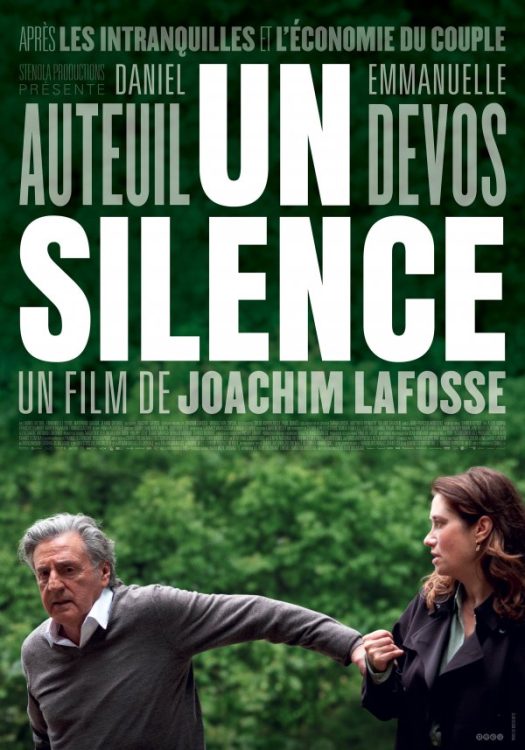
Belgian screenwriter and film director Joachim Lafosse (b. 1975) recently added a new film to his impressive list of credits with “Un silence,” a.k.a. “A Silence.” It is his tenth feature film, after having previously shot films such as “Élève libre” (2008), “À perdre la raison” (2012), “L’économie du couple” (2016) and “Les intranquilles” (2021).
In “Un silence”, the silence in the privileged family of Astrid (played by Emmanuelle Devos) and her husband François (role for Daniel Auteuil) is disrupted after many years, and the most disturbing secrets are about to emerge. For many years, they were able to live peacefully on their estate, also when François, a distinguished lawyer, worked on a very high-profile case. But after twenty-five years of silence, Astrid sees the family balance imploding when her children search for justice and a Greek tragedy threatens to unfold.
“Un silence” (a.k.a. “A Silence, trailer)
This powerful drama had its world premiere at the San Sebastian Film Festival in Spain last September as part of the Official Competition. The film also earned Mr. Lafosse the Prize for Best Director at the Rome Film Festival a month later.
“Un silence” was produced by Stenola Productions (Belgium), Samsa Film (Luxembourg), Les Films du Losange (France) and Prime Time (Belgium), and will be released in Belgium on January 24 through Cinéart. When this interview (a Zoom call) with filmmaker Joachim Lafosse was conducted earlier this month, over 250,000 people already went to see the film in only a matter of days in French theaters.
 Mr. Lafosse, with each new film you have a completely different approach and find a new angle. What exactly triggers your creativity?
I think it’s all about emotions and curiosity. When I wrote the screenplay for “Un silence,” I asked myself, ‘Why did it take them so long? Why did they remain silent and didn’t talk about what had happened? And what is the impact of their silence, since they always knew what happened?’ I began writing the screenplay for “Un silence” in 2016, and sticking with a project for so many years always requires a lot of dedication—maybe even unknowingly. Writing the screenplay can be all about trying to find the reason why you want to make that film. So when I started writing, I wasn’t aware of what attracted me to this story and the whole Victor Hissel affair, or why it touched me the way it did. Two years before I finished the screenplay, I found out why I wanted to make this film. In 2008, I made a film called “Élève libre” [a.k.a. “Private Lessons”] which was very autobiographical. I didn’t say that back then, but the film dealt with something violent I had experienced in my teens. I hoped that the people who knew me in those days would recognize the story, but once the film was released, they crossed the street when they saw me. Nobody approached me to talk about what I had shown in “Élève libre.” But when I was writing the screenplay for “Un silence,” I got a call from someone who apologized and said he was advised not to talk about it. He also asked me how I was doing. At that moment, I realized why I was writing “Un silence”: he could have helped me to prevent what happened to me in my teens, but he was ashamed because he hadn’t done anything—just like the character of Astrid is in the film. So I wrote this story of this young man, his mother and his family consumed by shame.
You capture the attention of your audience right away; take the first scene of “Un silence,” for example. You show Emmanuelle Devos in close-up during most of the scene. Did you do that to show all the nuances of her character right away?
Yes, and I wanted the viewer to feel Astrid’s shame and guilt, how she is consumed by what has happened, and what she did or didn’t do about it. Not everything you see in the film is in the screenplay, like the scene where Astrid and her son leave from school. We planned to return to our accommodation, but I noticed that Emmanuelle was tired. So I told her, ‘Look Emmanuelle, we’re going to shoot immediately.’ And we shot this four-minute scene in the car right away.
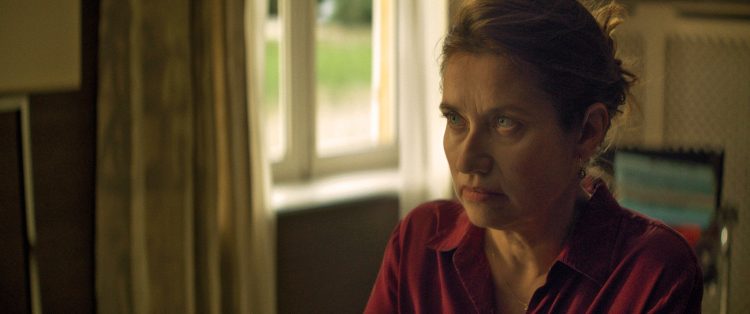
The whole cast is magnificent, but her tour-de-force performance is simply outstanding. How did you accomplish that?
She’s like a Stradivarius. I wanted to make the film with her from the very beginning. She’s very demanding and brave; she works hard and does a lot of research, as I learned right away. When I sent her the first draft of the screenplay, she turned it down. She told me why and what she didn’t like, so I rewrote it and three months later, I sent her a new draft that she greenlighted. Then I realized I had to pay attention to each detail and make sure I got it right. The film and the subject are so complicated that you need to discuss it and collaborate with everybody to make it truthful. It would be very unwise and foolish of me to think I could do this on my own.
You said that you started writing the screenplay in 2016…
…the first draft I wrote, was titled “Le fils de la loi,” from the point of view of the father, the lawyer. Two or three years later, I wrote another version, from the son’s point of view. In the final years of writing, I decided to tell the story from the mother’s point of view, considering the changes I had made for Emmanuelle and because of this person who had called me to talk about his shame. Then when we shot the film, it got a classic and modest look and feel. There are three basic rules to achieve that. The first one, don’t show the violence that you describe; secondly, focus on the strength of the characters, and the third one—when you’re editing—is to give the viewer the opportunity to ask what he or she would do in those very same circumstances. Despite Astrid’s silence and what Raphaël [character played by Matthieu Galoux] does, I tried to connect the audience with Astrid and Raphaël and let them empathize with those characters.
The musical score is also crucial in how you tell your story, isn’t it?
Absolutely. “Un silence” is a tragic story, yet it tries to hold on to the viewer’s empathy for this woman whose silence has huge consequences for her whole family and for this young man who commits a terrible act. To make sure the audience can think and feel with them, you need an essential tool to keep them connected to the characters and the story, and that’s the score. To me, music is a very rewarding and very accessible art form.
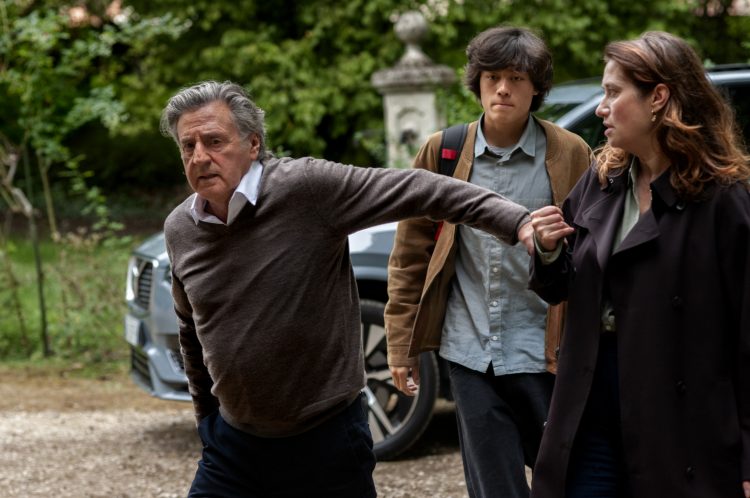
You shot “Un silence” in Metz, France, with many scenes in and around the huge family mansion. Was it logistically an easy film to make then?
The film is also about the bourgeoisie, so first of all, we had to find a residence that matched that social class. I was very fortunate to find it in Le Ban Saint-Martin, but that doesn’t mean it was an easy film to make. On the contrary, “Un silence” was the most stressful film I have made so far. Because of the subject and how we shot the film with cinematographer Jean-François Hensgens, everything had to be meticulously prepared. If a sequence shot or a panorama shot was too long, you know you could lose the audience or it might get bored. This was the first time I worked with a dolly—I worked with a steadicam, like when we did “L’économie du couple” [2016, a.k.a. “After Love”], and with a steadicam it’s very easy to move around in a house or a mansion. But when you work with a dolly, it’s much more complicated, and you need to rehearse everything before you shoot to check if it looks good. In the end, the result is great, but I was very worried when we were shooting.
With Emmanuelle Devos playing Astrid, you have another leading actress in a compelling and demanding role, like you could rely on actresses such as Isabelle Huppert or Émilie Dequenne in the past. That’s your niche, isn’t it?
Well, next April, I will start shooting my upcoming film about a woman who has a hard time but keeps her things together and gives her children a wonderful view on life. I think I make this film because I was raised by a single mother. When I grew up, I could see all the difficulties she had to face on her own, and as a woman. That project is all set; we have the budget and cast—everything is ready. But that film will be totally different from “Un silence.” It’s much lighter.
“Un silence” deals with a very serious subject. Was there also fun on the set?
Absolutely! When you make a tragedy like that, it’s usually a very amusing shoot. And it was. Otherwise, it would be impossible to make a film like that.
Finally, one film director or film title that’s always been very dear to you?
I would say Jane Campion and “The Piano” [1993]. I think that’s my favorite film.
Zoom interview,
January 15, 2024
FILMS
FOLIE PRIVÉE (2004) DIR Joachim Lafosse PROD Eric van Zuylen SCR Joachim Lafosse, Kris Cuppens CAM Federico D’Ambrosio ED Sophie Vercruysse CAST Mathias Wertz, Vincent Cahay, Kris Cuppens, Catherine Salée, Jean-Benoît Ugeux
 ÇA REND HEUREUX (2006) DIR – SCR Joachim Lafosse CAM Ana Samoilovich ED Sophie Vercruysse CAST Fabrizio Rongione, Kris Cuppens, Catherine Salée, Mariet Eyckmans, Dirk Tuypens, Cédric Eeckhout, François Pirot, Jean-Benoît Ugeux
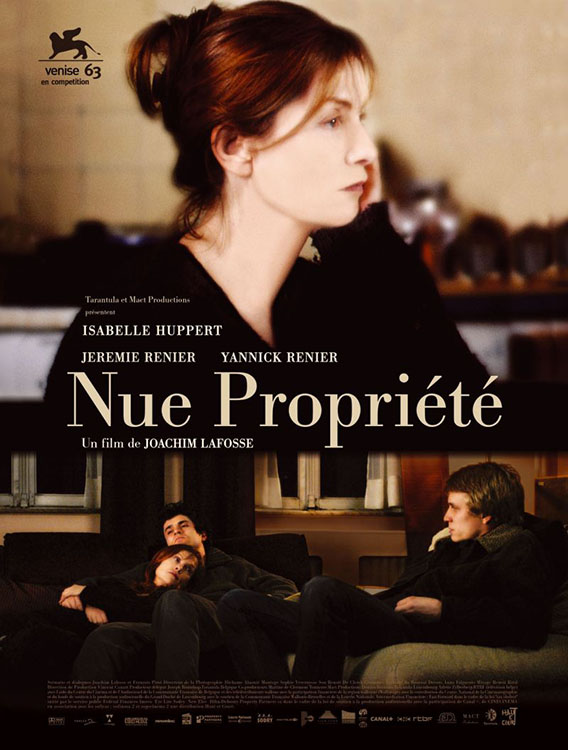
NUE PROPRIÉTÉ, a.k.a. PRIVATE PROPERTY (2006) DIR Joachim Lafosse PROD Joseph Rouschoup SCR Joachim Lafosse, François Pirot CAM Hichame Alaouie ED Sophie Vercruysse CAST Isabelle Huppert, Jérémie Renier, Yannick Renier, Kris Cuppens, Patrick Deschamps, Raphaëlle Lubansu, Sabine Riche, Catherine Salée, Jean-Benoît Ugeux
ÉLÈVE LIBRE, a.k.a. PRIVATE LESSONS (2008) DIR Joachim Lafosse PROD Jacques-Henri Bronckart SCR Joachim Lafosse, François Pirot CAM Hichame Alaouie ED Sophie Vercruysse CAST Jonas Bloquet, Jonathan Zaccaï, Yannick Renier, Claire Bodson, Pauline Etienne, Anne Coesens, Thomas Coumans, Johan Leysen
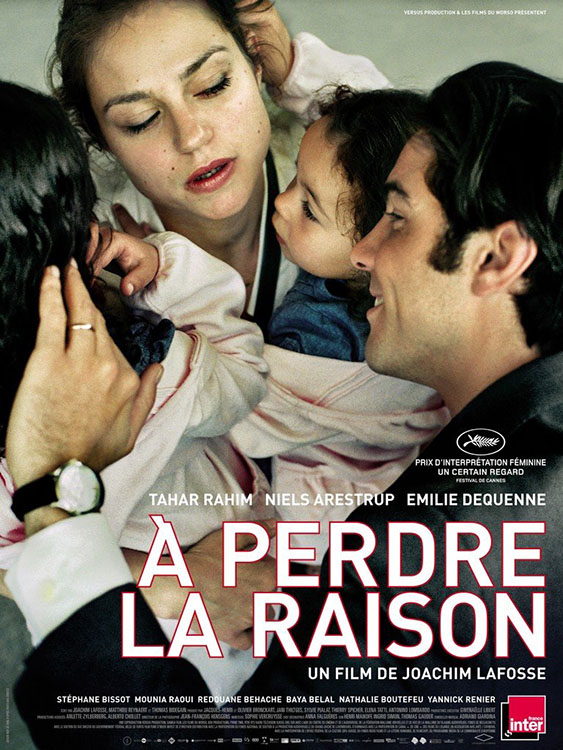 À PERDRE LA RAISON, a.k.a. LOVING WITHOUT REASON and OUR CHILDREN (2012) DIR Joachim Lafosse PROD Jacques-Henri Bronckart, Olivier Bronckart SCR Joachim Lafosse, Matthieu Reynaert, Thomas Bidegain CAM Jean-François Hensgens ED Sophie Vercruysse CAST Tahar Rahim, Niels Arestrup, Émilie Dequenne, Stéphane Bissot, Mounia Raoui, Radouane Behache, Baya Belal, Nathalie Boutefeu, Yannick Renier
LES CHEVALIERS BLANCS, a.k.a. THE WHITE KNIGHTS (2015) DIR Joachim Lafosse PROD Jacques-Henri Bronckart, Olivier Bronckart, Sylvie Pialat SCR Joachim Lafosse, Thomas van Zuylen, Bulle Decarpentriers (book by Geoffroy d’Ursel, François-Xavier Pinte) CAM Jean-François Hensgens ED Sophie Vercruysse CAST Vincent Lindon, Louise Bourgoin, Valérie Donzelli, Reda Kateb, Bintou Rimtobaye, Stéphane Bissot, Yannick Renier, Catherine Salée, Tibo Vandenborre, Filip Peeters
 L’ÉCONOMIE DU COUPLE, a.k.a. AFTER LOVE (2016) DIR Joachim Lafosse PROD Jacques-Henri Bronckart, Olivier Bronckart, Sylvie Pialat, Benoît Quainon SCR Joachim Lafosse, Mazarine Pingeot, Fanny Burdino CAM Jean-François Hensgens ED Yann Dedet CAST Bérénice Bejo, Cédric Kahn, Marthe Keller, Margaux Soentjens, Jade Soentjens, Francesco Italiano, Tibo Vandenborre, Catherine Salée
CONTINUER, a.k.a. KEEP GOING (2018) DIR Joachim Lafosse PROD Jacques-Henri Bronckart, Olivier Bronckart, Sylvie Pialat, Benoît Quainon SCR Joachim Lafosse, Thomas van Zuylen (adaptation by Mazarine Pingeot, Fanny Burdino, Samuel Doux) CAM Jean-François Hensgens ED Yann Dedet CAST Virginie Efira, Kacey Mottet Klein, Diego Martín, Mairambek Kozhoev, Damira Ripert, Belek Mamatkoulov
LES INTRANQUILLES, a.k.a. THE RESTLESS (2021) DIR – SCR Joachim Lafosse PROD Alexandre Gavras, Anton Iffland Stettner, Eva Kuperman, Antonino Lombardo, Jani Thiltges CAM Jean-François Hensgens ED Marie-Hélène Dozo MUS Antoine Bodson, Ólafur Arnalds CAST Leïla Bekhti, Damien Bonnard, Gabriel Merz Chammah, Patrick Deschamps, Jules Waringo, Alexandre Gavras, Joël Delsaut, Colette Kieffer
UN SILENCE, a.k.a. A SILENCE (2023) DIR Joachim Lafosse PROD Antonio Lombardo, Alexis Dantec, Anton Iffland Stettner, Eva Kuperman, Régine Vial, Jani Thiltges SCR Joachim Lafosse, Thomas van Zuylen, Chloé Deponchelle, Paul Ismaël CAM Jean-François Hensgens ED Damien Keyeux CAST Daniel Auteuil, Emmanuelle Devos, Matthieu Galoux, Jeanne Cherhal, Louise Chevillotte, Nicolas Buysse, Karim Barras, Larisa Faber
 FILM TALK
You must be logged in to post a comment.