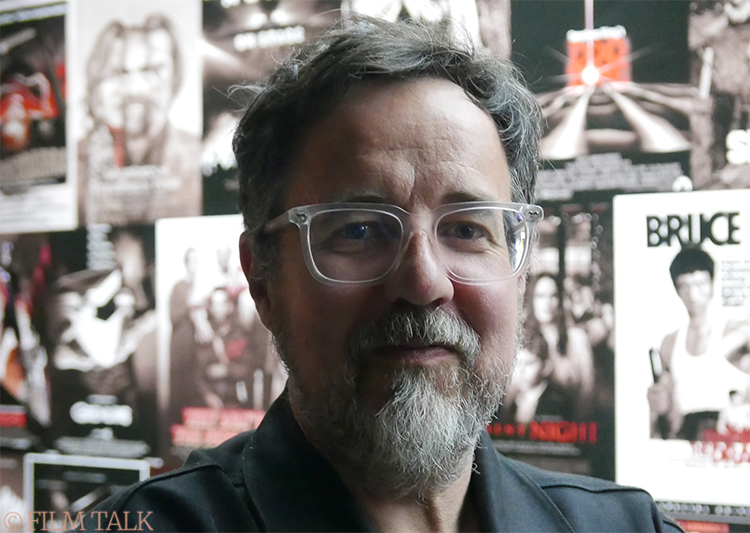
Paco Plaza (b. 1973) is a Spanish filmmaker best known for his work in the horror genre, particularly within the realm of supernatural and psychological thrillers. He gained international recognition through his collaboration with fellow director Jaume Balagueró (b. 1968) on the groundbreaking found-footage horror film “[REC]” (2007).
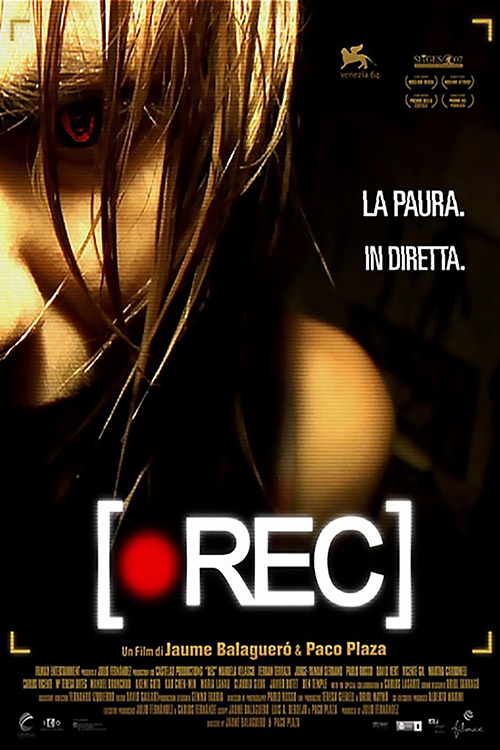
Shot in a documentary style, “[REC]” follows Angela Vidal, a young TV reporter, played by Spanish actress and TV presenter Manuela Velasco, and her cameraman Pablo, when they follow a group of firefighters on a routine night shift at the local fire station in Barcelona, and accompany them on a night call to an apartment building in the city. What begins as a simple report quickly descends into chaos when a mysterious infection spreads among the tenants, turning them into violent, zombie-like creatures.
“[REC]” (2007, trailer)
The found-footage format adds a raw intensity to the narrative, immersing viewers in the horror as events unfold in real-time through the lens of Pablo’s camera. The confined setting of the apartment building heightens the claustrophobic tension, while the lack of a musical score emphasizes the realism and terror of each moment. What sets “[REC]” apart from most zombie films is its blend of supernatural and viral horror. As the characters delve deeper into the building, they uncover hints of a Vatican investigation and demonic possession, suggesting the infection may be more than just a virus. The final act, shot entirely in night vision, is particularly chilling and has become iconic in horror cinema.
“[REC]” stands out for its claustrophobic atmosphere, real-time narrative, and effective use of the found-footage technique, which heightens the sense of realism and terror. The film was both critically acclaimed and commercially successful; it was made for reportedly $1,500,000 and grossed worldwide over $32,000,000—it became a cult classic for its raw, claustrophobic style and terrifying depiction of a zombie-like outbreak in the apartment building. “[REC]” was remade in the U.S. as “Quarantine” (2008) and spawned several sequels, with Plaza co-directing “[REC]²” (2009), and later directing “[REC]³: Génesis” (2012) on his own. The fourth and final installment, “[REC]⁴: Apocalipsis” (2014), was directed by Jaume Balagueró.
Mr. Plaza’s solo work further solidified his reputation as a master of atmospheric horror. His 2017 film “Verónica” was inspired by a real-life police report from Madrid in 1991 about 18-year-old Estefania Gutiérrez Làzaro. The film delves into demonic possession and teenage vulnerability. The story follows Verónica, a teenage girl who uses an Ouija board during a solar eclipse to contact her deceased father. After the scéance, she begins experiencing terrifying supernatural events that threaten her and her siblings. Set in a working-class neighborhood, the film explores themes of adolescence, grief and the unknown. With a chilling atmosphere and a strong performance by Sandra Escacena as Verónica, the film was praised for its eerie and psychological tension, emotional depth, and stylish direction, earning comparisons to genre classics like William Friedkin’s “The Exorcist” (1973). “Verónica” was very successful on Netflix, reaching global audiences and gaining a reputation as one of the scariest films on the platform.
“Verónica” (2017, trailer)
Beyond horror, Mr. Plaza has shown versatility, exploring other themes such as aging, memory, and personal trauma, though he continues to return to horror with a fresh and often socially conscious approach. His visual storytelling often blends gritty realism with nightmarish fantasy, making his films both relatable and terrifying.
He is regarded as one of the most important voices in contemporary Spanish cinema. His ability to merge psychological depth with chilling horror has not only revitalized Spanish horror but also influenced a new generation of filmmakers. In recent years, he continues to develop new projects, keeping audiences eager for whatever comes next in his dark and compelling body of work.
Last month, he was a guest of honor at the 43rd edition of the Brussels International Fantastic Film Festival, a.k.a. BIFFF, where this interview was conducted.
Mr. Plaza, would you agree that “[REC]” and “[REC]²” made a huge contribution to the horror genre?
That’s not easy for me to say. I think they were important films at the time, and in Spain, they helped a lot of people to start their career in genre films. That is the most important thing we can achieve, I think, which is helping younger people who are following in our footsteps. I also know that for me and [co-director] Jaume Balagueró, they changed our lives, and I don’t think we will ever make another film that reaches a global audience again. Those films were shocking and unexpected—something we are very grateful for.
 That’s the most important legacy to you, that “[REC]” and “[REC]²” opened doors for other filmmakers?
Absolutely. We have a responsibility towards younger people, and we’re all part of this tradition in cinema—we had people who influenced us, like Jesús Franco or Alejandro Amenábar—and I think it’s very important to be aware of that and be in contact with younger people who can use what you did before.
How do you explain the success of your films, most notably “[REC]” and “[REC]²”?
Success doesn’t only depend on the movie that you make, but also on the time and the context, and there are films that—for some mysterious reason—seem to work when you never expect it. “[REC]” was one of them. I don’t think it was my best film—or our best film. I think Jaume has made better films, and I also feel I made films that were much better than “[REC],” but we won’t make another film again that will be as important. It touched something; I never knew what it was, and you don’t plan it. It just happened. The film came out at the right time. Sometimes success doesn’t depend on the quality of the film; it can depend on many other factors.
I saw both “[REC]” films back-to-back again during the lockdown of the pandemic. With the intense claustrophobia the film deals with, it became very real. You felt all the more how strong those films were.
Yes, at that moment a lot of people told me they were living in “[REC]” because the film looked so real. That’s maybe part of the impact it had: it felt real, and at that moment it looked a bit prophetic.
The fact that you made it so real, also indicates that you have a lot of empathy for your characters and the story that you tell.
That was very important to us. For instance, take the building: there are so many similar buildings in Barcelona and all over Spain, but it’s important that a film feels local. That’s the best way to reach a global audience, I think. The firemen and the neighbors turned it into a very typical Barcelona building. And you know, the neighbors were a reflection of my neighbors, with the Chinese family, the hairdresser… they were people I knew. For me, they were not only characters, they were also real people. I guess the audience also felt they were real.
Is that your niche? You want to make sure the audience can identify with your characters?
I think that’s what we look for in films; we all want to relate to the people we see in movies. And it has nothing to do with horror, but with cinema. What interests human beings is other human beings; we’re very curious about other people. The more real the characters look, the more appealing they are to the audience. And a real character can be an alien, it can be E.T.; it’s not a matter of being realistic. It’s a matter of being true and honest. The characters must be real, and you must be able to relate to their emotions. You need to understand their thoughts.
From that point of view, you could also make a romantic comedy, for example?
I would love to do that. I love romantic comedies very much. But the fun you have when you’re shooting horror is incomparable. It’s like children at play, with the makeup, throwing blood everywhere, and it’s so much fun to go on set every day and do something mysterious. It connects with the child inside all of us.
“Coupez!” (2022, trailer)
When Michel Hazanavicius made “Coupez!” [2022, a.k.a. “Final Cut”], about a film crew that makes a horror film but things go terribly wrong. At the time, I thought that would also be really something for you, to make a film about making a film, because your films indicate very clearly that you love your work.
I know that film; it was a remake of a Japanese film “Kamera o Tomeru na!” (2017, a.k.a. “One Cut of the Dead”). I had seen that one, not the French film. But I have a project now—I don’t know if it will work out—about the shooting of a cheap Spanish film that was made in 1972. I would love to recreate the atmosphere of that time. I hope I can do it, but it won’t be my next film; my producer and I always talk about it. It would be a horror film, and also a tribute to the horror genre.
After all the films you made up until now, are you bankable now?
No no. That’s something for Christopher Nolan and a few other filmmakers. I can’t complain; in Spain, I’m in a good position, but that’s where it ends for me. Making a new film is always a challenge. If I’d make a cheap horror film, that would be pretty easy to do. But if I want to make a more expensive film in another genre, that will be tricky.
 You also have an agent in the U.S. Does that mean that you are also trying to work there?
If I’d go and work there, it would have to be a very special project. I’m getting older now, and I don’t really feel like working there any longer. Twenty years ago, I would have been much more flexible and it would have been much easier to convince me. Now it doesn’t make that much sense anymore. There is a time for everything, I think. There comes a moment in your life when you start to appreciate other things than the business or your work. I want to be around my family. We have our own house, there’s a gym nearby, I love to cook, I love my daily routine. To break that, there must be a very good reason. When I get offered something, I always say to my agent, ‘In Spain, I have control over my project, they pay me well, I work with my friends, and I live with my wife. What can you put on the other side to level the balance?’ So if it’s a film that I really really love, I would go to Greece or to the United States, but it has to be a very important project for me.
Has “[REC]” made you a wealthy man? Do you still have to work to pay the bills?
I still have to work [laughs]. I think it made my producers richer. But, as I said, “[REC]” opened a lot of doors, both for Jaume and me. It was very important in our lives. The film was important enough so that people would pick up the phone when I’d call them. That’s already an important thing to achieve in this business, I think. You call, and they respond. And maybe it leads to something else or something new. “[REC]” gave us that kind of exposure.
Brussels International Fantastic Film Festival
April 15, 2025
FILMS
OT: LA PELÍCULA (2002) DIR Paco Plaza, Jaume Balagueró PROD Julio Fernández CAM Pablo Rosso ED David Gallart CAST Alejandro Parreño, David Bustamante, Manu Tenorio, David Bisbal, Chenoa, Geno Machado, Nuria Fergó, Gisela, Javian, Juan Camus
 EL SEGUNDO NOMBRE, a.k.a. SECOND NAME (2002) DIR Paco Plaza SCR Paco Plaza, Fernando Marías (novel “Pact of the Fathers” [2001] by Ramsey Campbell) CAM Pablo Rosso ED José Ramón Lorenzo Picado MUS Mikel Salas CAST Erica Prior, Trae Houlihan, Denis Rafter, Craig Stevenson, John O’Toole, Frank O’Sullivan, Toby Harper
ROMASANTA, a.k.a. WEREWOLF HUNTER (2004) DIR Paco Plaza SCR Elena Serra, Alberto Marini (story by Alfredo Conde) CAM Javier Salmones ED David Gallart MUS Mikel Salas CAST Julian Sands, Elsa Pataky, John Sharian, Gary Piquer, David Gant, Maru Valvivielso, Luna McGill, Carlos Reig-Plaza
[REC] (2007) DIR Paco Plaza, Jaume Balagueró SCR Paco Plaza, Jaume Balagueró, Luiso Berdejo CAM Pablo Rosso ED David Gallart CAST Manuela Velasco, Ferran Terraza, Jorge-Yamam Serrano, Pablo Rosso, David Vert, Vicente Gil, Martha Carbonell, Carlos Vicente
[REC]² (2009) DIR Paco Plaza, Jaume Balagueró PROD Julio Fernández SCR Paco Plaza, Jaume Balagueró, Manu Díaz CAM Pablo Rosso ED Xavi Gimenez CAST Manuela Velasco, Jonathan Mellor, Oscar Sànchez Zafra, Ariel Casas, Alejandro Casaseca, Pablo Rosso, Claudia Silva
[REC]³: GÉNESIS (2012) DIR Paco Plaza PROD Julio Fernández SCR Paco Plaza, Luiso Berdejo (story by Paco Plaza, David Gallart, Luiso Berdejo) CAM Pablo Rosso ED David Gallart MUS Mikel Salas CAST Leticia Dolera, Diego martin, Ismael Martinez, Àlex Monner, Emilio Mencheta
 VERÓNICA (2017) DIR Paco Plaza PROD Enrique López Lavigne SCR Paco Plaza, Fernando Navarro CAM Pablo Rosso ED Martí Roca MUS Eugenio Mira CAST Sandra Escacena, Bruno González, Claudia Placer, Iván Chavero, Ana Torrent, Consuelo Trujillo, Ánegal Fabián, Carla Campra
LA ABUELA, a.k.a. THE GRANDMOTHER (2021) DIR Paco Plaza PROD Enrique López Lavigne SCR Carlos Vermut CAM Daniel Fernández Abelló ED David Gallart MUS Fatima Al Qadiri CAST Almudena Amor, Vera Valdez, Karina Kolokolchykova, Marina Gutiérrez, Berta Sánchez, Alba Bonnin, Gabriela Calonfirescu
MUGARITZ. SIN PAN NI POSTRE (2024) DIR Paco Plaza PROD Pablo Isla SCR Paco Plaza, Mapa Pastor CAM Adrián Hernández ED Mapa Pastor MUS Mikel Salas CAST Andoni Luis Aduriz
TV MOVIES
PELÍCULAS PARA NO DORMIR: CUENTO DE NAVIDAD, a.k.a. FILMS TO KEEP YOU STAY OUT HORRORS: A FOUR CHRISTMASES (20) DIR Paco Plaza PROD Julio Fernández SCR Luiso Berdejo CAM Javier Salmones ED David Gallart MUS Mikel Salas CAST Maru Valdivielso, Christian Casas, Roger Babià, Pau Poch, Daniel Casadellà, Ivana Baquero, Elsa Pataky
QUIEN A HIERRO MATA, a.k.a. AN EYE FOR AN EYE and EYE FOR AN EYE (2019) DIR Paco Plaza PROD Mercedes Gamero, Mikel Lejarza, Emma Lustres, Borja Pena SCR Juan Galiñanes, Jorge Guerricaechevarría CAM Pablo Rosso ED David Gallart MUS Maika Makovski CAST Luis Tosar, Xan Cejudo, Ismael Martínez, Enric Auquer, María Vázquez, Daniel Currás, Rebecca Montero
 FILM TALK
You must be logged in to post a comment.