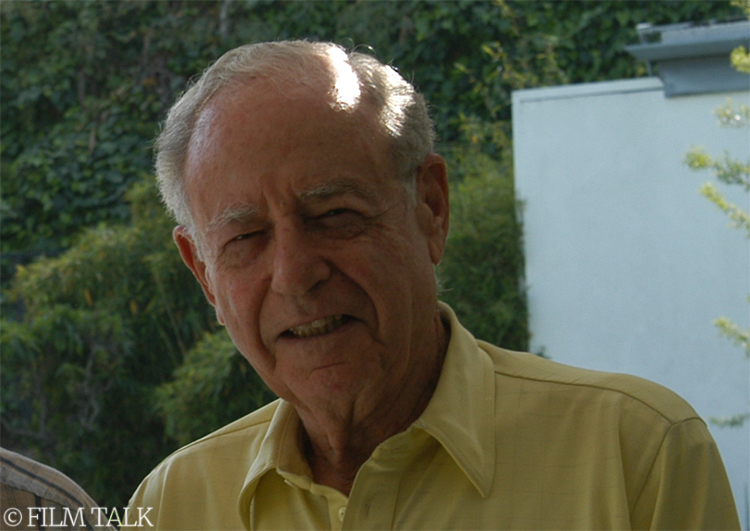
Stanley Rubin (1917-2014) was an American screenwriter and film producer who made numerous films in the 1940s and 1950s; he began writing screenplays for actors such as Burgess Meredith, Lupe Velez, Maria Montez, Robert Mitchum, Jane Russell and Gloria Grahame, and ended up producing films like Richard Fleischer’s screen classic “The Narrow Margin” (1952), a tightly constructed film noir about assassins stalking a woman on a train from Chicago to Los Angeles to testify against the mob. The film has since become a hallmark of the genre.
Two years later, he produced “River of No Return” starring Robert Mitchum and Marilyn Monroe; he was forced to turn into a diplomat when he mediated between strict director Otto Preminger and his icon star Marilyn Monroe. Preminger preferred Jean Simmons to play the leading role after they both had made “Angel Face” (1952) together, but 20th Century Fox’s Darryl F. Zanuck cast Marilyn Monroe, the studio’s major box offce draw, instead.
Mr. Rubin was responsible for managing the logistics of the film’s challenging location shoots, including near the Canadian Rocky Mountains and, as mentioned, navigating the sometimes tense relationships among the cast and crew. The production was famously difficult—director Otto Preminger and lead actor Robert Mitchum clashed during filming, and Marilyn Monroe suffered a minor injury during a rafting sequence. When overlooking the entire shoot, Mr. Rubin demonstrated his skill in handling large-scale productions and his eye for pairing talent with marketable stories.
Another highlight in his long and rewarding career was the lighthearted, mid-’60s romantic comedy “Promise Her Anything” (1966), directed by Arthur Hiller, and starring Warren Beatty and Leslie Caron.
In the late 1930s, he began writing screenplays for B-movies and serials, but he quickly rose through the ranks, joining Universal and later 20th Century Fox, where he worked on scripts and gradually moved into production roles. He also worked for TV, and made television history when he won the first Emmy in 1949 for writing and producing the NBC TV series “Your Show Time.” His other television producing credits over the years include “The Ghost & Mrs. Muir” (1968-1970) starring Hope Lange, and “The Man and the City” (1971-1972) with Antony Quinn. He also made a number of TV movies, including “Babe” (1975) starring Susan Clark as Babe Didriksen Zaharias, and “Don’t Look Back: The Story of Leroy ‘Satchel’ Paige” (1981) with Louis Gossett Jr. playing the former baseball legend. He retired in 1990 after producing “White Hunter Black Heart” starring Clint Eastwood.

In 2006, he returned to UCLA to get his bachelor of arts degree—which he did—one he narrowly missed earning in 1937 when he was at UCLA, but got too busy editing the campus Daily Bruin newspaper. So in 2006, at 88, he drove from his Hollywood home to Westwood twice a week to attend class and four hours of lectures and discussions. At first, his 18 and 19-year-old classmates didn’t know who this elderly man was, until they noticed that he always had something interesting to say. They Googled his name and found out he was a Hollywood pioneer from the Golden Era.
Mr. Rubin was married to former actress Kathleen Hughes from 1954 until his death in 2014 at 96; Ms. Hughes passed away earlier this year on May 19 in Los Angeles, also at age 96. I met both of them in 2004 at their home in the Hollywood Hills, above the Sunset Strip, for interviews about their body of work. This is what Mr. Rubin had to say about his heyday as a Hollywood screenwriter and producer.
Mr. Rubin, do you have a special bond with silent movies? Because you had cast Bessie Love [star of the silent era] in a small part in “Promise Her Anything” [1966] with Warren Beatty and Leslie Caron.
Was she in that picture? I’ve forgotten all about that, but I remember how much I admired her when I was a youngster in the Bronx, where we went to the movies every Saturday to see her. Two actresses stayed in my mind from the days when I was a youngster going to the movies in New York on Saturdays. One was Bessie Love, the other one was Billie Dove. That’s probably where that came from.
Your most famous film is “River of No Return” [1954] starring Marilyn Monroe. Do you remember how and when you decided to hire Otto Preminger to direct that picture?
I do. I ran some Preminger pictures that I hadn’t seen, and I couldn’t argue that he wasn’t a good director—he was a very good director. But he wasn’t the director I wanted for “River of No Return.” So I went to meet with Darryl F. Zanuck and his righthand man, I think it was Lew Schreiber. Anyway, the point is that I battled against Preminger. I wanted Raoul Walsh or William A. Wellman. I wanted a guy who really understood the American West and could give it that classic look and feel. But Fox had a pay-or-play commitment with Preminger; he was the last one at the moment, and they wanted to use that pay-or-play commitment. They had to pay him anyway if they didn’t use it by a certain date. So I lost the fight. Now, when they brought Otto Preminger out of New York to direct “River of No Return,” I was introduced to him when we had lunch in the studio commissary. At lunch, I told him, ‘You know, Otto, you are not the director I wanted on this film, but I’m sure you’ll do a great job, and we’ll get along—etcetera.’ I should never have said that to him; it was unnecessary. I mean, honestly, it’s a great policy, but I just didn’t have to say that. We were struggling to make a good relationship. I was young, and I thought I had to tell him that I didn’t want him, or that he was not my first choice.
“River of No Return” (1954, trailer)
Otto Preminger was known to be a bully. Did you or Marilyn Monroe ever have any problems with him?
Marilyn and Otto didn’t get along too well, but she and I did. We became friends, and that helped her when we made that picture. Marilyn and Bob Mitchum were also good friends; they already knew each other before we made the picture.
How did you get Marilyn Monroe on board?
You want the long version or the short version? [Laughs.] In late 1947, I was writing and producing the very first television series on film for a national network and a national sponsor [“Your Show Time”]. In 1949, it won the first Emmy ever awarded; that makes me a part of the history of television. I’m very proud of that. I met Marilyn because Danny [Dann Cahn], one of the editors on the series, was going out with her. So he came to see me one day in the office, and he said, ‘Hey Stanley, we are making twenty-six half-hour shows, and I’m going out with this actress. She’s young, beautiful, talented, and sweet and needs a job. Couldn’t we find something for her in the twenty-six shows that we’re gonna do?’ I said, ‘Well, what’s her name?’ ‘Marilyn Monroe.’ She was unknown at the time. I said, ‘Tell her to ask her agent to call my office and set an appointment. I’ll give her one of the scripts that we haven’t shot yet, and she can read for me.’ So the agent called, and we set an appointment. When she walked in with her agent, I gave her one of the unshot scripts; she sat in another office for perhaps twenty minutes and looked over the script. Then my secretary called her in when she was ready. She came into my office, we met officially, and she read for me. When we finished, I thanked her, and she went her way. Danny immediately called me and asked, ‘Well, Stanley, what did you think? You think we can find a part for her?’ I said, ‘Danny, I’m a little nervous about her. I think you’re right; she’s talented and certainly beautiful, but I think she’s a little too inexperienced for me. You know what we’re doing here right now; we’re shooting two half-hour shows a week. It could be dangerous for the overall schedule if somebody blew on us. I think we should wait a while. Maybe next year or so, then I’d be happy to try her again.’ That was the end of it then. About three years later, I was developing a story called “River of No Return,” and by the time I had the first screenplay draft, Robert Mitchum had agreed to do it. In the meantime, we all had been watching this rising young star by the name of Marilyn Monroe whom I had turned down for a television bit. We became more and more enthusiastic because of her looks and her growing talent, and so we designed the role of the saloon girl in “River of No Return” around the whole concept of Marilyn. And I really wanted the girl that I had turned down earlier to play Kay Weston in “River of No Return.” I did get her, but later, she told me I that one of the reasons she accepted the part was because she loved the songs that she got to sing in “River of No Return.” [The songs were “River of No Return,” “I’m Gonna File My Claim,” “One Silver Dollar,” “Down in the Meadow”]
Marilyn Monroe as Kay Weston sings the title song in “River of No Return” (1954)
By that time, you had witnessed the impact of the Hollywood blacklist and saw how it destroyed lives and careers. Did it ever affect you or your career?
Yes, it did. My political views were left and center. I had been questioned by [actor] Ward Bond [who represented the Motion Picture Alliance for the Preservation of American Ideals] and was approved. I remember exactly how it happened; this is all very painful to talk about. I knew Lou [Louis] Lantz, a screenwriter who was blacklisted. He was not very well-known, but I knew him; we had worked together and I thought he was very talented. One day, I told him I had been called to meet with Ward Bond. Lou said, ‘Stan, here’s what you should do. They will ask you for names. Give them my name. They already know that I was a member of the Communist Party, and they can’t hurt me any more than they already did. So tell them that you knew a Communist, and say that it’s me. If you do so, you give them what they want, and they’ll leave you alone.’ So I went, I spoke to Ward Bond, and I gave him the name of Lou Lantz—which they already had. A year or two later, Lou came to me with an idea for another picture that we developed, and that was “River of No Return” [Lantz received screen credit under his own name as the story writer]. But this is very painful to talk about—even today.
Over the years, you worked with numerous directors. Did any of them ever cause you sleepless nights?
I had good relationships with most of them, but when I think about “The Take” [1974]… I wound up being the executive producer on that film. I met the director, Robert Hartford-Davis; he was a sweet, charming man, but he just didn’t know what he was doing. Since he was also one of my financiers of the picture, there was no way I could fire him. But I did fire one director when I did an American baseball picture about Satchell Paige; he was in the Negro League of Baseball when Black Americans were not allowed into the major leagues, even though Satchell Paige was probably one of the greatest pitchers in baseball at the time. But he couldn’t make it into the major leagues because he was black. And so I did a picture about him. I heard that George C. Scott was very much interested in directing a feature. He had directed one for television already [“The Andersonville Trial,” 1970], that was a very good one, and so I hired him to direct the Satchell Paige picture which was called “Don’t Look Back: The Story of Leroy ‘Satchell’ Paige” [1981]. We were on location in Harrisburg, Mississippi, and I didn’t get the dailies until at least two or three days later. So I was looking at those dailies, and I realized that what George C. Scott was doing is what you would call camera cutting, meaning that he is only shooting exactly what he thinks is gonna make the final picture. There was nothing of what we call coverage. So we were stuck with what we had, we couldn’t change anything. The next day, I got him aside, and I asked, ‘George, you’re camera cutting.’ He said, ‘Yes yes, I am.’ I said, ‘Why are you doing that?’ He said, ‘Well, now those sonsabitches—which probably included me—can’t change what I want in this picture.’ I said, ‘George, camera cutting is a terrible idea. It’s not a good excuse in feature pictures because we have to deliver a picture that is one hour and so many minutes long, and when you’re camera cutting, we can’t fool around and try to get the best out of your work. You decided that in advance and that decision is not always right.’ He said, ‘Well, okay. I won’t camera cut anymore.’ The next day, or two days later, I got more dailies, and he was still camera cutting. So I called Hollywood and told the network that I had to fire him and that we needed another director. I told them who I wanted and the point is that I waited until we finished shooting that night at midnight when he said, ‘It’s a wrap.’ I walked up to him and said, ‘George, I have to fire you. You violated your promise to me, and I can’t have that because, in the end, it will only hurt the picture. I’m sorry, I don’t like doing this, but it just has to be done.’ He said, ‘It’s okay, Stanley. I never told you, but I’m an alcoholic and I think part of that is to blame for what I’ve done to you. I know I said I wouldn’t camera cut anymore, but then I had a few drinks and forgot about it. It’s okay, no hard feelings.’ And he left the next day; the new director arrived that night and we started the following day.
“The Narrow Margin” (1952, trailer)
When you were at 20th Century Fox, what kind of a man was Darryl F. Zanuck? Was he easy to work with?
I got along with him very well. We just hit it off. It was different with each studio head. But with Zanuck, I got along particularly well. With Harry Cohn, it was much more difficult. He could be brutal, but I never experienced any of that. Maybe I was just lucky, I don’t know. When I was at RKO and made “The Narrow Margin” [1952], Howard Hughes bought the studio, and I got notes from him—by then, we had finished shooting, and we were editing—so I was there, but I never met Howard Hughes. He would send all his comments and memos to [producer] Robert Sparks, who would then give them to me. The story was that Hughes was running “The Narrow Margin” in a room somewhere on the lot at midnight. What happened to “The Narrow Margin” is kind of interesting; we had previewed it, and it got a lot of buzz in town. It was a very good film noir, and I got a note saying, ‘Mr. Hughes likes “The Narrow Margin.”’ Any picture you make is a lot of hard work, with long days and long nights during the shooting. There are arguments and disagreements, and sometimes you make a decision and you spend the rest of the time on the picture wondering whether you made the right decision. You’re not sure. And during the postproduction process, a lot of questions come up and a lot of decisions have to be made, a lot of choices have to be made. On the pictures I worked on, Will Jason [“Slightly Scandalous,” 1946] was a cute, sweet guy, and we were friends. Never had any problem with him. George Beck was impossible; he directed “Behave Yourself!” [1951] which he also wrote. He wasn’t in any way a bully or anything which Otto Preminger was, but he just didn’t know what he was doing. It was his first direction on “Behave Yourself!” and I had to watch him like a hawk. Dick [Richard] Fleischer was, I think, one of the most talented directors I ever worked with [“The Narrow Margin,” 1952], of all the directors. He was an excellent director and a very bright guy, and very helpful on the script too. Robert Parish [“My Pal Gus,” 1952] was a delight; he was a very talented and successful film editor before he became a director. With Robert Wise, I had a delightful relationship when we did “Destination Gobi” [1953]; he was one of the nicest directors I ever worked with. George Marshall [“Destry,” 1954] was a delight—a very amusing guy with a terrific sense of humor and every minute of every day, he knew exactly what he was doing. Rudy [Rudolph] Maté [laughs] did “The Rawhide Years” [1956]; he was a very good cameraman and then became a director. He had a tick. Abner Biberman [“Behind the High Wall,” 1956] was a very talented actor who became a director; very intense. Mitch [Mitchell] Leisen was a very successful director at Paramount, and we got along okay when we did “The Girl Most Likely” [1957], but he was nowhere near as talented as his reputation would have led me to believe. But in the end, the picture worked out okay. It was a cute picture. Tony Scott [“Revenge,” 1990] is an interesting guy, an interesting character. He plays mood music before every take and it’s always the perfect music. He’s a great man, but at the same time, he’s one of the stubbornest men I’ve ever met in my life. Normal postproduction on a picture is about three or four months. The postproduction on “Revenge” was almost thirteen months because there was Tony Scott: he had his version of the picture, it was his view. There was Kevin Costner, who was also one of the stubbornest men I’ve ever met, and he had his version and his view on the picture. And the studio had their vision. Kevin Costner wanted the picture to run three hours. The studio said, ‘No way.’ I had to manouver between the studio and Kevin and Tony Scott. It was difficult but it was never bitter because Kevin, with all his stubburness, was reasonably pleasent and Tony was always pleasent, even though you were fighting with him the whole time not to cut certain scenes because they destroyed the pace of the picture or because they destroyed the drive or the progression of the story. So, in the end, you would have to compromise all the way down.
You mentioned Richard Fleischer. Do you still see him?
Yes, but Dick is not in good health. We run into each other once in a while, or we talk on the phone occasionally. But I don’t see him very often [Richard Fleischer died in 2006 at age 89]. We see Arthur Hiller frequently at the Motion Picture Academy where they screen films.
 What about Clint Eastwood? You gave him his first credited role in the talking-mule comedy “Francis in the Navy” [1955], so you have known him for many years, haven’t you?
Yes, and I just skipped Arthur Lubin because Arthur Lubin—we did “Francis in the Navy”—introduced me to Clint Eastwood. Clint and I have had a kind of interesting relationship throughout the years. We stayed in touch, and we were friendly. He was very pleasant to me, and I was not about to turn my back on Clint Eastwood. He became the eight-hundred-pound gorilla; I was a good deal responsible for getting Clint into the Producers Guild when I was President. Clint can be as self-absorbed and tough as the characters he plays on the screen, so when it came to “White Hunter Black Heart” [1990], I was the one who got him to do that picture. The script was prepared by Ray Stark and his company Rastar, and Ray could not get that picture launched. I took it to Clint, and he took it with him to the Cannes Film Festival—he was leaving the next day after I had given him that script. That was one of the few times I worked with a script I had not prepared. Towards the end of the Cannes Film Festival, I got a call from Clint in Europe, and he said, ‘Hey, I like the script. I’ll call you when I get back.’ So we agreed that he would direct and play the John Huston role, and then I worked out the deal between Rastar Productions and Warner Bros. for Clint to do the picture. Even though I had brought the screenplay to Clint, I felt it needed some work. I talked to Clint when he got back about some of the things I thought should be done. But I was finishing up “Revenge,” and Clint was still working on another picture—we didn’t get together again for many weeks—and when we did get together, the deal had been made. Clint was going to star in it, but he kind of cut me out of it in his fashion. I was very upset about that and he knows that. Anyway, that’s my story of Clint Eastwood. Another director that I liked was Buzz Kulik, who did “Babe” [1975]; he was one of the best television directors, and so was Lamont Johnson.
You also worked with Paul Henried. Everybody remembers him for his memorable screen role opposite Bette Davis in “Now, Voyager” [1942], or as Ingrid Bergman’s husband Victor Laszlo in “Casablanca” [1942]. But what was he like as a director?
He was a delight. When you were doing television series, you were always looking for directors because you were shooting one episode every week, and one day, Kathy said to me, ‘Why don’t you try Paul Henried? I think you’ll like him very much. He’s very good.’ So I brought him in to direct “Bracken’s World” [1969-1970; eight episodes]. And he was a delight; he was a very good director, great to work with. We immediately liked each other, just like I knew Ida Lupino—by the way, I talked about Bessie Love and Billie Dove. Add Ida Lupino to that list. I adored her. She was one of the best actresses on screen and she was a great director. She only had one problem—the same problem George C. Scott had—alcohol. Which is a shame because she was just as talented in her way as George C. Scott was. I’m sure alcohol contributed to her death [in 1995, at age 77].

What gave you the passion for film, besides the fact that you admired Bessie Love, Billie Dove, and Ida Lupino?
[Laughs.] Well, I came out from New York and went to UCLA [1933-1937], and my ambition at the time was to be a journalist. At UCLA, I went to work on the Daily Bruin, which was the school newspaper. In my fourth year, I ended up editing the Daily Bruin. Will Rogers had a son, named—oddly enough—Will Rogers Jr., and he was publishing a paper called The Beverly Hills Citizen. At his plant, they were also printing the Daily Bruin, so I became friends with Will Rogers Jr. because I would see him many times a week. Then I started working for him; I had also written some magazine pieces—non-fiction pieces—that came to the attention of someone at Paramount, and they wanted to know if I was interested in working at the studio. And I was. So made the switch and ended up in the mailroom at Paramount where I met A.C. Lyles who was also in the mailroom at Paramount. That was the beginning for me. But I became very much a film baby; I became very fascinated by film, I became very fascinated by what you can do with film editing—the magic of your work when you’re film editing. From the Paramount mailroom, I became a story reader. There were outside readers—people who did piece work for studios. They would read a play, a novel, a manuscript, a magazine article and would go to the studios to recommend it or not recommend it. I got an inside readers job—today that’s called a story analyst—and I went to work for Marshall Grant, a story editor at Universal who became a producer. When he became a producer, he hired me as a writer, and I wrote eight or nine screenplays in a row for him; they were all made at Universal. They were great fun for me, and my career took off from there.
Is that the secret of being successful? Start in the mailroom, at the bottom, and then work your way up?
No. It’s much better to start at the top [laughs], but that’s more difficult to do. Many people start in the mailroom; that’s one of the ‘entry level jobs,’ as they are called.
Hollywood, California
April 9, 2004
FILMS
SOUTH TO KARANGA (1940) DIR Harold D. Schuster ASSOC PROD Marshall Grant SCR Stanley Rubin, Edmund L. Hartmann CAM Jerome Ash ED W. Donn Hayes CAST Charles Bickford, James Craig, Luli Deste, John Sutton, Maurice Moscovitch, Paul Hurst, Abner Biberman, Ben Carter, Frank Reicher
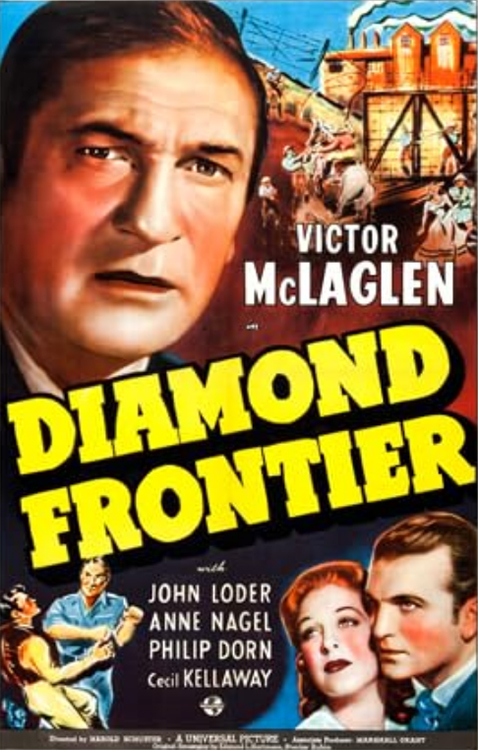 DIAMOND FRONTIER (1940) DIR Harold D. Schuster ASSOC PROD Marshall Grant SCR Stanley Rubin, Edmund L. Hartmann (story “A Modern Monte Cristo” by Stanley Rubin, Edmund L. Hartmann) CAM Milton R. Krasner ED W. Donn Hayes CAST Victor McLaglen, John Loder, Anne Nagel, Philip Dorn, Cecil Kellaway, Francis Ford, Hugh Sothern, Ferris Taylor
SAN FRANCISCO DOCKS (1940) DIR Arthur Lubin ASSOC PROD Marshall Grant SCR Stanley Rubin, Edmund L. Hartmann CAM Charles Van Enger ED Bernard W. Burton MUS CAST Burgess Meredith, Irene Hervey, Barry Fitzgerald, Raymond Walburn, Robert Armstrong, Lewis Howard, Esther Ralston, Edward Gargan, Edward Pawley
WHERE DID YOU GET THAT GIRL? (1941) DIR Arthur Lubin PROD Joseph Gersherson SCR Stanley Rubin, Jay Dratler, Paul Franklin (original story by Jay Dratler) CAM John W. Boyle ED Adrienne Fazan, Philip Cahn CAST Leon Errol, Helen Parrish, Charles Lang, Eddie Quillan, Franklin Pangborn, Stanley Fields, Tom Dugan, Joe Brown Jr.
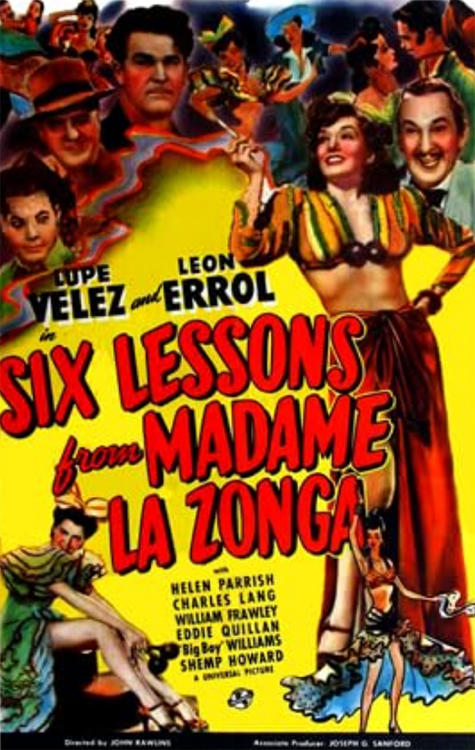 SIX LESSONS FROM MADAME LA ZONGA (1941) DIR John Rawlins ASSOC PROD Joseph Gersherson SCR Stanley Rubin, Ben Chapman, Larry Rhine, Marion Orth (original story by Ben Chapman, Larry Rhine) CAM John W. Boyle ED Edward Curtiss CAST Lupe Velez, Leon Errol, Helen Parrish, Charles Lang, William Frawley, Eddie Quillan, Guinn ‘Big Boy’ Williams, Shemp Howard, Frank Mitchell
MR. DYNAMITE (1941) DIR John Rawlins ASSOC PROD Marshall Grant SCR Stanley Rubin (also story) CAM John W. Boyle ED Ted J. Kent CAST Lloyd Nolan, Irene Hervey, J. Carrol Naish, Robert Armstrong, Frank Gaby, Elisabeth Risdon, Ann Gillis, Shemp Howard, Cliff Nazarro, Monte Brewer
BURMA CONVOY (1941) DIR Noel M. Smith ASSOC PROD Marshall Grant SCR Stanley Rubin, Roy Chanslor (story by Stanley Rubin) CAM John W. Boyle ED Ted J. Kent MUS Hans J. Salter CAST Charles Bickford, Evelyn Ankers, Frank Albertson, Keye Luke, Cecil Kellaway, Willie Fung, Turhan Bey, Truman Bradley
FLYING CADETS (1941) DIR Erle C. Kenton ASSOC PROD Paul Malvern SCR Stanley Rubin, Roy Chanslor, George Waggner CAM John W. Boyle ED Otto Ludwig CAST William Gargan, Edmund Lowe, Peggy Moran, Frank Albertson, Frankie Thomas, Roy Harris, Charles Williams, John Maxwell
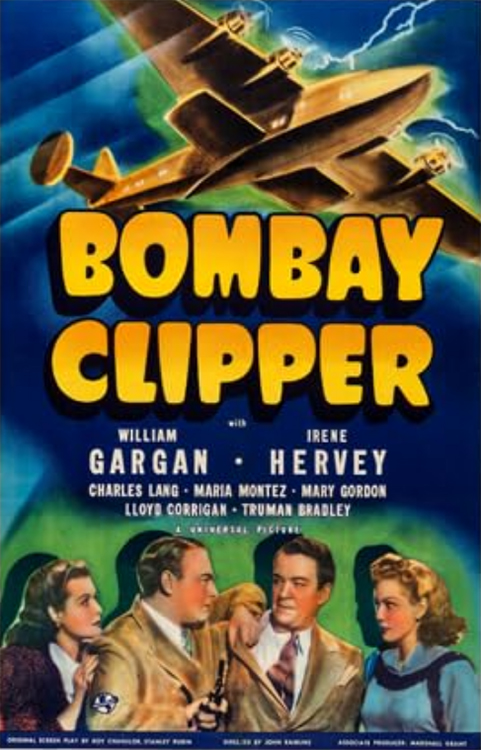 BOMBAY CLIPPER (1941) DIR John Rawlins ASSOC PROD Marshall Grant SCR Stanley Rubin, Roy Chanslor CAM Stanley Cortez ED Otto Ludwig CAST William Gargan, Irene Hervey, Charles Lang, Maria Montez, Mary Gordon, Lloyd Corrigan, Truman Bradley, Phillip Trent, Turhan Bey, John Bagni
UNSEEN ENEMY (1942) DIR John Rawlins ASSOC PROD Marshall Grant SCR Stanley Rubin, Roy Chanslor (story by George Wallace Sayre) CAM John W. Boyle ED Edward Curtiss CAST Leo Carillo, Andy Devine, Irene Hervey, Don Terry, Turhan Bey, Lionel Royce, Turhan Bey, Frederick Giermann, William Ruhl
LUCKY LEGS (1942) DIR Charles Barton PROD Wallace MacDonald SCR Stanley Rubin, Jack Hartfield CAM Philip Tannura ED Art Seid CAST Jinx Falkenburg, Leslie Brooks, Kay Harris, Russell Hayden, Elizabeth Patterson, William Wright, Don Beddoe, Adele Rowland, Eddie Marr, Blake Edwards
TWO SENORITAS FROM MEXICO (1942) DIR Frank Woodruff PROD Wallace MacDonald SCR Stanley Rubin, Maurice Tombragel (story by Steven Vas) CAM L. William O’Connell ED Jerome Thoms CAST Joan Davis, Jinx Falkenburg, Ann Savage, Leslie Brooks, Bob Haymes, Ramsey Ames, Sam Ash, Vi Athens, Stanley Brown
DECOY (1946) DIR Jack Bernhard PROD Jack Bernhard, Bernard Brandt SCR Nedrick Young (original story by Stanley Rubin) CAM L. William O’Connell ED Jason H. Bernie CAST Jean Gillie, Edward Norris, Robert Armstrong, Herbert Rudley, Sheldon Leonard, Marjorie Woodworth, Philip Van Zandt, Bert Roach
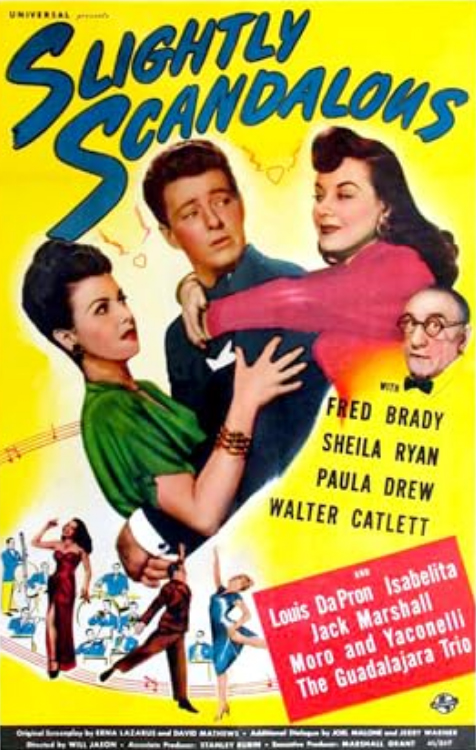 SLIGHTLY SCANDALOUS (1946) DIR Will Jason ASSOC PROD Stanley Rubin EXEC PROD Marshall Grant SCR Erna Lazarus, David Mathews CAM George Robinson ED Fred R. Feitshans Jr. CAST Fred Brady, Sheila Ryan, Paula Drew, Walter Catlett, Louis Da Pron, Isabelita [Lita Baron], Jack Marshall, Moro and Yaconelli [Nick Moro, Frank Yaconelli], The Guadalajara Trio
LITTLE MISS BIG (1946) DIR Erle C. Kenton ASSOC PROD Stanley Rubin EXEC PROD Marshall Grant SCR Erna Lazarus (story by Harry H. Poppe) CAM Paul Ivano ED Russell F. Schoengarth MUS Hans J. Salter CAST Beverly Simmons, Fred Brady, Frank McHugh, Fay Holden, Dorothy Morris, Milburn Stone
VIOLENCE (1947) DIR Jack Bernhard PROD Jack Bernhard, Bernard Brandt SCR Stanley Rubin, Louis Lantz (original story by Stanley Rubin, Louis Lantz) CAM Henry Sharp ED Jason H. Bernie MUS Edward J. Kay CAST Michael O’Shea, Nancy Coleman, Sheldon Leonard, Emory Parnell, Peter Whitney, Pierre Watkin
JOE PALOOKA IN WINNER TAKE ALL (1948) DIR Reginald Le Borg PROD Hal E. Chester SCR Stanley Rubin (characters created by Ham Fisher) CAM William A. Sickner ED Otho Lovering CAST Joe Kirkwood Jr., Elyse Knox, William Frawley, Mary Beth Hughes, Stanley Clements, Sheldon Leonard, John Shelton
THE WHIP HAND (1951) DIR William Cameron Menzies PROD Lewis J. Rachmil SCR Stanley Rubin [uncredited], George Bricker, Frank L. Moss (story by Roy Hamilton) CAM Nicholas Musuraca ED Robert Golden MUS Paul Sawtell CAST Carla Balenda, Elliott Reid, Edgar Barrier, Raymond Burr, Otto Waldis, Michael Steele, Lurene Tuttle, Peter Brocco, Lewis Martin, Frank Darien, Olive Carey
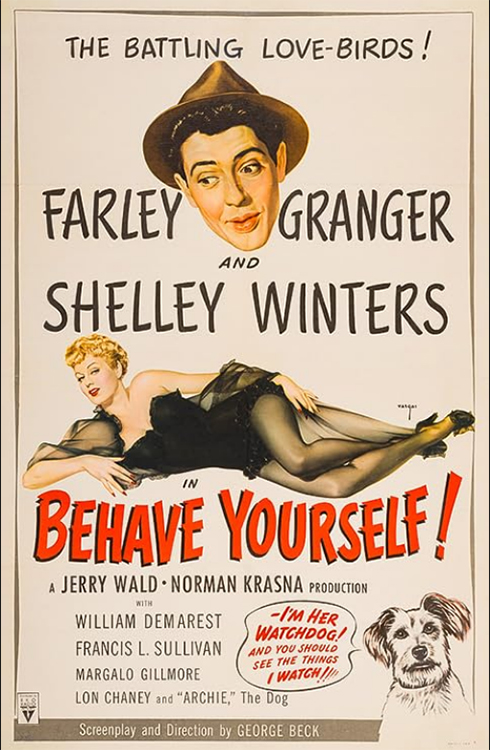 BEHAVE YOURSELF! (1951) DIR George Beck PROD Stanley Rubin SCR George Beck (story by George Beck, Frank Tarloff) CAM James Wong Howe ED Paul Weatherwax MUS Leigh Harline CAST Farley Granger, Shelley Winters, William Demarest, Francis L. Sullivan, Margalo Gillmore, Lon Chaney Jr., Hans Conried, Elisha Cook Jr., Glenn Anders, Sheldon Leonard, Kathleen Freeman, Vera Marshe
MACAO (1952) DIR Josef von Sternberg, [uncredited] Mel Ferrer, Nicholas Ray, Robert Stevenson PROD Alex Gottlieb SCR Stanley Rubin, Bernard C. Schoenfeld (story by Robert Creighton Williams) CAM Harry J. Wild ED Robert Golden, Samuel E. Beetley MUS Anthony Collins CAST Robert Mitchum, Jane Russell, William Bendix, Thomas Gomez, Gloria Grahame, Brad Dexter, Edward Ashley, Philip Ahn, Vladimir Sokoloff
THE NARROW MARGIN (1952) DIR Richard Fleischer PROD Stanley Rubin SCR Earl Felton (story by Jack Leonard, Martin Goldsmith) CAM George E. Diskant ED Robert Swink CAST Charles McGraw, Marie Windsor, Jacqueline White, Gordon Gebert, Queenie Leonard, David Clarke, Peter Virgo, Don Beddoe, Bess Flowers
MY PAL GUS (1952) DIR Robert Parrish PROD Stanley Rubin SCR Fay Kanin, Michael Kanin CAM Leo Tover ED Robert Fritch MUS Leigh Harline CAST Richard Widmark, Joanne Dru, Audrey Totter, George Winslow, Joan Banks, Regis Toomey, Ludwig Donath, Ann Morrison, Lisa Golm
DESTINATION GOBI (1953) DIR Robert Wise PROD Stanley Rubin SCR Everett Freeman (story by Edmund G. Love) CAM Charles G. Drake ED Robert Fritch MUS Sol Kaplan CAST Richard Widmark, Don Taylor, Max Showalter, Murvyn Vye, Darryl Hickman, Martin Milner, Ross Bagdasarian, Judy Dan, Rodolfo Acosta
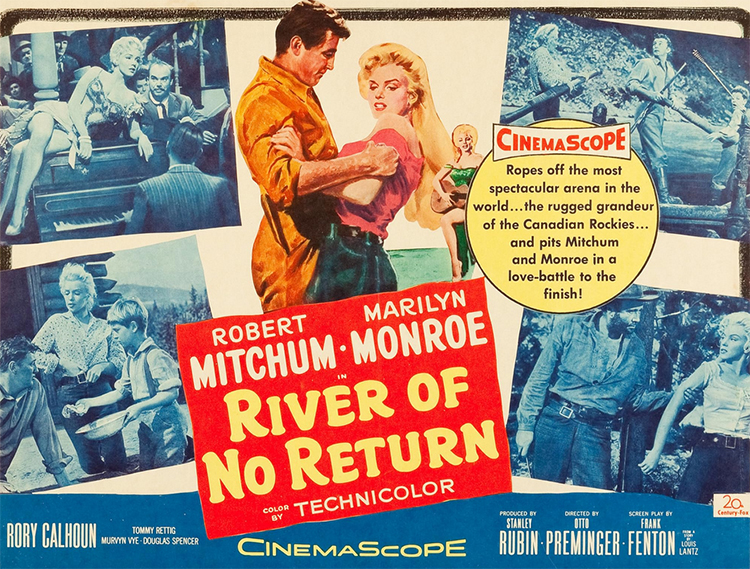
RIVER OF NO RETURN (1954) DIR Otto Preminger PROD Stanley Rubin SCR Frank Fenton (story by Louis Lantz) CAM Joseph LaShelle ED Louis R. Loeffler MUS Cyril J. Mockridge CAST Robert Mitchum, Marilyn Monroe, Rory Calhoun, Tommy Rettig, Murvyn Vye, Douglas Spencer, Fred Aldrich, Claire Andre, Hal Baylor, Don Beddoe
DESTRY (1954) DIR George Marshall PROD Stanley Rubin SCR Edmund H. North, D.D. Beauchamp (story by Felix Jackson; suggested by the novel “Destry Rides Again” [1930] by Max Brand) CAM George Robinson ED Ted J. Kent MUS Henry Mancini, Frank Skinner, Herman Stein CAST Audie Murphy, Mari Blanchard, Lyle Bettger, Lori Nelson, Thomas Mitchell, Edgar Buchanan, Wallace Ford, Mary Wickes, Alan Hale Jr.
FRANCIS IN THE NAVY (1955) DIR Arthur Lubin PROD Stanley Rubin SCR Devery Freeman (also story; characters created by David Stern) CAM Carl E. Guthrie ED Milton Carruth, Ray Snyder MUS Irving Gertz, William Lava CAST Donald O’Connor, Martha Hyer, Richard Erdman, Jim Backus, Myrna Hansen, Clint Eastwood, David Janssen, Leigh Snowden, Virginia O’Brien, Hy Averback, Timothy Carey
THE RAWHIDE YEARS (1956) DIR Rudolph Maté PROD Stanley Rubin SCR Earl Felton (novel “The Rawhide Years” by Norman A. Fox; adaptation by D.D. Beauchamp, Robert Presnell Jr.) CAM Irving Glassberg ED Russell F. Schoengarth MUS Hans J. Salter, Frank Skinner CAST Tony Curtis, Colleen Miller, Arthur Kennedy, William Demarest, William Gargan, Peter van Eyck, Minor Watson, Donald Randolph, Leigh Snowden, Don Beddoe
BEHIND THE HIGH WALL (1956) DIR Abner Biberman PROD Stanley Rubin SCR Harold Jack Bloom (story by Richard K. Polimer, Wallace Sullivan) CAM Maury Gertsman ED Ted J. Kent CAST Tom Tully, Sylvia Sidney, Betty Lynn, John Larch, Barney Phillips, John Gavin, Don Beddoe, Ed Kemmer, Nicky Blair
THE GIRL MOST LIKELY (1957) DIR Mitchell Leisen PROD Stanley Rubin SCR Devery Freeman, Paul Jarrico (story by Paul Jarrico) CAM Robert H. Planck ED Harry Marker, Doane Harrison MUS Nelson Riddle CAST Jane Powell, Cliff Robertson, Keith Andes, Kayle Ballard, Tommy Noonan, Una Merkel, Kelly Brown, Judy Nugent, Frank Cady
PROMISE HER ANYTHING (1966) DIR Arthur Hiller PROD Stanley Rubin SCR William Peter Blatty (story by Arne Sultan, Marvin Worth) CAM Douglas Slocombe ED John Shirley MUS Lyn Murray CAST Warren Beatty, Leslie Caron, Bob Cummings, Keenan Wynn, Hermione Gingold, Lionel Stander, Asa Maynor, Cathleen Nesbitt, Bessie Love

OH DAD, POOR DAD, MAMMA’S HUNG YOU IN THE CLOSET AND I’M FEELIN’ SO SAD (1967) DIR Richard Quine PROD Stanley Rubin, Ray Stark SCR Ian Bernard (stage play “Oh Dad, Poor Dad, Mamma’s Hung You in the Closet and I’m Feelin’ So Sad: A Pseudoclassical Tragifarce in a Bastard French Tradition” [1961] by Arthur Kopit) CAM Geoffrey Unsworth ED Warren Low, David Wages MUS Neal Hefti CAST Rosalind Russell, Robert Morse, Barbara Harris, Hugh Griffith, Jonathan Winters, Lionel Jeffries
THE PRESIDENT’S ANALYST (1967) DIR – SCR Theodore J. Flicker PROD Stanley Rubin CAM William A. Fraker ED Stuart H. Pappé MUS Lalo Schifrin CAST James Coburn, Godfrey Cambridge, Severn Darden, Joan Delaney, Pat Harrington Jr., Barry McGuire, Jill Banner, Eduard Franz, Will Geer, Joan Darling, Kathleen Hughes, Dyanne Thorne
THE TAKE (1974) DIR Robert Hartford-Davis PROD Howard Brandy EXEC PROD Stanley Rubin SCR Franklin Coen, Del Reisman (novel “Sir, You Bastard” [1970] by G.F. Newman) CAM Duke Callaghan ED Aaron Stell MUS Fred Karlin CAST Eddie Albert, Frankie Avalon, Sorrell Brooke, Albert Salmi, Vic Morrow, Tracy Reed, James Luisi, John Davis Chandler, Robert Miller Driscoll, Kathleen Hughes
REVENGE (1990) DIR Tony Scott PROD Stanley Rubin, Hunt Lowry SCR Jim Harrison, Jeffrey Alan Fiskin (novella “Revenge” [1990] by Jim Harrison) CAM Jeffrey L. Kimball ED Chris Lebenzon, Michael Tronick MUS Jack Nitzsche CAST Kevin Costner, Anthony Quinn, Madeleine Stowe, Tomas Milian, Joaquin Martínez, James Gammon, Jesse Corti, Sally Kirkland, Kathleen Hughes
 WHITE HUNTER BLACK HEART (1990) DIR Clint Eastwood PROD Clint Eastwood, Stanley Rubin SCR Peter Viertel, James Bridges, Burt Kennedy (novel “White Hunter, Black Heart: The Impact of Savage Africa on a Civilized Man” [1953] by Peter Viertel) CAM Jack N. Green ED Joel Cox MUS Lennie Niehaus CAST Clint Eastwood, Jeff Fahey, Charlotte Cornwell, Norman Lumsden, George Dzundza, Edward Tudor-Pole, Roddy Maude-Roxby, Marisa Berenson
TV MOVIES
EUROPEAN EYE (1968) DIR Lamont Johnson PROD Stanley Rubin TELEPLAY Robert Shaw CAST Mark Miller, Michael Rennie, Barry Foster, Julie Sommars, Irene Handl, Ryan O’Neal
BABE (1975) DIR Buzz Kulik PROD Stanley Rubin, Norman Felton TELEPLAY Joanna Lee (book “This Life I’ve Lived: My Autobiography” [1955] by Babe Didriksen Zaharias, Harry Paxton) CAM Charles F. Wheeler ED Henry Berman MUS Jerry Goldsmith CAST Susan Clark, Alex Karras, Slim Pickens, Jeanette Nolan, Ellen Geer, Ford Rainey, Arch Johnson, Stu Nahan, Philip Bournef, Byron Morrow, Kathleen Hughes
…AND YOUR NAME IS JONAH (1979) DIR Richard Michaels PROD Stanley Rubin, Norman Felton TELEPLAY Michael Bortman CAM David Myers ED David Newhouse MUS Fred Karlin CAST Sally Struthers, James Woods, Randee Heller, Titos Vandis, Penny Stanton, Ruth Manning, Jeffrey Bavin, Robert Davi, Kathleen Hughes
DON’T LOOK BACK: THE STORY OF LEROY ‘SATCHEL’ PAIGE (1981) DIR Richard A. Colla PROD Stanley Rubin, Jimmy Hawkins TELEPLAY Ronald Rubin (book “Maybe I’ll Pitch Forever” [1962] by Leroy ‘Satchel’ Paige) CAM Héctor R. Figueroa ED LaReine Johnston, Bud S. Isaacs MUS Jack Elliott CAST Louis Gossett Jr., Beverly Todd, Cleavon Little, Ernie Barnes, Clifton Davis, Hal Williams, Taylor Lacher, John Beradino, Jim Davis, Ossie Davis
ESCAPE FROM IRAN: THE CANADIAN CAPER (1981) DIR Lamont Johnson PROD Les Harris EXEC PROD Stanley Rubin TELEPLAY Lionel Chetwynd (story by Stanley Rubin) CAM Albert J. Dunk ED Leslie Borden Brown MUS Peter Jermyn CAST Gordon Pinset, Chris Wiggins, Diana Barrington, Robert Joy, James B. Douglas, Tisa Chang, Larry Aubrey
 FILM TALK
You must be logged in to post a comment.