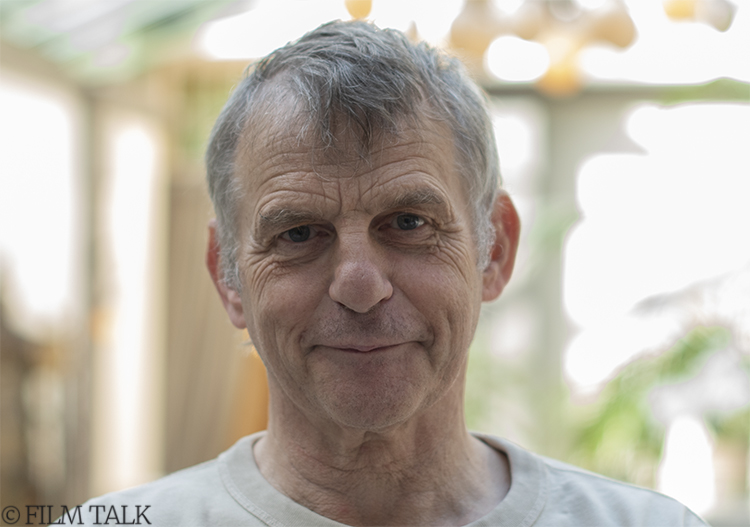
Lucas Belvaux (b. 1961) is a critically acclaimed Belgian actor, screenwriter, and filmmaker, known for his thought-provoking films that often explore complex themes such as identity, politics, and human relationships. He began his career as an actor in the early 1980s before transitioning into writing and directing in 1992; that’s where the seven-time César-nominee made a significant mark in contemporary European cinema.
He gained international recognition with his ambitious 2002 project, “The Trilogy”—three interconnected films titled “Cavale” (a.k.a. “On the Run”), “Un couple épatant” (a.k.a. “An Amazing Couple”), and “Après la vie” (a.k.a. “After Life”). Each film explores the same events from a different perspective and genre—thriller, comedy, and melodrama—offering a multifaceted view of the characters and their world. This experiment in narrative structure was widely praised and made him an innovative and bold filmmaker.
Throughout his distinguished career, he has often focused on socially relevant themes, particularly political ideologies and class struggles. His 2006 film “La raison du plus faible” (a.k.a. “The Right of the Weakest”), for example, set in Liège, Belgium, was a gritty drama about unemployed workers who turn to crime. The film was selected for the Cannes Film Festival and highlighted his commitment to examining the moral consequences of social inequality.
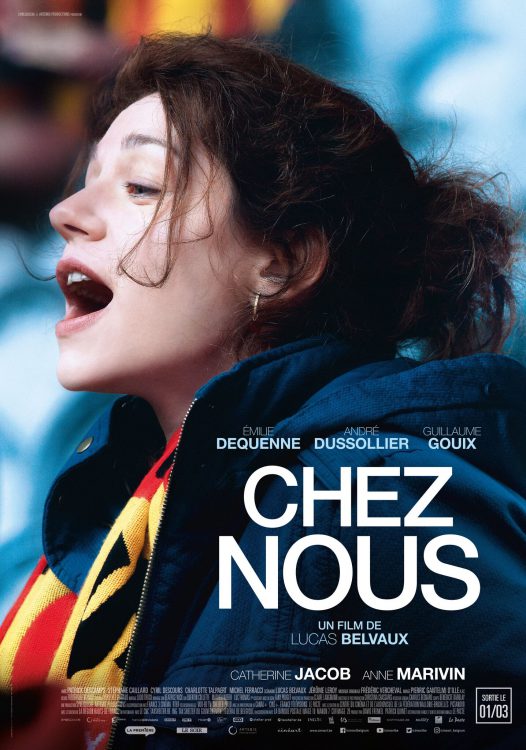
Another of the many highlights in his career, “Chez nous” (2007, a.k.a. “This Is Our Land”), a politically charged film, examined the rise of far-right politics in France. Through the story of a nurse, played by Émilie Dequenne—their second screen effort after “Pas son genre” (2014, a.k.a. “Not My Type”)—who was recruited by a nationalist party, Mr. Belvaux critiques populist rhetoric and the manipulation of working-class fears. The film was praised for its courage and relevance. His experience as an actor, when he worked with renowned filmmakers such as Claude Chabrol and Agnès Varda, undoubtedly influenced his sensitive and nuanced direction.
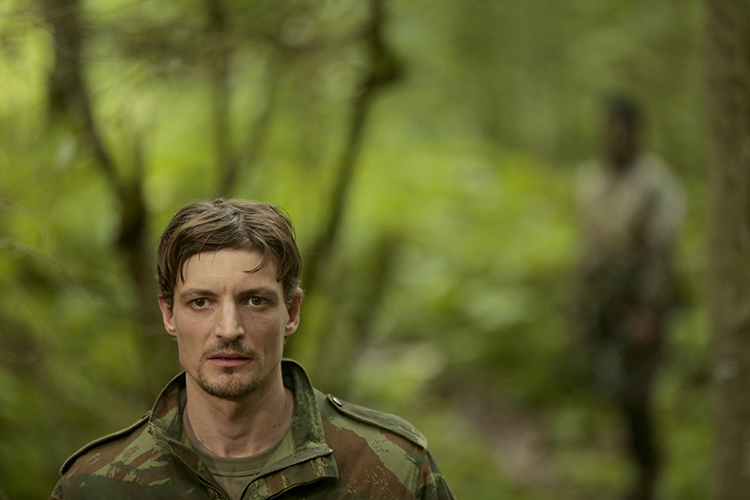
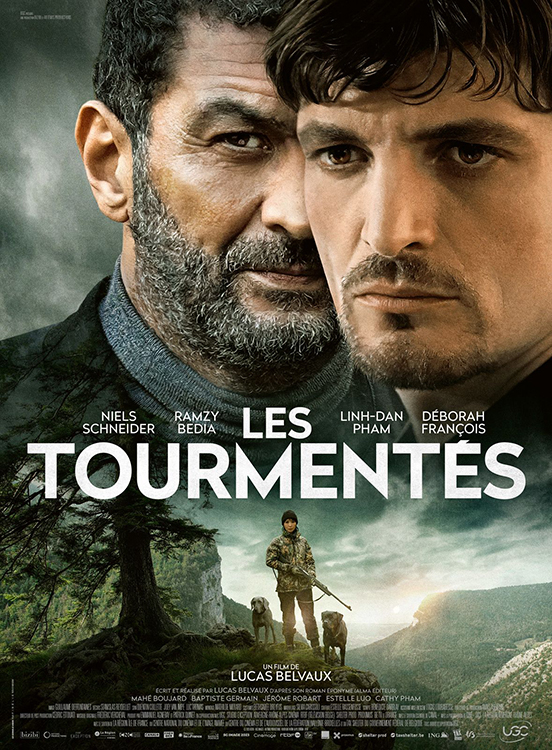 His latest feature, “Les tourmentés” (2025, a.k.a. “Haunted Minds”), is based on his own 2022 novel, and tells the story of Skender, played by Niels Schneider; Skender is a former legionnaire haunted by his past, who has fallen into homelessness and despair. He is estranged from his ex-wife Manon (role for Déborah François) and their children. One day, his old sergeant Max (Ramzy Bedia) contacts him with a bizarre proposition. Max works for a very wealthy widow (known simply as “Madame,” played by Linh-Dan Pham) who has developed a cruel fancy: to stage a manhunt, using a person as the prey.
Skender is selected for the role; his background and state of vulnerability make him a “perfect candidate.” If he agrees, he receives a sizable payment, but only on one condition: he has to survive one month while being hunted. If he dies, the money goes to his family. The hunt itself is scheduled to take place six months later, in a foreign country, in the wilderness.
The tone of “Les tourmentés” is dark, tense, and morally complex. Though there is an element of thriller and hunt narrative, the story seems built to provoke deeper reflection rather than simply offering action. The film examines the value of human life under extreme conditions, exploring themes of injustice, dignity, survival, trauma, and redemption. It blends physical danger with psychological torment with Skender’s internal struggle and his connections to his family.
The film is out now and showing in theaters in several territories.
Lucas Belvaux was in Brussels last week to promote the release of “Les Tourmentés”; I sat down with him to talk about the film and his approach as a screenwriter and filmmaker.
Mr. Belvaux, when you wrote your novel “Les tourmentés,” were you already thinking at the time to adapt it into a film?
No, I simply wrote the novel. Writing it was like a vacation for me. I love to write, but at that time, I didn’t want to write a screenplay. I had been writing screenplays for thirty years and that’s all I have done. A screenplay is very technical, very constrained. You’re always thinking about the shoot, how much money it’s going to cost, about the actors, the costumes… You’re thinking about all of that the whole time. So now, I wanted to be free; I wanted to write and let my imagination run wild, let me focus on the literary style and not worry about anything else. And so I wrote this book, without thinking about the camera, I maintained this freedom and pleasure of writing throughout the whole book. Once it was finished and I took it to the editor, I said to myself, ‘What if they want to buy the rights to make a film? If so, do I sell it, or do I keep it and make the film myself?’ And I thought that I’d prefer to make the film myself, since I know the characters so well. I know who they are, I like them, and the subject interests me.
“Les tourmentés” (2025, trailer)
So I imagine that writing a book goes a lot faster for you than writing a screenplay?
Yes, it’s much easier than writing a screenplay, because it’s less technical. When you write a screenplay, you’re already making the film, and that’s very consuming because you know there’s going to be a technical crew, forty people, you have to find all the locations, things like that. You inevitably think about it. There are also constraints that come with cinema, with the way you tell a story for a film. You know that you have an hour and a half or two hours, you have to write the dialogue, there are moments when nobody’s talking, there’s action, there are so many things. In a novel, all of that is done in the same way. When you describe a car chase or you have two characters talking at a table, it’s all written using the same technique. Whereas when you’re writing a screenplay, an action scene isn’t filmed like a discussion at the dinner table. And so, in a way, literature is easier.
Several filmmakers claim that writing a screenplay is the most challenging aspect of making a film. Would you agree with that?
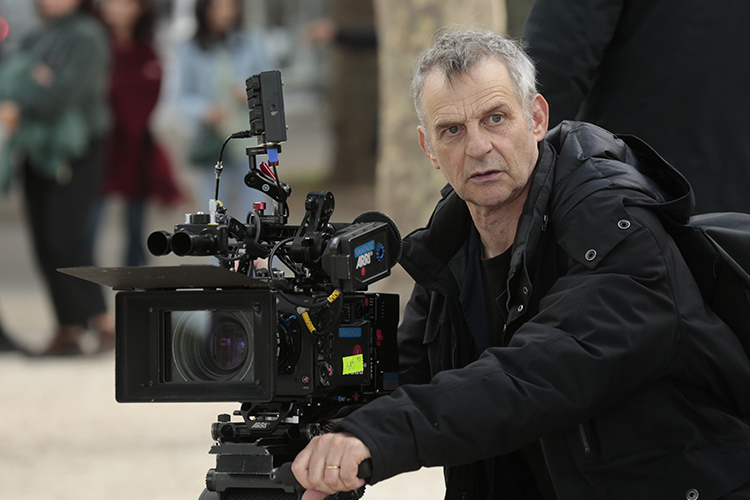
I think there are specific difficulties during each stage. Writing a screenplay, even if you write it in collaboration with someone else, is a very lonely job. Whereas during a shoot, there’s a group of forty people around you, there are actors, technicians, and there’s a competitive spirit. So, it’s a different set of difficulties. When you write a screenplay, you also develop the film in the meantime; you plan everything. You try to anticipate. When you write a book, you have time and you’re in control of your time. You can stop writing for three days to reflect, you can go back to the beginning, you can take a break; you go back over what you’ve already written, you redo it—whatever. When it comes to shooting, you’re on a train that’s moving forward, and you can’t stop it. Every day, you have a very precise shooting schedule, and by the end of the day, you need to have finished the day’s schedule. You can’t do it any other way; it costs too much money. And so, you deal with the tension, the pressure, and you’re managing a whole team. You have to make sure everyone has the same goal. If you have three actors on a set, you have three different people who function differently, to whom you have to speak differently. You have to blend all of that together and find a way for each one to make it work. And so, that’s a totally different challenge. But it’s very enjoyable; I really enjoy doing it, but it’s difficult.
Jacqueline Bisset once told me, ‘Making a film is like a couple. You bring out the best in each other.’ That’s the bottom line?
Yes, and at the same time, what’s difficult is that each actor, each actress, has their own rhythm. For example, we know that there are actors who give all they’ve got during the first take; they’ll be at their best on that first take, and after that, it might get more difficult for them. Others need to warm up first and like to rehearse, and they’ll be pretty good by the fourth or fifth take. And so, when you’re working with these two actors, someone who’s very good on the first take and the other one is very good on the fifth take, you have to figure out how to get them to work together so they’re both good at the same time. That’s just one of the difficulties of making a film and directing actors. But it’s fascinating, that’s the part I love.

In “Les tourmentés,” you have your four main characters. How do you find the right balance between them and between their interaction, so that it’s not too fast or too slow, not too much or too little, and during the first or fifth take…
…it’s a little bit mysterious. But that already happens when you’re developing the film. First, you have to make sure to balance the roles. That begins when you’re writing, how each role will play out, and how each character will be constructed in relation to the others. So then you’re already working on that balance. When you start shooting, who is good at the first take, who is good at the fifth, and how do we make them work together? That is almost a theatrical work. It is the same with rehearsals; we have to make sure that the actor who will be good at the first take does not give everything during the rehearsals. I’ll tell him, ‘Hold back a little,’ while I’ll say to the actor of the fifth take, ‘Keep going, keep going!’ After we finish shooting the film, we’ll correct everything in the editing room. I’ll have several takes of each one and edit the best takes to find this balance and adjust—if necessary. Suppose we do a face-to-face reverse shot, where you say all your lines and the camera is on you with you in close-up, and then we shoot the scene with the camera on me the whole time. You are alone in the image, and then I will be alone in the image. And in the editing, we need to find a way to make this conversation work between you and me. It has to look as if we’re in a real conversation. There I will have to find the best take for each one; maybe you’ll have a great line in take one, but another line looks better in take three. So, we will have to choose each moment in each of the takes, for each of the characters.
This is where it gets exciting; you go through the same process when you show the characters when they’re listening. A simple scene like that creates a thousand possibilities for telling something. That’s when you also find a balance between the characters—figure out what’s important when they’re talking and when they’re listening. Or when we see that a character is lying, how will the other one respond? So the possibilities are endless, and that’s fantastic. You can also do the sequence shot. A sequence shot means you’re going to shoot the entire sequence at once; when you’re editing, you have no back-up, you have no security. So at the time of filming, it is necessary for both actors to be good at the same time and with the same intensity—the technicians too. Everyone will have to be in the rhythm of the film, in the rhythm of the dialogue, in the rhythm of the action. That’s what cinema is all about: it’s about choices, and directing is also choosing between something that might or might not end up on the cutting room floor.
To get back to “Les tormentées,” what is in your opinion the main theme of the film?
When I wrote it, I didn’t think about that. I mean, at first, I thought I was going to tell the story of a manhunt. But I wrote without a plan, without knowing where I was going. I wrote as I went along. I simply followed the writing process, and after a while, the story took over. When I started, I thought of writing something like a film noir, or maybe an action thriller. After a while, I realized that I was more interested in what the characters were going through, their inner thoughts, rather than a manhunt adventure. And by the time I had finished the novel, I found out what I had written and what the real subject was. In the story, you’ll find the impact of war or violence on people, and what it does to them. There’s friendship, there’s betrayal, there’s money—lots of money. Money is one of the most important subjects of the film. Does money make people happy, or not? What if you have too much money? Having a lot of money doesn’t necessarily make you happy. Not having any at all brings unhappiness. You need at least a little. You can’t say you don’t need money. So, there are lots of reflections on that, but I don’t know what the most important reflection is. I think that each viewer will choose a theme in the film. The audience will be attentive to one character or another, and to all those various issues. Some people may be interested in betrayal, others could be more interested in the violence or the money. I guess every spectator will find his or her own theme in the film.
Was it easy to put your cast together?
People often ask me how I cast. Casting is always a bit… It’s not easy to cast when you have the script and you don’t have the actors. It’s not easy. You tell yourself it could be him for that role, it could be her for another part, or it could be someone else, etc. On the other hand, when the film is finished and if it all works out, it’s obvious. If it’s successful, we say to ourselves that there couldn’t have been another actor who could have done it better. But you never know because there are no rules for casting successfully. Sometimes, it’s just pure luck. I met Ramzy Bedia on a staircase, by chance, long before thinking about the film, and I told myself that I should make a film with him because of his potential. When I met him that day, he was so different from what I saw when he was on television, in a film, or in the theater. He has something that I’ve never seen in cinema, and I wanted to film this something extra. I want it to nourish his character. And so, when I wanted to make “Les Tourmentés,” I knew right away that I was going to offer him the role of Max because he has a tragic dimension that very few French actors have. When he enters a room, something happens. So it was a real pleasure to work with him, to make him discover that he had that dimension while he wasn’t even aware of it. Imagine that he could give you something of himself that he had never given before. This kind of dramatic force. That was very exciting; I really enjoyed working with him because he wanted that too. So, it’s a bit like sculpturing. You take away bits and pieces to get to the heart of the stone. When that works, you get something that he didn’t even expect. When you work with actors like that… Sometimes it moves them too. Sometimes they’re surprised. They’re acting and then—boom—they stop because something unexpected happens to them. Then we have to keep and preserve that feeling.
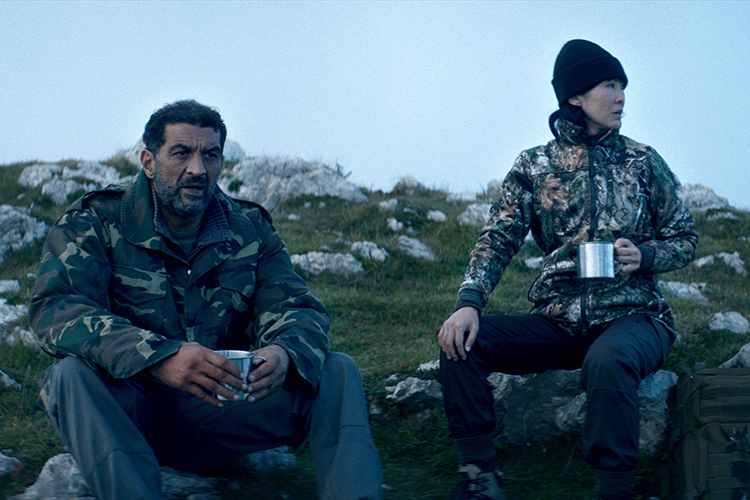
Was it physically a difficult film to make? Because there are several outdoor scenes shot in nature?
No, I don’t think it was a difficult film physically. We may have the impression that it’s very difficult because the entire staging is designed for that, to convey the difficulty. The weather conditions were bad. We had a lot of rain, wind, and it was cold. That made it difficult. But otherwise, it was fine. That’s the fun part when making a movie; you can make the audience believe it’s very tough or very hard when, in fact, it’s not.
In all of your films, you love to do many close-ups, don’t you? Any particular reason for that?
Oh yes, I love close-ups because I admire actors so much. In a face, you can see everything that humanity feels. So I like that, I like close-ups because when you film an actor—we were talking about reverse shots earlier—and he listens to his co-actor, he may have the impression that the other person is acting, while he’s only listening. But if you let unexpected things happen, things that he doesn’t necessarily control, then this humanity comes through and takes over. If an actor is in a close-up and he thinks, you see something happening on the face. That’s marvelous. The magic of editing a face is also very rewarding. You film a close-up, then you show another image, and then you go back to the same close-up. And depending on what you’ve shown the audience, they will all see something different when they look at the same face. Close-ups move us or tell us something because there’s also what we project and expect, or what we want to see in the face. I could talk for hours about close-ups.
One of your best close-ups, in my opinion, is in the final sequence of “Pas mon genre” when Émilie Dequenne sings “I Will Survive.” When she finishes the song, you keep her in close-up for a few extra seconds, and then you feel her pain all the more.
Exactly. But—that’s something interesting to talk about—when we shot that scene, we were all very, very moved by her performance. And so, if you’d say, ‘Cut!’ right after she finishes the song, you would ruin a very beautiful moment because we all knew how great an actress she was, and what a powerful performance she was giving. We didn’t even know for sure if it was Émilie the actress, the character of the hairdresser, or someone in between who moved us all so deeply. If I had said ‘Cut’ immediately after the song, it would have been as if I slapped her in the face. So we wanted her to continue, finish her emotion, and let her go to the end of the scene the way she wanted to. And then in the editing, you see how she had built it up. Those few magical seconds were only possible if we filmed the whole song before. So she sang the song, went all the way to the end and let out all her emotions. Even if it were only for those few seconds, we still needed to film the entire three-minute song so that she could take over and stay in character.
And you’re right: those five seconds are so beautiful, but it was also great to see how she used those three minutes of the song to get there. I didn’t show the whole song in the film, but a good part of it anyway. Those five seconds come from before, and that’s also what directing and editing are all about—being able to create the conditions that lead up to that moment, that will create that moment. So it’s true that a close-up, when it works, it really does work, and it’s magnificent because you get this tremendous empathy so we can easily put ourselves in her shoes. That’s very moving. And that happens in a close-up. The love scenes between the two leading characters in the film, the hairdresser and the teacher, are all filmed in close-up. We never see the bodies; the passion is all played out in the faces. Émilie didn’t want to do nude scenes. It would have bothered her, it would have bothered me too, and it would have created a very strange relationship with the audience.
Émilie Dequenne sings “I Will Survive” in “Pas son genre” (2014)
Do you remember the first time you met her?
I remember our first encounter very well. I had sent her the screenplay for “Pas son genre” and after she had read it, we met in a café. She loved the script, and so we met and talked about it. About the love scenes, she told me, ‘I love the story, I love the characters and I would love to do it, but no nude love scenes.’ That was fine with me; I had no desire to do that. So we talked about that, about her character. And her performance in the film was superb.
Do you miss her? [She died of cancer last March at age 43.]
Of course. I am in my mid-sixties now, and I have lost quite a few people that I adored. I remember I was very devastated when Pauline Lafont [1963-1988] died. I had worked with her on Claude Chabrol’s “Poulet ou vinaigre” [1985]. There’s a film festival later this month with a tribute to Émilie, and one of her films they will screen is “Pas son genre.” So we will talk about her a lot. There are moments when you unexpectedly meet an actor or an actress who gives powerhouse performances in your films. Émilie was one of them. There was also a memorable karaoke scene in “Pas son genre,” and as we were shooting it, her movements and expression were so incredible that we all thought, ‘This is magic.’ We were all overwhelmed. She could give you so much more than what was written in the script.
Close-ups, that’s your niche to tell your story even better, I suppose?
Yes, that’s what I like. It’s natural to me. Sometimes people tell me, ‘There are too many close-ups.’ Then I say, ‘Yes, maybe you’re right, but I can’t do it any other way.’ What interests me is the face of the actor. And that’s often why they’re so good.
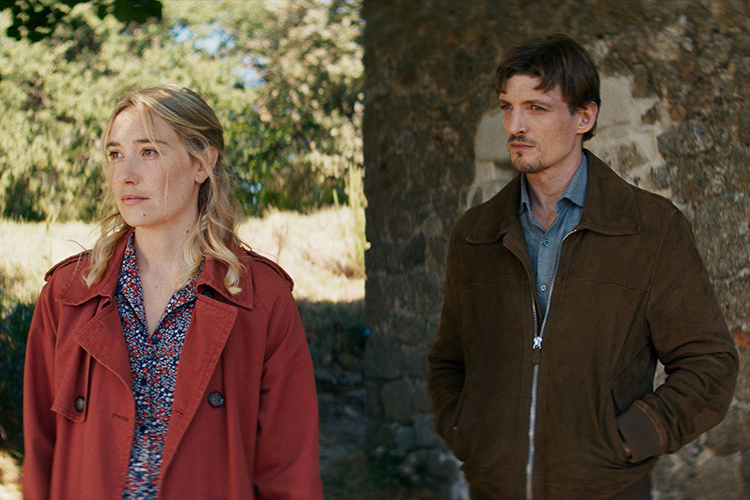
How and where did you learn to tell a wide variety of films, because all of your twelve films so far are totally different, although there’s one common denominator: humanity.
The characters interest me. And do my films look different? Yes, I think they do, that’s probably because I have very eclectic tastes. As a spectator, I like a lot of things in cinema. I love Claude Chabrol’s films, but I also like the comedies of Billy Wilder, Ernst Lubitsch, or more recent things… I like lots of different things. And so, I want to try comedy, drama, and fantasy. But, as you say, my films have in common is humanity. And you can talk about that in a comedy, a drama—no matter what genre—as long as humanity is essential. One of my favorite films is “The Apartment” [1960] from Billy Wilder; that’s a great comedy, and very, very funny. But there’s this terrible despair in the film, as it’s about very profound things like humanity and love. If you look at “Breakfast at Tiffany’s” [1960], it’s the same thing. It’s a romantic comedy. But it’s about a girl who prostitutes herself—it’s all in the sixties. Those films tell very difficult stories about what humanity is. And at the same time, they are very funny and very light. That fascinates me.
You’re talking about American cinema now. Have you had job offers to make a film in the United States?
No, never.
And what would you do if they call you tomorrow?
It would be a pleasure because I really like American actors. But I don’t know if the American system and the way they make films suits me—the administration, the rules, the unions, and all that. And I’m not that young anymore. Now, I adapt less easily, I think.
I spoke to Cécile de France a few years ago; she had made “Hereafter” [2010] for Clint Eastwood, and she told me, ‘I don’t have to work in the United States to be happy.’ Do you recognize that?
Yes, it’s true, and I understand it. I’ve always worked in France and Belgium. It’s very pleasant to shoot here. The crews are pleasant. They’re very competent. It’s even easier in Belgium than it is in France. So I’m fine. Maybe a Hollywood film would be great too. I don’t know. But they won’t ask me. It won’t happen, and that’s okay.
Brussels, Belgium
September 19, 2025
FILMS
ALLONS Z’ENFANTS (1981) DIR Yves Boisset SCR Yves Boisset, Jacques Kirsner (novel by Yves Gibeau) CAM Pierre-William Glenn ED Albert Jurgenson MUS Philippe Sarde CAST Lucas Belvaux (Simon Chalumot), Jean Carmet, Jean-Pierre Aumont, Jean-François Stévenin, Jacques Denis, Eve Cotton
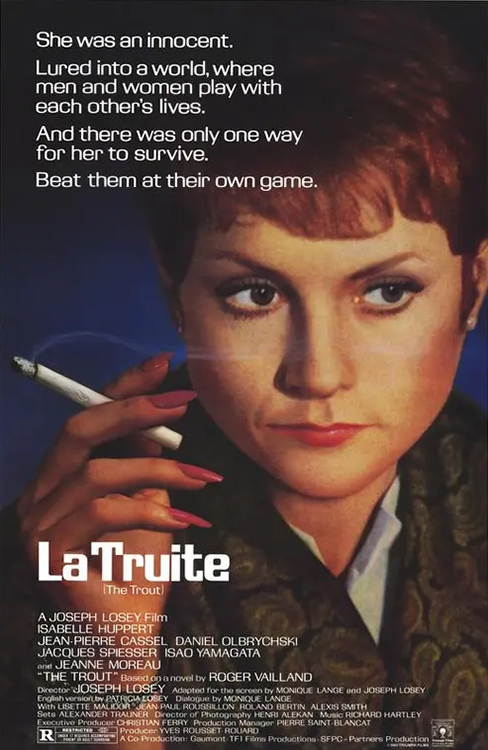 LA TRUITE, a.k.a. THE TROUT (1982) DIR Joseph Losey PROD Yves Rousset-Rouard SCR Joseph Losey, Monique Lange (novel by Roger Vailland) CAM Henri Alekan ED Marie-Castro Vasquez MUS Richard Hartley CAST Isabelle Huppert, Jean-Pierre Cassel, Jeanne Moreau, Daniel Olbrychski, Jacques Spiesser, Isao Yamagata, Craig Stevens, Alexis Smith, Lucas Belvaux (Clerk)
LA MORT DE MARIO RICCI, a.k.a. THE DEATH OF MARIO RICCI (1983) DIR Claude Goretta SCR Claude Goretta, Georges Haldas CAM Hans Liechti ED Joële Van Effenterre MUS Arié Dzierlatka CAST Gian Maria Volontè, Magali Noël, Heinz Bennent, Mimsy Farmer, Jean-Michel Dupuis, Michel Robin, Lucas Belvaux (Stéphane Couyaz), Claudio Caramaschi
RONDE DE NUIT, a.k.a. NIGHT PATROL (1984) DIR Jean-Claude Missiaen PROD Alain Sarde SCR Jean-Claude Missian (story by Jean-Claude Missian, Marc Perrier, Claude Veillot) CAM Pierre-William Glenn ED Armand Psenny MUS Hubert Rostaing, Yvan Jullien CAST Gérard Lanvin, Eddy Mitchell, Françoise Arnoul, Raymond Pellegrin, Lisette Malidor, Lucas Belvaux (Laurent)
LA FEMME PUBLIQUE, a.k.a. THE PUBLIC WOMAN (1984) DIR Andrzej Zulawski PROD Rene Cleitman SCR Andrzej Zulawski, Dominique Garnier (novel by Dominique Garnier) CAM Sacha Vierny ED Marie-Sophie Dubus MUS Alain Wisniak CAST Francis Huster, Valérie Kaprisky, Lambert Wilson, Patrick Bauchau, Giselle Pascal, Lucas Belvaux (François)
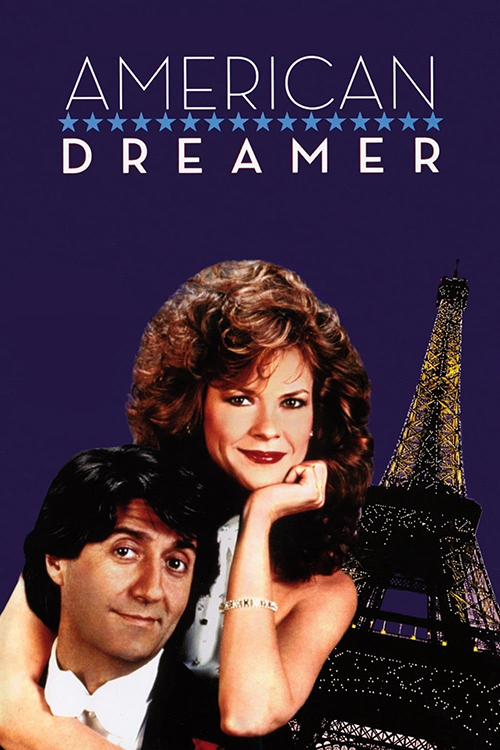 AMERICAN DREAMER (1984) DIR Rick Rosenthal PROD Doug Chapin SCR Jim Kouf, David Greenwalt (story by Ann Biderman) CAM Giuseppe Rotunno, Jan de Bont ED Anne Goursard MUS Lewis Furey CAST JoBeth Williams, Tom Conti, Giancarlo Giannini, Coral Browne, James Staley, C.B. Barnes, Lucas Belvaux (Thief on Bike)
LA FEMME IVOIRE (1984) DIR Dominique Cheminal SCR Dominique Cheminal, Sylvie Moinet CAM Jean Orjollet MUS Jean-Marie Sénia CAST Lucas Belvaux (Maurice), Dora Doll, Sylvie Granotier, Roland Blanche, Céline Valérie, Maurice Chevit
POULET OU VINAIGRE (1985) DIR Claude Chabrol PROD Marin Karmitz SCR Claude Chabrol, Dominique Roulet (novel by Dominique Roulet) CAM Jean Rabier ED Monique Fardoulis MUS Matthieu Chabrol CAST Jean Poiret, Stéphane Audran, Michel Bouquet, Jean Topart, Lucas Belvaux (Louis Cuno), Pauline Lafont, Caroline Cellier, Josephine Chaplin
LE BASTON (1985) DIR Jean-Claude Missiaen PROD Denise Petitdidier SCR Jean-Claude Missiaen, Jacques Labib CAM Jean-Claude Vicquery ED Armand Psenny MUS Yvan Jullien, Hubert Rostaing Trust CAST Robin Renucci, Véronique Genest, Gérard Desarthe, Michel Constantin, Patrick Depeyrrat, Lucas Belvaux (Jeanjean Levasseur), Natacha Inutine
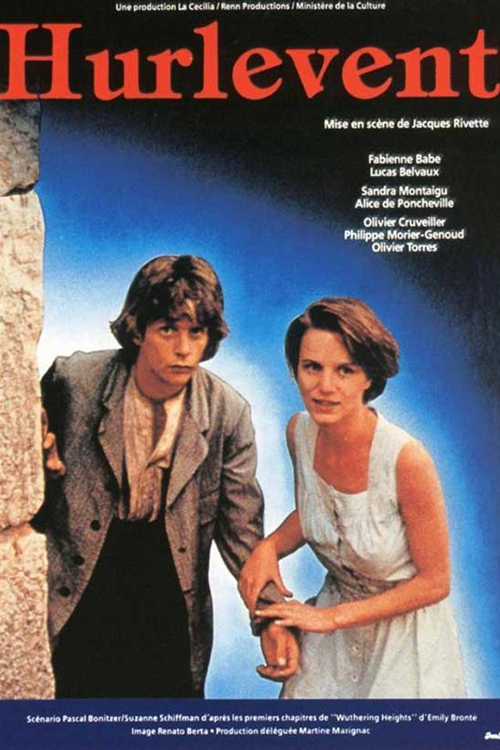 HURLEVENT, a.k.a. WUTHERING HEIGHTS (1985) DIR Jacques Rivette PROD Martine Marignac SCR Jacques Rivette, Pascal Bonitzer, Suzanne Schiffman (novel ‘Wuthering Heights’ by Emily Brontë) CAM Renato Berta ED Nicole Lubtchansky CAST Fabienne Babe, Lucas Blevaux (Roch), Sandra Montaigu, Alice de Poncheville, Olivier Cruveiller, Philippe Morier-Genoud
DÉSORDRE, a.k.a. DISORDER (1986) DIR – SCR Olivier Assayas PROD Claude-Éric Poiroux CAM Denis Lenoir ED Luc Barnier MUS Gabriel Yared CAST Wadeck Stanczak, Ann-Gisel Glass, Lucas Belvaux (Henri), Rémi Martin, Corinne Dacla, Simon de la Brosse, Etienne Chicot
LE LOI SAUVAGE (1988) DIR Francis Reusser SCR Jacques Guhl CAM Emmanuel Machuel CAST Michel Constantin, Lucas Belvaux (Luc / Gandhi), Hélène Lapiower, Jean Boissery, Roland Armstutz
L’AIR DE RIEN, a.k.a. EASY IN MIND (1989) DIR – SCR Mary Jimenez PROD Benoît Lamy CAM Raymond Fromont ED Philippe Bourgueil MUS Thierry De Mey CAST Carole Courtoy, Gabriel Arcand, Josse De Pauw, Lucas Belvaux (Francis), Bernadette Lafont, Eugénie De Mey, Maria de Medeiros
TROIS ANNÉES (1990) DIR Fabrice Cazeneuve PROD Jacques Kirsner SCR Fabrice Cazeneuve, Jacques Tournier (short story by Anton Chekhov) CAM Pierre-Laurent Chénieux ED Yann Dedet MUS Michel Portal CAST Sabine Azéma, Jacques Villeret, Philippe Volter, Lucas Belvaux (Pilou), Claude Bouchery, Christine Cohendy
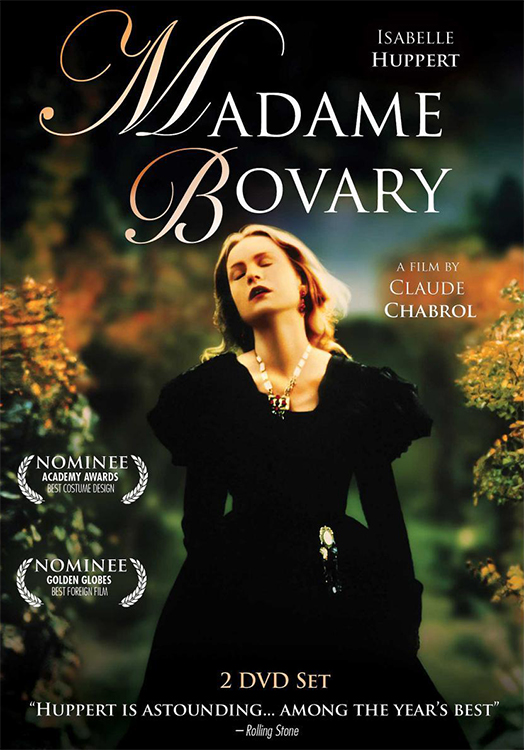 MADAME BOVARY (1991) DIR Claude Chabrol PROD Marin Karmitz SCR Claude Chabrol (novel by Gustave Flaubert) CAM Jean Rabier ED Monique Fardoulis MUS Matthieu Chabrol, Jean-Michel Bernard, M.J. Coignard-Helison CAST Isabelle Huppert, Jean-François Balmer, Christophe Malavoy, Jean Yanne, Lucas Belvaux (Léon Dupuis), Christiane Minazolli, Jean-Louis Maury, Thomas Chabrol
PARFOIS TROP D’AMOUR (1992) DIR – SCR Lucas Belvaux PROD Jean-Jacques Andrien CAM Bertrand Chatry ED Valérie Loiseleux MUS Lee Clayton, Christian Monheim CAST Joséphine Fresson, Bernard Mazzinghi, David Martin, Francis Bouc, Lucas Thierry
GRAND BONHEUR, a.k.a. GREAT HAPPINESS (1993) DIR – SCR Hervé Le Roux PROD Humbert Balsan CAM Sophie Caretta, Antoine Roch, Jean-René Duveau ED Lise Truong, Nadine Tarbouriech, Marie Lecoeur MUS Charlotte Léo, Pierre Gérard, Pierre Berriau, Christine Vouilloz, Lucas Belvaux (Luc), Marilyne Canto, Nathalie Richard
POUR RIRE!, a.k.a. JUST FOR LAUGHS (1996) DIR – SCR Lucas Belvaux PROD Paolo Branco CAM Laurent Barès ED Danielle Anezin MUS Riccardo Del Fra CAST Ornella Muti, Jean-Pierre Léaud, Antoine Chappey, Tonie Marshall, Philippe Fretun, Bernard Mazzinghi, Benoît Poelvoorde, Gilbert Duclos-Lassalle
SORRISI ASMATICI – FIORI DEL DESTINO (1997) DIR – SCR Tonino De Bernardi CAM Tommaso Borgstrom CAST Lucas Belvaux, Lou Castel, Giulietta De Bernardi, Ines de Medeiros, Manuela Giacomini, Ivano Marescotti
ON APPELLE ÇA… LE PRINTEMPS, a.k.a. THEY CALL THIS… SPRING (2001) DIR – SCR Hervé Le Roux PROD Gilles Sandoz CAM Pierre Milon ED Nadine Tarbouriech CAST Maryline Canto, Maryse Cupaiolo, Marie Matheron, Bernard Ballet, Pierre Berriau, Lucas Delvaux (Luc)
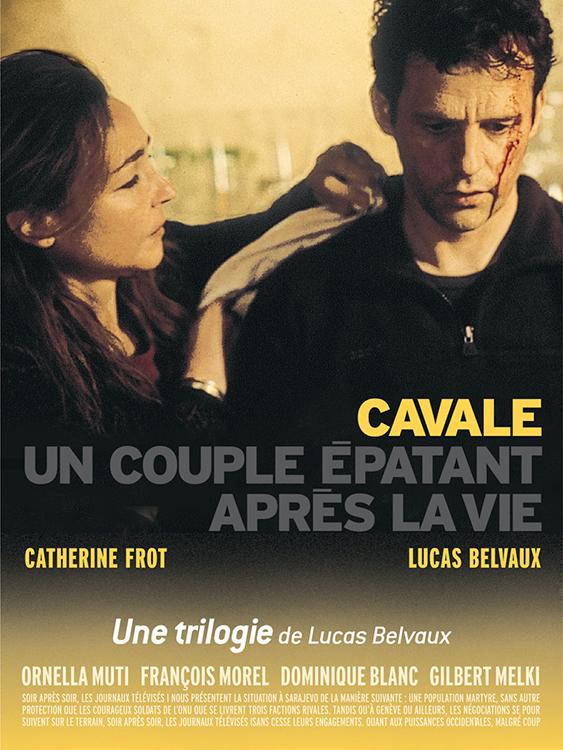 CAVALE, a.k.a. ON THE RUN (2002) DIR – SCR Lucas Belvaux PROD Patrick Sobelman, Diana Elbaum CAM Pierre Milon ED Ludo Troch MUS Riccardo Del Fra CAST Lucas Belvaux (Bruno Le Roux), Catherine Frot, Dominique Blanc, Ornella Muti, Gilbert Melki, Patrick Descamps
UN COUPLE ÉPATANT, a.k.a. AN AMAZING COUPLE and TRILOGY: TWO (2002) DIR – SCR Lucas Belvaux PROD Patrick Sobelman CAM Pierre Milon ED Valérie Loiseleux MUS Riccardo Del Fra CAST Ornella Muti, Lucas Belvaux (Pierre), François Morel, Valérie Mairesse, Dominique Blanc, Gilbert Melki, Catherine Frot
APRÈS LA VIE, a.k.a. AFTER LIFE and TRILOGY: THREE (2002) DIR – SCR Lucas Belvaux PROD Patrick Sobelman, Diana Elbaum CAM Pierre Milon ED Danielle Anezin MUS Riccardo Del Fra CAST Dominique Blanc, Gilbert Melki, Lucas Belvaux (Bruno Le Roux), Ornella Muti, Catherine Frot, François Morel
DEMAIN ON DÉMÉNAGE, a.k.a. TOMORROW WE MOVE (2004) DIR Chantal Ackerman PROD Paulo Branco SCR Chantal Ackerman, Eric De Kuyper CAM Sabine Lancelin ED Claire Atherton MUS Sonia Wieder-Atherton CAST Aurore Clément, Sylvie Testud, Natacha Régnier, Jean-Pierre Marielle, Lucas Belvaux (Delacre), Dominique Raymond, Elsa Zylberstein
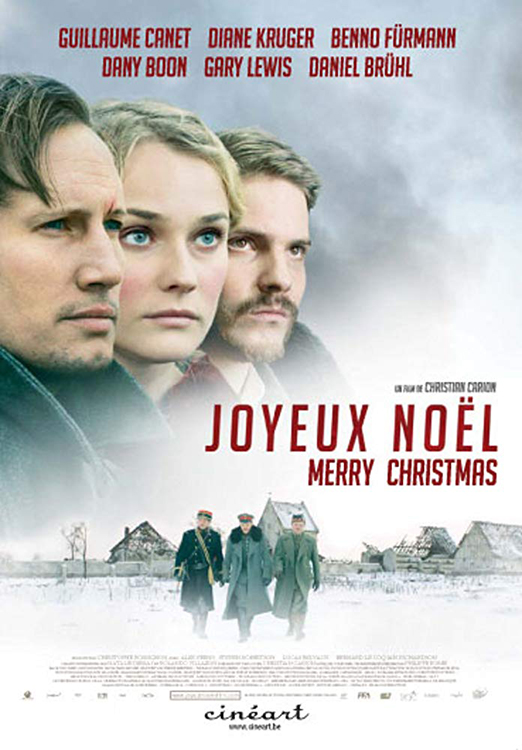 JOYEUX NOEL, a.k.a. MERRY CHRISTMAS (2005) DIR – SCR Christian Carion PROD Christophe Rosignon CAM Walther Vanden Ende ED Judith Rivière Kawa, Andrea Sedlácková MUS Philippe Rombi CAST Diane Krüger, Benno Fürmann, Guillaume Canet, Dany Boon, Gary Lewis, Ian Richardson, Lucas Belvaux (Gueusselin), Gary Lewis, Michel Serrault, Christian Carion
LA RAISON DU PLUS FAIBLE, a.k.a. THE RIGHT OF THE WEAKEST (2006) DIR – SCR Lucas Belvaux PROD Patrick Sobelman, Diana Elbaum CAM Pierre Milon ED Ludo Troch MUS Riccardo Del Fra CAST Éric Caravaca, Lucas Belvaux (Marc Pirmet), Claude Semal, Patrick Descamps, Matacha Régnier, Elie Belvaux, Gilbert Melki, Patrick Sobelman
PARS VITE ET REVIENS TARD, a.k.a. SEEDS OF DEATH and HAVE MERCY ON US ALL (2007) DIR Régis Wargnier PROD Jean-Baptiste Dupont, Cyril Colbeau-Justin SCR Régis Wargnier, Ariane Fert, Harriet Marin, Julien Rappeneau, Lawrence Shore (adaptation by Régis Wargnier, Ariane Fert, Harriet Marin, Julien Rappeneau, Lawrence Shore; novel by Fred Vargas) CAM Laurent Dailland ED Yann Malcor MUS Patrick Doyle CAST José Garcia, Lucas Belvaux (Danglard), Marie Gillain, Olivier Gourmet, Michel Serrault, Nicolas Calazé
L’ARMÉE DU CRIME, a.k.a. ARMY OF CRIME (2009) DIR Robert Guédiguan PROD Dominique Barneaud SCR Robert Guédiguan, Gilles Taurand, Serge Le Péron (adaptation by Gilles Taurand; original idea by Serge Le Péron) CAM Pierre Milon ED Bernard Sasia MUS Alexandre Desplat CAST Simon Abkarian, Virginie Ledoyen, Robinson Stévenin, Lola Naymark, Grégoire Leprince-Ringuet, Adrien Jolivet, Lucas Belvaux (Joseph Epstein)
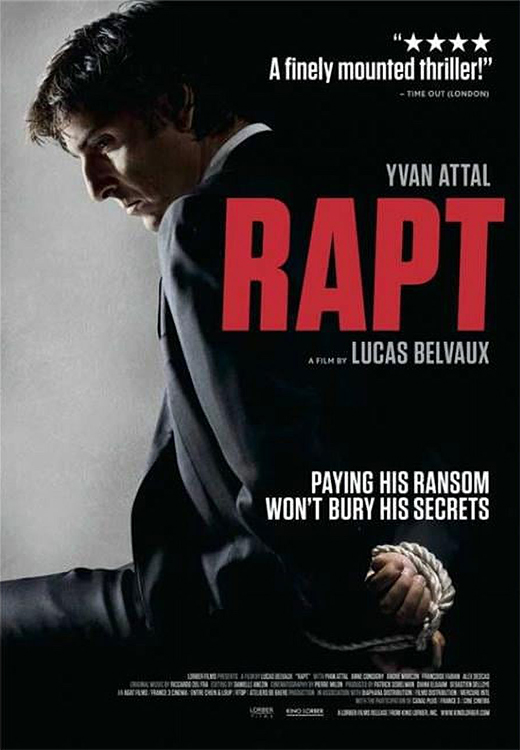 RAPT (2009) DIR – SCR Lucas Belvaux CAM Pierre Milon ED Danielle Anezin MUS Riccardo Del Fra CAST Yvan Attal, Anne Consigny, André Marcon, Françoise Fabian, Alex Descas Michel Voïta, Gérard Meylan, Mexime Lefrançois, Lucas Belvaux
38 TÉMOINS, a.k.a. 38 WITNESSES and ONE NIGHT (2012) DIR Lucas Belvaux PROD Yvan Attal, Patrick Sobelman, Patrick Quinet SCR Lucas Belvaux (novel by Didier Decoin) CAM Pierric Gantelmi d’Ile MUS Arne Van Dongen CAST Yvan Attal, Sophie Quinton, Nicole Garcia, François Feroleto, Natacha Régnier, Patrick Descamps
PAS SON GENRE, a.k.a. NOT MY TYPE (2014) DIR Lucas Belvaux PROD Patrick Sobelman, Patrick Quinet SCR Lucas Belvaux (novel by Philippe Vilain) CAM Pierric Gantelmi d’Ille ED Ludo Troch MUS Frédéric Vercheval CAST Émilie Dequenne, Loïc Corbery, Sandra Nkake, Charlotte Talpaert, Anne Coesens, Daniela Bisconti, Didier Sandre
CHEZ NOUS, a.k.a. THIS IS OUR LAND (2017) DIR Lucas Belvaux PROD David Frenkel, Patrick Quinet SCR Lucas Belvaux, Jérôme Leroy CAM Pierric Gantelmi d’Ille ED Ludo Troch MUS Frédéric Vercheval CAST Émilie Dequenne, André Dussollier, Guillaume Gouix, Catherine Jacob, Anne Marivin, Patrick Descamps, Charlotte Talpaert
 DES HOMMES (2020) DIR Lucas Belvaux PROD Patrick Quinet, David Frenkel SCR Lucas Belvaux (novel by Laurent Mauvignier) CAM Guillaume Deffontaines ED Ludo Troch CAST Gérard Depardieu, Catherine Frot, Jean-Pierre Darroussin, Yoann Zimmer, Félix Kysyl, Édouard Sulpice, Fleur Fitoussi, Ahmed Hammoud
LES TOURMENTÉS (2025) DIR – SCR Lucas Belvaux (also novel “Les Tourmentés” [2022]) PROD Patrick Quinet, Emmanuel Agneray CAM Guillaume Deffontaines ED Stanislas Reydellet MUS Frédéric Vercheval CAST Niels Schneider, Ramzy Bedia, Linh-Dan Pham, Déborah François, Mahé Boujard, Baptiste Germain, Jérôme Robart, Estelle Luo
TV MOVIES
QUATRE FEMMES, QUATRE VIES: ÊTRE HEUREUX SANS LE BONHEUR (1981) DIR Jacques Trébouta SCR Hortense Dufour CAST Nicole Courcel, Marice Barrier, Ronny Coutteure, Gérard Darrieu, Lucas Belvaux, Olivier Destrez
LE ROMAN DU SAMEDI: L’AGENT SECRET (1981) DIR Marcel Camus SCR Roger Grenier (novel by Joseph Conrad) CAM Pierre Petit MUS Even de Tissot CAST Michael Lonsdale, Marina Vlady, Lucas Belvaux (Stevie), Jeanne Herviale, Jean-Pierre Sentier
NON RÉCUPÉRABLES (1982) DIR Frank Apprederis SCR Sylvain Joubert MUS Jean Musy CAST Sylvain Joubert, Bernard Fresson, Anne-Marie Besse, Lucas Belvaux (Joël), Jacques Richard, Sheila O’Connor
LE VENT DU NORD (1984) DIR Alain Dhénaut SCR Richard Caron, Geneviève Cluny CAST Georges Géret, Lucas Belvaux (Patrick), Antoinette Moya, Henri Marteau, Totin Liebman, David Reboul
LE PASSAGE (1985) DIR Frank Apprederis SCR Christine Carrel, Jean Patrick MUS Nicolas Peyrac CAST Marie-Christine Barrault, Pierre Vaneck, Jacques Dufilho, Philippe Ogouz, Lucas Belvaux (Lutz), Nicolas Peyrac
LE BANQUET (1989) DIR Marco Ferreri SCR Marco Ferreri, Monique Canto, Radu Mihaileanu, Platon MUS Didier Vasseur CAST Lucas Belvaux (Phèdre), Jean Benguigui, Christian Berthelot, Farid Chopel, Renato Cortesi, Jean-Pierre Kalfon, Irene Papas, Roger Van Hool
INCOGNITO (1989) DIR Alain Bergala SCR Alain Bergala, Philippe Arnaud, Renée Falson CAM Jean-Paul Rose da Costa MUS Eric Dolphy CAST Arielle Dombasle, Lucas Belvaux (Serge), Jean-Pierre Beauviala, Yves Afonso, Gaële Le Roi
DÉRIVES (2001) DIR Christophe Lamotte PROD Arlette Guedj SCR Christophe Lamotte, Pierre Chosson CAM Florence Levasseur ED Benoît Quinon MUS Didier Cattin, Sofiane Gnaba, Benjamin Duvallet, Gillian Boughey CAST Guillaume Gouix, Jacques Spessier, Francis Renard, Ludwig-Stanislas Loison-Robert, Véra Briole, Marina Golovine, Lucas Belvaux (Policeman)
NATURE CONTRE NATURE (2004) DIR Lucas Belvaux SCR Lucas Belvaux, Jean-Luc Gaget CAM Pierre Milon ED Danielle Anezin MUS Riccardo Del Fra CAST Lucas Belvaux (Sébastien Chantoux), Raphaële Godin, Catherine Mouchet, Jacques Spessier, Henri Guybet, Nicolas Silberg, Michèle Silberg
LA FIN DE LA NUIT (2015) DIR Lucas Belvaux PROD Jérôme Clément, Georges-Marc Benamou SCR Lucas Belvaux, Jacques Fieschi (novel by François Mauriac) CAM Éric Guichard ED Ludo Troch MUS Frédéric Verchavel CAST Nicole Garcia, Louise Bourgoin, Amir El Kacem, Sandra Nkake, Bernard Mazzinghi
 FILM TALK
You must be logged in to post a comment.