
The lady pictured here is Julie Garfield. She was born in 1946 in Los Angeles; her father was the legendary screen actor John Garfield (1913-1952; real name, Jacob Julius Garfinkle), one of Hollywood’s most dynamic and celebrated stars of the late 1930s and 1940s. He was also one of the first Hollywood actors to embody a raw, naturalistic acting style that would later become the hallmark of postwar American cinema.
At a time when movie stars often relied on theatrical gestures, refined diction, and a cultivated glamor—and there was nothing wrong with that—John Garfield stood apart from many of his contemporaries by rejecting this polished, larger-than-life image of the traditional leading man. Instead, he embodied a natural, lived-in quality that made his characters feel authentic and deeply human.
Ms. Julie Garfield is an expert on her father and his film legacy, as I found out during a recent phone interview. But first, who was John Garfield, the actor? Most people might remember him from “The Postman Always Rings Twice” (1946), considered a classic of noir cinema; chances are that this film is the first one that comes to mind when hearing his name. But there is so much more when it comes to John Garfield.
He grew up in poverty on New York’s Lower East Side in the 1920s. His mother died when he was seven, and his father struggled to support the family. As a boy, he would often find himself in street fights and minor trouble, but he also discovered an outlet in performing. A schoolteacher recognized his talent and steered him toward acting. He later trained with the American Laboratory Theater, a group influenced by Konstantin Stanislavski’s system, and he became involved with the Group Theater in the 1930s, a new theater collective in New York—founded in 1931 by Lee Strasberg, Cheryl Crawford, and Harold Clurman—that taught the earliest form of Method acting. There, he learned to channel raw emotion into performance, a quality that became typical of his acting style.
The Group emphasized psychological realism and an actor’s connection to lived experience. He absorbed that approach, and carried it with him to Hollywood. He arrived there in 1937 and instantly became one of the biggest stars at Warner Bros. As mentioned, his acting style contrasted sharply with the studio system’s more polished conventions: his performances felt spontaneous, as if emotions were bubbling just under the surface. This unpredictability made his characters compelling, even dangerous, and it gave audiences the sense that they were watching a real person rather than an actor playing a character. As a result, John Garfield was the first Method actor from the Group Theater to become a superstar in movies.
John Garfield in “Four Daughters” (1938)
After a brief ten-second bit in the musical “Footlight Parade” (1933), where he played a sailor, he wasn’t discovered until his next feature five years later, Michael Curtiz’s melodrama “Four Daughters,” a vehicle for the three Lane Sisters (Priscilla, Rosemary, and Lola). It was his first of five films directed by Michael Curtiz, who cast and discovered John Garfield after he saw his screen test. In “Four Daughters,” he played a supporting role as the city-wise cynical suitor of a small-town girl; for his performance, he got considerable praise. The New York Times wrote in its August 19, 1938, review, ‘Our vote, though, is for Mr. Garfield, and for whatever stars watch over his career on the stage and screen. […] Mr. Garfield is such a sweet relief from conventional screen types, so eloquent of a certain dispossessed class of people, that we can’t thank Warner Brothers, Michael Curtiz, the director, Mr. Epstein and Miss Coffee, the screen playwrights, and even Miss Fannie Hurst, the original author, enough for him.’
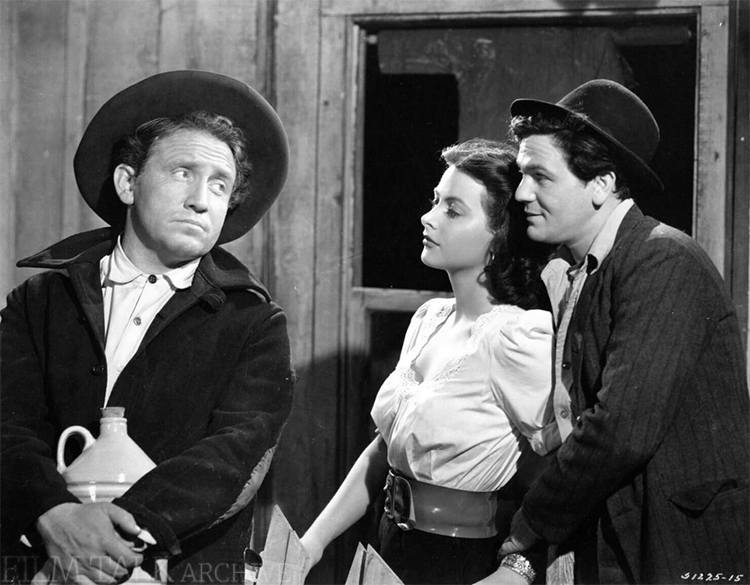
Right from the start, and in several of the other films he did when he was under contract to Warner Bros., he demonstrated his versatility as an actor. Like in Vincent Sherman‘s “Saturday’s Children” (1940), for example, with Anne Shirley playing a hard-working woman, John Garfield as her boyfriend, and what happens to them when they get married. In between his Warner Bros. films, he was loaned out to Metro-Goldwyn-Mayer to do Victor Fleming’s “Tortilla Flat” (1942). Author Michael Sragow wrote in “Victor Fleming: An American Movie Master” (2008) that one day, Fleming took John Garfield aside between takes when he was shooting a scene with him and Hedy Lamarr. Fleming told him, ‘Take it easy, Garfield. Don’t get too good. A lot of your scenes are with Hedy Lamarr; she’s not what you call un-outclassable, and we can’t let that happen. Let’s take it again. Be better than you were the first time, but worse than the second.’ In a 1971 interview, Hedy Lamarr said, ‘John Garfield was wonderful to work with.’
He also starred in a string of patriotic World War II box office successes such as “Air Force” (1943), directed by Howard Hawks and set in the aftermath of the Japanese attack of December 7, 1941, on Pearl Harbor; “Destination Tokyo” (1943), a suspenseful account of a U.S. submarine sent to Japanese waters to place a spy team ashore; and “Pride of the Marines” (1945), with John Garfield playing U.S. Marine Al Schmid, a war hero blinded by a grenade during a Japanese attack.
Schmid invited John Garfield to spend a month with him at his home in Philadelphia, so he could learn as much as he could about the man, and study him on a daily basis. When the film was released, the actor received nothing but kudos. ‘John Garfield does a brilliant job as Schmid, cocky and self-reliant and full of calm, commanding pride,’ Bosley Crowther wrote in his film review for The New York Times on August 25, 1945.
Unable to serve in World War II due to a weak heart, John Garfield did bond-selling campaigns across the U.S. and entertained the troops abroad. He also founded the Hollywood Canteen along with Bette Davis. In her memoir, “This ’n That” (1987), Bette Davis wrote, ‘One day, just after the start of World War II, in the Green Room, our dining room at Warner Bros., Johnny Garfield sat down at my table during lunch. He had been thinking about the thousands of servicemen who were passing through Hollywood without seeing any movie stars. Garfield said something ought to be done about it. I agreed, and then and there the idea for the Hollywood Canteen was born.’
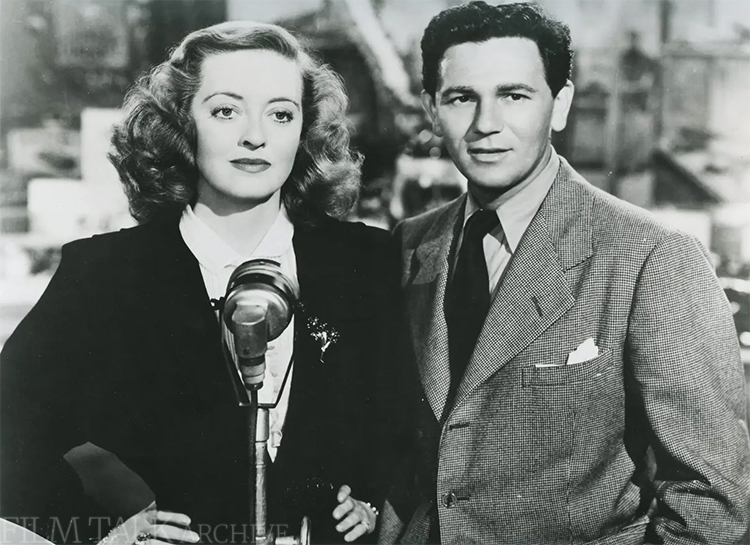
The Hollywood Canteen opened its doors on October 3, 1942, and offered food, dance, and entertainment. Everything was free of charge; the uniforms of the servicemen were their tickets for admission. It became the place to be where American servicemen, waiting to be shipped out to the Pacific, could mingle with their favorite Hollywood stars; many top stars served food, did the dishes, danced with the soldiers, signed autographs, handed out Christmas presents, or simply chatted with the servicemen who visited the Hollywood Canteen.
The list of Hollywood celebrities who volunteered at the Canteen is huge. Rita Hayworth, Lana Turner, Norma Shearer, Hattie McDaniel, Marion Davies, Dorothy Dandridge, Bob Hope, Ida Lupino, Linda Darnell, Frank Sinatra, Bing Crosby, Eddie Cantor, Red Skelton, Dinah Shore, Una Merkel, Fred Astaire, Jean Arthur, Marsha Hunt, Lucille Ball, Dolores del Rio, Patricia Morison, Barbara Stanwyck, Buster Keaton, Milton Berle, Humphrey Bogart, Jimmy Durante, Evelyn Keyes, Nelson Eddy, James Cagney, Ava Gardner, Charlie Chaplin, and so many others were among the regulars.
Bette Davis recalled in “This ‘n That” that ‘the glamorous Marlene Dietrich one night came straight from the set from “Kismet” [1943], covered in gold paint. I had never seen two thousand men screaming in a state of near mass hysteria. Marlene was one of the most generous in the amount of time she spent at the Hollywood Canteen.’ John Garfield’s attempt to boost the morale of the servicemen who were defending freedom overseas was a huge success: when it closed its doors on November 22, 1945, the Hollywood Canteen, with its thousands of volunteers, had entertained more than 3,000,000 in uniform. All of this thanks to John Garfield, who came up with the idea that servicemen who were passing through Hollywood had to be able to see movie stars; in the end, he gave them much more than that.
The musical romantic comedy “The Hollywood Canteen” (1944), starring Joan Leslie, Robert Hutton, Dane Clark, and many stars in cameo roles, was also a celebrated film and Warner Bros.’ biggest hit film of 1944.
 John Garfield’s final film for Warner Bros. was “Humoresque” (1946), a screen classic where he played an ambitious violinist who got involved with a wealthy and unstable socialite, played by Joan Crawford. In John Kobal’s interview book “People Will Talk” (1985), Crawford said, ‘It was great working with Johnnie. Great, great talent,’ while film director Jean Negulesco was proud to say, ‘I gained the friendship of John Garfield,’ as he wrote in his autobiography “Things I Did and Things I Think I Did: A Hollywood Memoir” (1984).
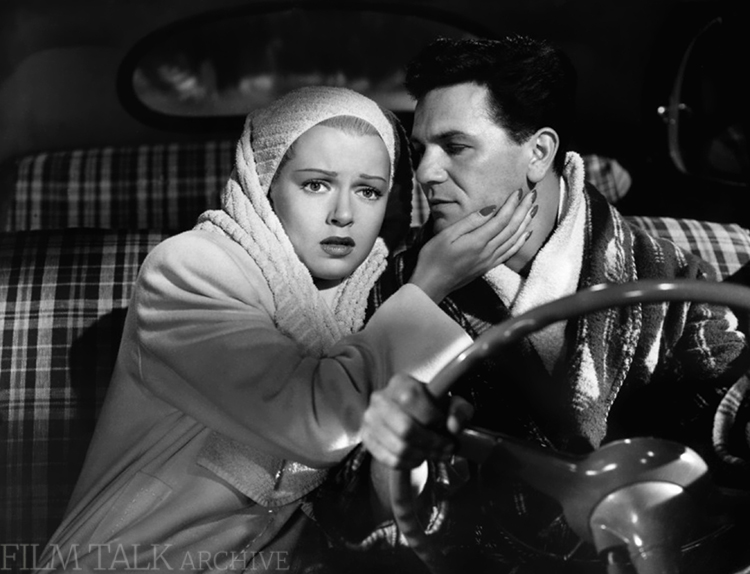
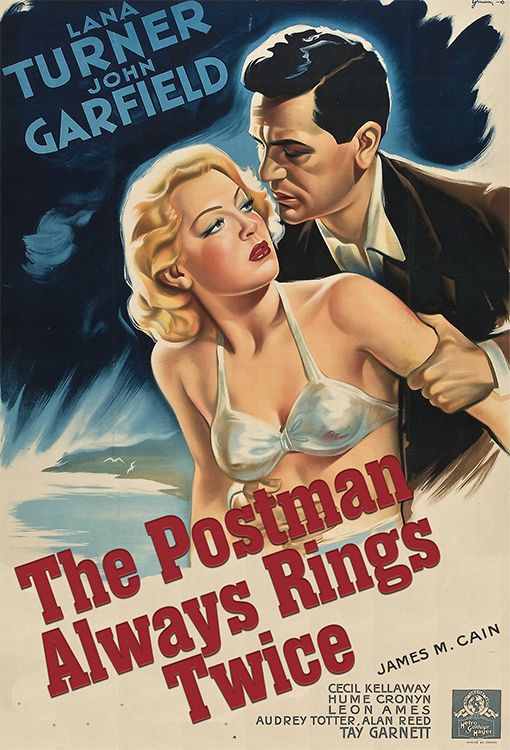
To this day, “The Postman Always Rings Twice” (1946) remains one of the best examples of John Garfield’s artistry; it highlighted his ability to convey both dangerous passion and deep humanity. As Frank Chambers, the restless drifter who conspires with Lana Turner’s femme fatale character to murder her husband, he conveyed a mix of lust, guilt, and desperation. His performance captured both the erotic energy that drives the plot and the moral corrosion that follows. Where other actors might have leaned into stylized film noir tropes, he made Frank’s inner conflict visible in subtle gestures—a nervous glance, a shift in posture, a momentary hesitation before a kiss. His realism grounded the melodrama, giving the story its lasting power.
Another film of his, “Body and Soul” (1947), captured perhaps his most celebrated performance. Playing boxer Charley Davis, he charted a character arc from scrappy underdog to corrupted champion. What made his portrayal remarkable was the way he balanced physical presence with psychological depth. In the ring, he moved with convincing athleticism, but his emotional vulnerability outside the ring gave the film extra weight. The climactic moment, when Davis defiantly refuses to throw a fight, became emblematic of John Garfield’s screen persona: a flawed man who finds dignity in resistance.
Academy Award-winning actress Patricia Neal reminisces about John Garfield when she was his co-star in “The Breaking Point” (1950)
In “The Breaking Point” (1950), Michael Curtiz’s splendid rendition of Ernest Hemingway’s novel “To Have and Have Not,” published in 1937, he played the beleaguered hero, an honest charter-boat captain who took on a dangerous cargo to save his boat and support his family; Patricia Neal was a playful, cheeky blonde and femme fatale. This was Hemingway’s preferred version of his novel, although the 1944 film, directed by Howard Hawks and starring Humphrey Bogart and Lauren Bacall in their first film together, is considered a screen classic.
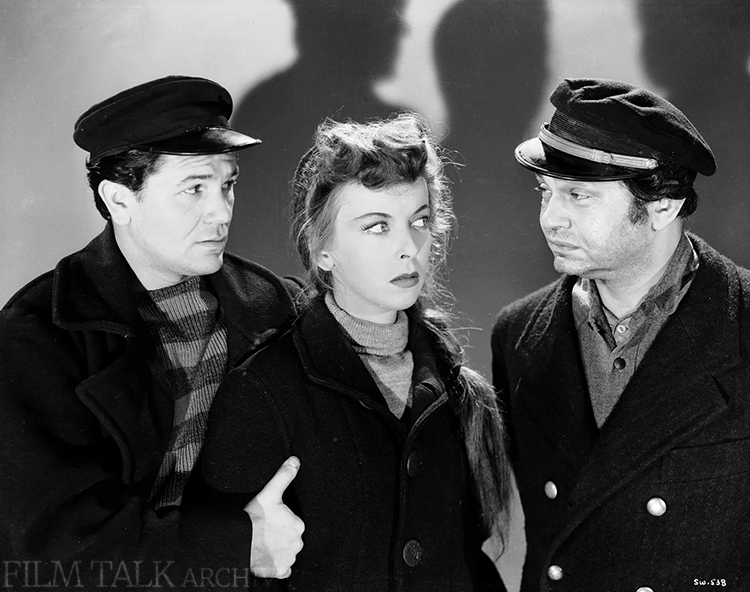
“The Breaking Point” was the fifth and final film he made with film director Michael Curtiz, who won an Academy Award for “Casablanca” (1942). Their four other films were “Four Daughters” (1938), “Daughters Courageous” (1939), “Four Wives” (1939), and “The Sea Wolf” (1941). The latter, by the way, was a highly rated drama starring Edward G. Robinson as a tyrannical captain of a ship, and co-starring John Garfield and Ida Lupino, among others, as passengers—a brash seaman and a fugitive, respectively—trying to escape.
In his autobiography “All My Yesterdays: An Autobiography” (1973), Robinson remembered John Garfield as ‘one of the best young actors I ever encountered,’ while author William Donati quoted Ida Lupino in his book “Ida Lupino: A Biography” (1996) when she said, ‘He [John Garfield] was wonderful and I loved him. He and I were like brother and sister.’ Like John Garfield, Ida Lupino regularly played tough, resentful, hard-luck characters.
In many of his screen roles and films—including those that aren’t even mentioned here, such as his supporting role opposite Gregory Peck in “Gentleman’s Agreement” (1947)—John Garfield redefined what masculinity on screen could look like. He wasn’t afraid to show weakness, doubt, or tenderness. He proved that being vulnerable could be just as powerful as being tough. His background was part of what made him so unique. You could feel that grit in every role he played. He wasn’t the tall, square-jawed hero type. Instead, he brought a lived-in quality to his characters, men who carried burdens, flaws, and insecurities. That was what made him so relatable. Watching him, you felt like he understood what it meant to struggle, to want more, to be torn between right and wrong.
His characters, from boxers to drifters and doomed romantics, radiated vulnerability and volatility, and with the intensity and rebellious charm that he brought to the screen, he paved the way for a new generation of Method actors such as Marlon Brando, Montgomery Clift, and James Dean; Brando’s raw explosiveness, Clift’s wounded sensitivity, and Dean’s restless rebellion all echo John Garfield’s template. He channeled personal emotion into his roles, often blurring the line between the man and the character. His portrayals were never one-dimensional; he layered toughness with sensitivity, making even morally ambiguous figures sympathetic.
It made John Garfield one of the most distinctive and electrifying actors of Hollywood’s Golden Age, and, at the same time, one of the most modern of Hollywood actors in the 1940s.
His contribution to screen acting endures, as not only Marlon Brando, Montgomery Clift, or James Dean built upon the foundation that he had laid, but so did Al Pacino or Robert De Niro; they too reflect John Garfield’s intense portrayals, his timeless brilliance, and his naturalistic approach to acting in front of the camera.
During the so-called Red Scare in the late 1940s, when the House Un-American Activities Committee (HUAC) investigated suspected communist influence in the film industry, many actors, writers, and directors were called to testify, and those who refused to cooperate or were suspected of communist sympathies often found themselves unemployable. It marked the beginning of the Hollywood blacklist.

John Garfield’s relatively brief but dazzling career was cut short by his lifelong heart condition, but also by the Hollywood blacklist that ruined his life and his career. He was never a communist, yet he was called to testify before the House committee in 1951, where he refused to name names of friends and colleagues. He was labeled an uncooperative witness. His refusal to name names was seen as defiance, and the studios quickly distanced themselves from him. After his appearance, the FBI called him in and asked him to confirm his wife’s earlier involvement in the Communist Party. He responded with profanity and left.
Almost overnight, the major and bankable Hollywood star at Warner Bros. and later in independent productions—also twice nominated for an Academy Award—became a performer effectively shut out of the industry, and at the height of his talent and popularity, he suddenly found himself unable to work.
He was excluded from the Hollywood system that had made him a household name in America, even when the Hollywood studios and the U.S. government knew all too well that he was never a communist. His situation illustrates the wider consequences of the blacklist; the pressure of the blacklist weighed heavily on him, both professionally and personally. Garfield’s stress only increased as roles dried up and his reputation was smeared. On May 21, 1952, at just 39 years old, he died in New York of a heart attack.
During his funeral two days later, more than 10,000 people gathered outside Riverside Memorial Chapel in Manhattan. At the time, it was the largest turnout for a celebrity funeral in New York since silent screen star Rudolph Valentino’s in 1926.
Like Robert De Niro, who always wanted to be an actor and not a movie star, John Garfield preferred to develop his craft as an actor. His obituary in The New York Times, published on May 22, 1952, said, ‘In Hollywood he was known as an actor with no taste for nightclubs, the social whirl, fancy cars and other frills. ‘Screen acting,’ he once said, ‘is my business. But I get my kicks on Broadway.’ He made movies for money, but acted on the stage because it was his love. Once he turned down a studio offer reputed to be $250,000 a year to go into a little theater production of “Skipper Next to God” at $80 a week.’
Variety added in its May 28, 1952, obituary that he ‘often asserted that he was not a pic actor—only a theater actor who went to Hollywood.’

He was the fourth actor to die after being subjected to HUAC investigations. The others were Vienna-born actress Mady Christians (1892-1951); J. Edward Bromberg (1903-1951), American actor and founding member of the Group Theater; and Black actor Canada Lee, who appeared opposite John Garfield in “Body and Soul.” Lee died on May 9, 1952, at age 45, less than two weeks before John Garfield passed away. In his final years, Lee was reportedly banned from forty television shows. He died penniless.
John Garfield married Roberta Seidman in 1935, and they had three children: Katherine (1938-1945); David (1943-1994), who also became a film editor and an actor, a.k.a. John Garfield Jr.; and their youngest daughter Julie (b. 1946). She is an award-winning stage and screen actress, as well as a painter who has studied at The New York Studio School, The Art Students League, and the New York Academy, among others. Currently, she’s involved in the New York Historical Society Exhibition “Blacklisted: An American Story” (from June 13 to November 2, 2025), which—as mentioned on its website—’explores the intersection of politics, art, culture, and social dynamics during Hollywood’s Red Scare through photographs, objects, and film. Personal narratives of the blacklisted “Hollywood Ten,” members of Congress, and film executives reveal different approaches to what it means to be a patriotic American. The exhibition also explores how Broadway and New York’s theater community responded at a time when art and creative expression were no longer protected.’
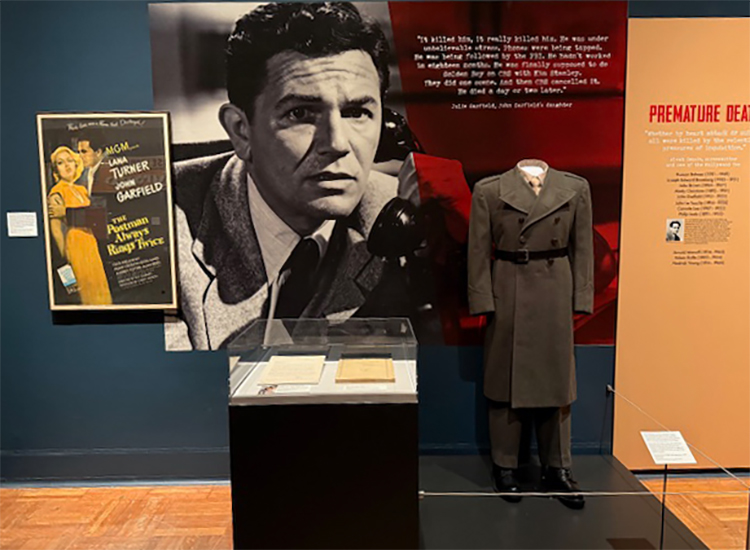
As John Garfield’s only living child, Julie Garfield is an expert on her father, his films, and his legacy. I was fortunate to get hold of her contact info and got in touch with her. She was so kind to grant me quite a bit of her time; the phone interview we had was like the best book ever written on her father.
Ms. Garfield, your father was the first actor to introduce Method acting on the screen. Did he get enough credit for that?
No. Marlon Brando gets all the credit, but it’s not really Marlon who introduced it; my father was the first one. He started it. Isaac Butler wrote an incredible book, called “The Method: How the Twentieth Century Learned to Act” [2022]. He gives my father credit for that.

To everybody, your father was a movie star, but to you, he was your father. When did you first realize he was a very accomplished and famous actor?
When you’re very young, you don’t really understand these things. I was only six and a half when he died, but my father was always my hero. Later on, when I would go out in the world and people knew who he was and remembered him, they would say, ‘What’s your name again?’ ‘Julie Garfield.’ ‘Any relation to John Garfield?’ And when I would say that I was his daughter, they would go nuts. But then, when Garfield the cat came along [from 1978], that sort of took over, and people’s association with the name Garfield became the cat. But that was a long time after; for many years, also during my career, when people heard the name Garfield, they remembered my father, and people were very interested in what I was going to come up with as myself, as an actress. My brother too—it was a hard act to follow.
Was it then more a curse than a blessing to have your father’s last name and to be his daughter?
Yes, it was more a curse than a blessing. Even though it is true that in my early years, when I opened in an Off-Off-Broadway play “Uncle Vanya” [1971], in the little basement of the Roundabout Theater—the first Roundabout Theater, now it’s a big Broadway theater—and I played Sonya, I got rave reviews. In The New York Post, the critic wrote a love letter to me, saying that I was ‘a miracle.’ He also wrote about my father, and so did The New York Times. It was very difficult for me when they said I was so brilliant, and then many famous producers and directors came downtown to see me and meet me. I was never taught to work that game. My mother and my stepfather [Sidney Cohn] protected me, so I did not really know how to take advantage of that. My mother was so afraid because my sister died in her arms when she was six years old, so she was always protective of me. She married a labor lawyer who became a hotshot theatrical lawyer, and he, too, was very protective of me. They treated me like a delicate flower, so I didn’t know how to work the business, be enthusiastic, and not be afraid. A part of me was very afraid.
To what extent did that affect your acting career?
It ruined it. It just ruined it. I didn’t take advantage of the things that I could have; I was afraid and really scared. I mean, when you open your first play and someone calls you a genius, you either deal very well with it, or it scares the crap out of you, and I think it really scared me. So it was already a hard act to follow John Garfield, and then to follow myself. They called me a young Eleanore Duse [Italian stage actress, 1858-1924]. I also worked with a couple of very mean directors who were very angry at my father because he made it, and they didn’t. They took it out on me. So I had a mixed career; it sort of went well, but I had too much fear and a lack of self-confidence.

Is that why you chose to become a painter?
No. I think I originally had a very strong impulse to be a painter. That’s what I was going to be.
In the foreword of Robert Nott’s biography “He Ran All the Way: The Life of John Garfield” [2003], you wrote that ‘in his seven-year prison term at Warner Bros., he made a lot of rotten B movies.’ Did you refer to the fact that he was suspended so often by Warner Bros. because he wanted better scripts and better directors?
He was very unhappy with the scripts and with what they wanted him to do. What happened is that he tried to do this movie “Juarez” [1939] with Bette Davis and Paul Muni, and he wasn’t very good in it. Then the studio said, ‘Okay, that’s it. From now on, you’ll only do what you’re successful at. You’re gonna play gangsters, criminals, and boxers, and that’s how we’re gonna make money off of you.’ He fought them; he did the movies, but he hated them. He wanted to expand himself as an actor, and they wouldn’t allow that. So he spent seven unhappy years there; sometimes he was in trouble with the studio because of it, or they’d punish him, then they wanted him to do another movie that he didn’t want to do. When that contract was finally up, he decided to start his own production company [Enterprise Productions, founded in 1946 with producers David L. Loew and Charles Einfeld], and then he got to do the films he really wanted to do. But by then, he was being blacklisted, and one of the best movies he made was “The Breaking Point” [1950] when he was mentioned in “Red Channels.” That ruined the release of that movie. The idea of him forming his own production company—instead of working for the studio, being a good boy and behave—and the fact that he also wanted to go back to Broadway to do plays, they thought, ‘Ah, Garfield, he’s too much trouble. Let him go.’ But when he left the studio system and formed his own production company, that’s when he made his best films.
Did he get along with Jack L. Warner?
I wouldn’t be able to answer that, but I don’t think anybody could get along with Jack L. Warner, unless you did the things he wanted you to do. I think Warner was a very bossy man. So I don’t think my father got along with him; he was not happy there.
Did your father have any particular actors or directors that he liked to work with?
He loved Michael Curtiz; I think they had a very good working relationship. “The Postman Always Rings Twice” [1946], for example, a film that he made and was such a huge success, was so dumb because I’m sure he had a lot of fights about things that didn’t make sense to him as a Method actor. For example, after he had that terrible accident and he was in a wheelchair, the next day he was in court and he was standing up straight. I’m sure they had a fight with him about that, and that he probably said, ‘Listen, I would not be standing up straight because I wouldn’t be out of that wheelchair yet.’ They never took into account that kind of organic stuff when you track what’s gonna happen to the character and what kind of shape he will be in. I’m sure he had constant fights about that. Just the integrity of the story, you know, that there’s no way he would have done that scene in the courtroom standing up. They were also cursed by bad weather: every time they went to shoot, the weather was bad.
When he worked in Hollywood in the 1940s, was he a member of the Hollywood film community, or was he always a New Yorker at heart?
Both. The deal was that he was allowed to go back to do a play on Broadway every year, once a year. So in his heart, he wanted to be a great actor, and that would also mean to get on the stage and do it. In film, you can get away with a lot of stuff that you can’t get away with on stage. He respected that art form so highly, that’s why he always wanted to return to Broadway.
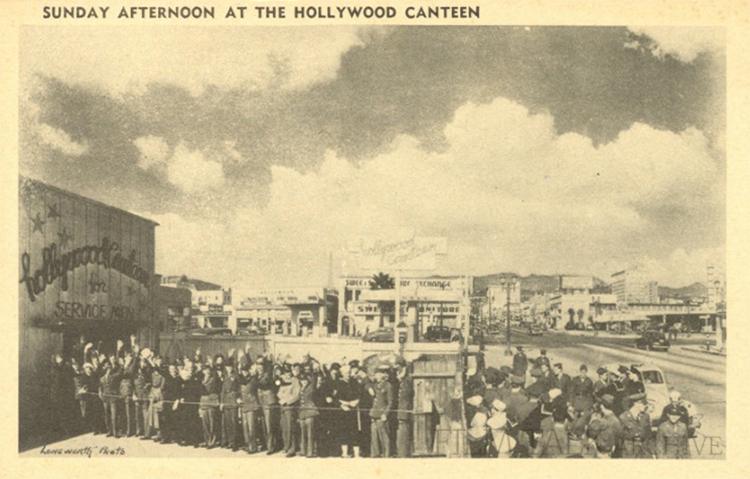
In 1942, your father founded the Hollywood Canteen with Bette Davis. That was one of the most patriotic things any American could have done back then.
Yes, and, by the way, my father was the first actor—before Bob Hope—who went overseas to entertain the troops. He went to Yugoslavia and he almost got himself killed, and this was all before Bob Hope started entertaining the troops. Somehow, he never got credit for that. And yes, he started the Hollywood Canteen; he was such a compassionate person, he cared so much about the people he worked with, the people who were wounded in the War, and forming the Hollywood Canteen showed that. His patriotism was completely discounted when it came to the communist witch hunt. One of the reasons they went after him was because of my mother. My mother’s mother’s best friend jumped to her death in the Triangle fire [New York, 1911; industrial disaster that killed 146 garment workers]. My grandmother was a bit of an activist, and then my mother was an activist when she met my father. She would go to demonstrations and meetings; she was interested in other forms of government, and maybe there was a better way to protect the workers who weren’t protected in those days. They didn’t have unions, so my mother was very active in that. For ‘a couple of minutes’ she was a member of the Communist Party, and I say for ‘a couple of minutes’ because once she had children, she didn’t have time for any of that. So when they went after my father, that was because of her Communist Party card. They took him down to the FBI headquarters and said, ‘Here’s your wife’s expired Communist Party membership card. Look at the card; she was a member of the Communist Party for a couple of months. What do you have to say about that?’ And he said, ‘You know, f*ck you!’ That’s why they went after him, and it killed his career. They also didn’t like it that he formed his own production company. It threatened them. Now everybody has their own production company.
Your father also wanted more diversity behind and in front of the camera, with better roles for Black people, didn’t he?
That had to do with Canada Lee in “Body and Soul” [1947]. My father was one of the producers for the company that made that film. He insisted that Canada Lee play that part. They said to my father one day, ‘Give up Canada Lee. Get a white actor.’ But my father said, ‘I’m not giving up Canada Lee. I won’t make the film without a Black actor.’ Coming from the slums and being an outsider, being poor and poverty-stricken, it made my father fight for those people.
You knew and worked with Zero Mostel, who was also blacklisted. Can you tell something about him?
We did “The Merchant” [1977] together, the last play with Zero before he died. It was a play written by Arnold Wesker, a rather famous English playwright, and it was a modern adaptation of Shakespeare’s “The Merchant in Venice” [1596-1598]. I was cast in the part of Jessica, Zero played Shylock, and we went out of town into tryouts. The play was a great idea, but it was so endless and so wordy. And poor Zero—after we did the first preview in Philadelphia, which was three hours and forty minutes, that’s how long it ran—he then got sick and had to go to the hospital. All of a sudden, he had lost a lot of weight, and he got really sick. We continued to rehearse it, and we waited for him. But then he died in the hospital. That was very, very sad.
Did you know a lot of people who were blacklisted?
Yes. My mother remarried a very famous lawyer who also represented a lot of famous actors, and he helped them. When Zero needed money, he would buy a painting from him. All the blacklisted people hung out together. We’d have Christmas parties with Zero, Lee Grant, and Jack Gilford; we were at all the parties with them.
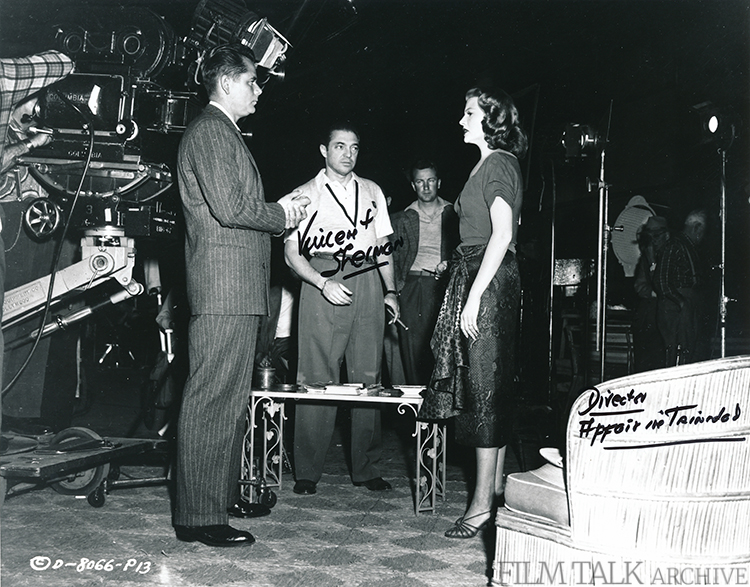
In the early 2000s, I knew film director Vincent Sherman [he made “Saturday’s Children” in 1940, starring John Garfield]. Each time I went to Los Angeles, I got to visit him at his Malibu home. We also met in Santa Monica once and had a coffee at Starbucks, where he talked for an hour and a half about your father, reminiscing about their days at Warner Bros., their friendship, and how much they respected each other.
I lived in Los Angeles. I moved there in 1990. But once I got to Los Angeles, I basically froze. I didn’t belong there, I shouldn’t have been there, and I was such a wreck that I didn’t go and find Vincent Sherman. I didn’t do that. The only great thing that happened to me was when I was in Mexico to do this telenovella; they showed Abraham Polonsky movies at the Lincoln Center in New York, and they flew me in from Mexico to New York to participate with Polonsky [in 1947, he wrote the screenplay for John Garfield’s “Body and Soul,” and in 1948, he directed John Garfield in “Force of Evil”]. I got to hang out with him, had dinner with him, and we talked about my father. I also did that with John Berry [directed John Garfield’s final film “He Ran All the Way” in 1951]. He was living in Paris, but he was visiting Los Angeles where I spent some time with him. But I’m just sorry I didn’t meet Vincent Sherman. I was always so ambivalent. Half of me was like, ‘Oh, I want to know all about it,’ and the other half of me was like, ‘Leave me alone. I don’t want to hear about it because it’s too painful.’ I was always in conflict. I didn’t learn how to make the most of who I was, or who I could have been. As I told you, part of the reason is that my sister died so tragically, and it was really devastating for my parents. My brother was about six months old then, and when my parents decided to have another child, it was me. I was so protected—everything about me was protected because my mother was so afraid that she would lose me too, and so was my stepfather. They’d say, ‘Oh Julie, you’re a brilliant artist, but don’t ever do commercials. It’s a sellout.’ If you want to have a career, you have to do everything that you can get your hands on, and I didn’t do that. I didn’t learn that kind of work ethic. Sometimes I had success, sometimes I didn’t. So that’s the way it was because I never thought, ‘Grab everything and do it.’ That’s what happened, but what can you do? I can understand it.
Do you have a lot of memorabilia from your father?
I have a lot of beautiful pictures, but I donated most of it to the University of Texas. A very strange thing happened to me after we did this documentary, “The John Garfield Story” [2003]. After it was released, I got this phone call from a businessman. ‘Hello, is this Julie Garfield?’ ‘Yes.’ ‘Julie, I’ve been looking for you for years.’ ‘You have? Well, here I am.’ ‘I have something I want to give you. I also want to buy you dinner and introduce you to my family.’ And he did. When he was a young man, he was working his way through college; he had a job, and he had to look through unclaimed wallets in the police department. There were so many unclaimed wallets from bums and people who had died—whatever. He started to work on them, to make sure there wasn’t any money in there, or any medals or anything. And then he saw this beautiful wallet. He picked it up, opened it up, and it said, John Garfield in gold. That was my father’s wallet when he died; my mother never claimed it. He immediately realized that he had something very special in his possession. The wallet was filled with handwritten notes and a long list of people my father knew and their phone numbers. The last thing he bought before he died was a bicycle for my brother; the receipt was still in there. There were pictures of my brother and my sister, pictures of me as a little girl, his Actors’ Equity card, his Screen Actors Guild card, his driver’s license… I mean, everything. He even had the phone number of the guy who had made him come down to the FBI headquarters, and who tried to have my father say that my mother was a member of the Party. So this wallet is like a piece of history. It’s amazing. Vincent Sherman would have loved that.
Wouldn’t it be great to make a movie about your father?
Yes. Wouldn’t it be great if we could get George Clooney to do it?
Phone interview,
July 27, 2025
1. FILMS OF JOHN GARFIELD
FOOTLIGHT PARADE (1933) DIR Lloyd Bacon PROD Robert Lord SCR James Seymour, Manuel Seff CAM George Barnes ED George Amy CAST James Cagney, Joan Blondell, Ruby Keeler, Dick Powell, Frank McHugh, Guy Kibbee, Ruth Donnelly, Hugh Herbert, Claire Dodd, Busby Berkeley, Ann Sothern, John Garfield (Sailor)
FOUR DAUGHTERS (1938) DIR Michael Curtiz PROD Hal B. Wallis SCR Julius J. Epstein, Lenore J. Coffee (Cosmopolitan Magazine story “Sister Act” [1937] by Fannie Hurst) CAM Ernest Haller ED Ralph Dawson MUS Max Steiner CAST Priscilla Lane, Rosemary Lane, Lola Lane, Gale Page, Claude Rains, John Garfield (Mickey Borden), Jeffrey Lynn, Dick Foran, Frank McHugh, May Robson
THEY MADE ME A CRIMINAL (1939) DIR Busby Berkeley SCR Sig Herzig (novel by Beulah Marie Dix, Bertram Millhauser; play “Sucker” [1933] by Bertram Millhauser) CAM James Wong Howe ED Jack Killifer MUS Max Steiner CAST John Garfield (Johnnie Bradfield), The Dead End Kids, Claude Rains, Gloria Dickson, May Robson, Ann Sheridan, Ward Bond
BLACKWELL’S ISLAND (1939) DIR William C. McGann PROD Jack L. Warner, Hal B. Wallis SCR Crane Wilbur (original story by Crane Wilbur, Lee Katz) CAM Sidney Hickox ED Doug Gould MUS Bernhard Kaun CAST John Garfield (Tom Haydon), Rosemary Lane, Stanley Fields, Dick Purcell, Victor Jory, Morgan Conway, Granville Bates, Anthony Averill
 JUAREZ (1939) DIR William Dieterle SCR John Huston, Wolfgang Reinhardt, Æneas MacKenzie (play “Juarez” [1925] by Franz Werfel; biography “The Phanton Crown” [1934] by Bertita Harding) CAM Tony Gaudio ED Warren Low MUS Erich Wolfgang Korngold CAST Paul Muni, Bette Davis, Brian Aherne, Claude Rains, John Garfield (Porfirio Diaz), Louis Calhern, Gale Sondergaard, Donald Crisp, Joseph Calleia, Harry Davenport, Henry O’Neill, Montagu Love, John Miljan
DAUGHTERS COURAGEOUS (1939) DIR Michael Curtiz SCR Julius J. Epstein (play “Fly Away Home” [1935] by Dorothy Bennett, Irving White) CAM James Wong Howe, Ernest Haller ED Ralph Dawson, W. Donn Hayes MUS Max Steiner CAST John Garfield (Gabriel Lopez), Priscilla Lane, Rosemary Lane, Lola Lane, Gale Page, Claude Rains, Fay Bainter, Jeffrey Lynn, Donald Crisp, May Robson, Frank McHugh
DUST BE MY DESTINY (1939) DIR Lewis Seiler SCR Robert Rossen (novel “Dust Be My Destiny” by Jerome Odlum) CAM James Wong Howe ED Warren Lowe MUS Max Steiner CAST John Garfield (Joe Bell), Priscilla Lane, Alan Hale, Frank McHugh, Billy Halop, Bobby Jordan, Charley Grapewin, Henry Armetta, Stanley Ridges, Getrude Astor, Frank Coghlan Jr.
FOUR WIVES (1939) DIR Michael Curtiz SCR Julius J. Epstein, Maurice Hanline (suggested by the Cosmopolitan Magazine story “Sister Act” [1937] by Fannie Hurst) CAM Sol Polito ED Ralph Dawson MUS Max Steiner CAST Priscilla Lane, Rosemary Lane, Lola Lane, Gale Page, May Robson, Frank McHugh, Dick Foran, Henry O’Neill, Claude Rains, Eddie Albert, John Garfield (Mickey Bordan), Vera Miles, John Qualen
CASTLE ON THE HUDSON (1940) DIR – PROD Anatole Litvak SCR Courtney Terrett, Brown Holmes, Seton I. Miller (book “Twenty Thousand Years in Sing Sing” by Lewis Edward Lawes) CAM Arthur Edeson ED Thomas Richards MUS Adolph Deutsch CAST John Garfield (Tommy Gordan), Ann Sheridan, Pat O’Brien, Burgess Meredith, Henry O’Neill, Jerome Cowan, Guinn ‘Big Boy’ Williams, John Litel
SATURDAY’S CHILDREN (1940) DIR Vincent Sherman SCR Julius J. Epstein, Philip G. Epstein (play “Saturday’s Children” [1927] by Maxwell Anderson) CAM James Wong Howe ED Owen Marks CAST John Garfield (Rims Rosson), Anne Shirley, Claude Rains, Roscoe Karns, Lee Patrick, Dennie Moore, Elisabeth Risdon, Berton Churchill
FLOWING GOLD (1940) DIR Alfred E. Green SCR Kenneth Gamet (story by Rex Beach) CAM Sidney Hickox ED James Gibbon MUS Adolph Deutsch CAST John Garfield (Johnny Blake), Pat O’Brien, Frances Farmer, Raymond Walburn, Cliff Edwards, Tom Kennedy, Granville Bates, Jody Gilbert, Edward Pawley
 EAST OF THE RIVER (1940) DIR Alfred E. Green PROD Bryan Foy SCR Fed Niblo Jr. (original story by John Fante, Ross B. Wills) CAM Sidney Hickox ED Thomas Pratt MUS Adolph Deutsch CAST John Garfield (Joe Lorenzo), Brenda Marshall, Marjorie Rambeau, George Tobias, William Lundigan, Moroni Olsen, Douglas Fowley
THE SEA WOLF (1941) DIR Michael Curtiz PROD Hal B. Wallis SCR Robert Rossen (novel “The Sea-Wolf” [1904] by Jack London) CAM Sol Polito ED George Amy MUS Erich Wolfgang Korngold CAST Edward G. Robinson, Ida Lupino, John Garfield (George Leach), Alexander Knox, Gene Lockhart, Barry Fitzgerald, Stanley Ridges, David Bruce, Howard Da Silva
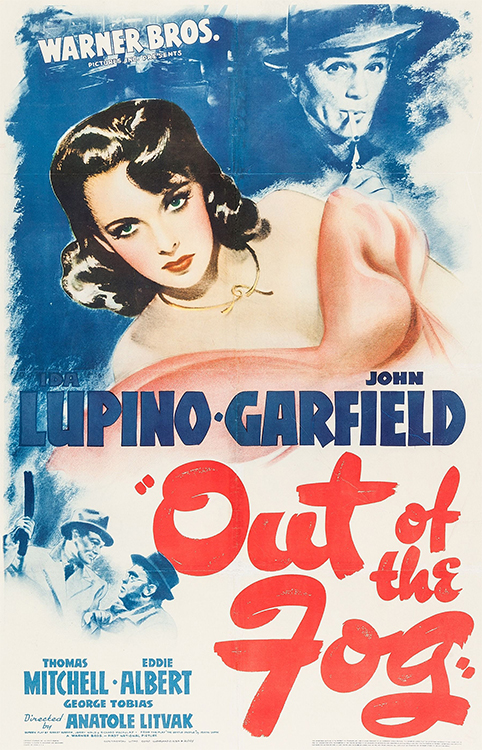
OUT OF THE FOG (1941) DIR Anatole Litvak SCR Jerry Wald, Robert Rossen, Richard Macauley (play “The Gentle People” [1939] by Irwin Shaw) CAM James Wong Howe ED Warren Low MUS Heinz Roemheld CAST Ida Lupino, John Garfield (Harold Goff), Thomas Mitchell, Eddie Albert, George Tobias, John Qualen, Aline MacMahon, Jerome Cowan, Frank Coghlan Jr.
DANGEROUSLY THEY LIVE (1941) DIR Robert Florey PROD Bryan Foy SCR Marion Parsonnet CAM L. William O’Connell ED Harold McLernon MUS William Lava CAST John Garfield (Dr. Michael Lewis), Nancy Coleman, Ramond Massey, Lee Patrick, Moroni Olsen, Esther Dale, John Ridgely, Christian Rub, Frank Reicher
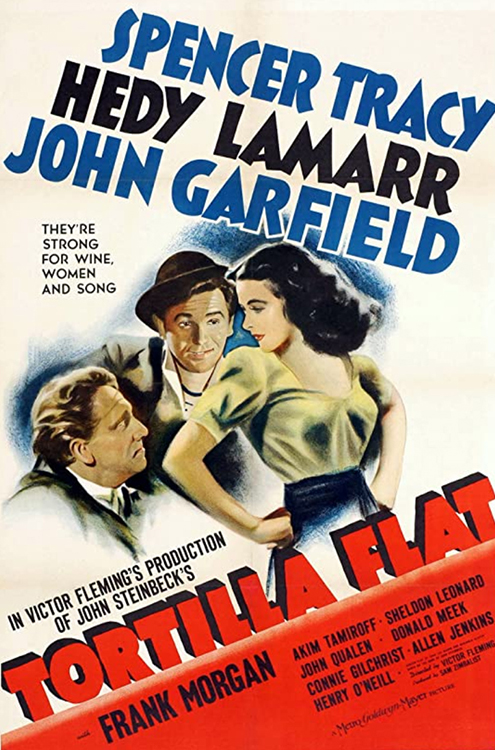 TORTILLA FLAT (1942) DIR Victor Fleming PROD Sam Zimbalist SCR John Lee Mahin, Benjamin Glazer (novel “Totilla Flat” [1935] by John Steinbeck) CAM Karl Freund ED James E. Newcom MUS Franz Waxman CAST Spencer Tracy, Hedy Lamarr, John Garfield (Danny), Frank Morgan, Akim Tamiroff, Sheldon Leonard, John Qualen, Donald Meek, Connie Gilchrist, Alen Jenkins, Henry O’Neill
AIR FORCE (1943) DIR Howard Hawks PROD Hal B. Wallis SCR Dudley Nichols CAM James Wong Howe ED George Amy MUS Franz Waxman CAST Gig Young, Arthur Kennedy, Charles Drake, Harry Carey, George Tobias, Ward Wood, Ray Montgomery, John Garfield (Sergeant Joe Winocki), James Brown
THE FALLEN SPARROW (1943) DIR Richard Wallace PROD Robert Fellows SCR Warren Duff (novel “The Fallen Sparrow” [1942] by Dorothy B. Hughes) CAM Nicholas Musuraca ED Robert Wise MUS Roy Webb CAST John Garfield (John McKittrick), Maureen O’Hara, Walter Slezak, Patricia Morison, Martha O’Driscoll, Bruce Edwards, John Banner, John Miljan
THANK YOUR LUCKY STARS, a.k.a. WARNER FOLLIES (1943) DIR David Butler PROD Mark Hellinger SCR Norman Panama, Melvin Frank, James V. Kern (original idea by Arthur Schwartz, Everett Freeman) CAM Arthur Edeson ED Irene Morra MUS Heinz Roemheld CAST Joan Leslie, Humphrey Bogart, Eddie Cantor, Bette Davis, Olivia de Havilland, Errol Flynn, John Garfield (Himself), Ida Lupino, Dennis Morgan, Ann Sheridan, Dinah Shore, Alexis Smith, Jack Carson, Alan Hale, George Tobias, Edward Everett Horton, S.Z. Sakall, Hattie McDaniel
DESTINATION TOKYO (1943) DIR Delmer Daves PROD Jerry Wald SCR Delmer Daves, Albert Maltz (original story by Steve Fisher) CAM Bert Glennon ED Christian Nyby MUS Franz Waxman CAST Cary Grant, John Garfield (Wolf), Alan Hale, John Ridgely, Dane Clark, Warner Anderson, William Prince, Robert Hutton, Tom Tully, Faye Emerson
BETWEEN TWO WORLDS (1943) DIR Edward A. Blatt PROD Mark Hellinger SCR Daniel Fuchs (play “Outward Bound” [1923] by Sutton Vane) CAM Carl E. Guthrie ED Rudi Fehr MUS Erich Wolfgang Korngold CAST John Garfield (Tom Prior), Paul Henreid, Sydney Greenstreet, Eleanor Parker, Edmund Gwenn, George Tobias, George Coulouris, Faye Emerson, Sara Allgood
HOLLYWOOD CANTEEN (1944) DIR – SCR Delmer Daves PROD Walter Gottlieb CAM Bert Glennon ED Christian Nyby MUS Leo F. Forbstein Running time 124 min CAST Robert Hutton, Joan Leslie, The Andrews Sisters, Jack Benny, Joe E. Brown, Eddie Cantor, Jack Carson, Dane Clark, Joan Crawford, Helmut Dantine, Bette Davis, John Garfield (Himself), Sydney Greenstreet, Alan Hale, Paul Henreid, Peter Lorre, Ida Lupino, Dennis Morgan, Janis Paige, Eleanor Parker, Joyce Reynolds, Roy Rogers, S.Z. Sakall, Jane Wyman, Diana Barrymore, Julie Bishop, Dorothy Malone
 PRIDE OF THE MARINES (1945) DIR Delmer Daves PROD Jerry Wald SCR Albert Maltz (book “Al Schmid, Marine” [1944] by Roger Butterfield) CAM J. Peverell Marley ED Owen Marks MUS Franz Waxman CAST John Garfield (Al Schmid), Eleanor Parker, Dane Clark, John Ridgely, Rosemary DeCamp, Ann Doran, Ann E. Todd, Warren Douglas, Don McGuire
THE POSTMAN ALWAYS RINGS TWICE (1946) DIR Tay Garnett PROD Carey Wilson SCR Niven Busch, Harry Ruskin (novel “The Postman Always Rings Twice” [1934] by James M. Cain) CAM Sidney Wagner ED George White MUS George Bassman CAST Lana Turner, John Garfield (Frank Chambers), Cecil Kellaway, Hume Cronyn, Leon Ames, Audrey Totter, Alan Reed, Jeff York
NOBODY LIVES FOREVER (1946) DIR Jean Negulesco PROD Robert Buckner SCR W.R. Burnett (also novel “I Wasn’t Born Yesterday”) CAM Arthur Edeson ED Rudi Fehr MUS Adolph Deutsch CAST John Garfield (Nick Blake), Geraldine Fitzgerald, Wlter Brennan, Faye Emerson, George Coulouris, George Tobias, Robert Shayne, Richard Gaines, Richard Erdman
HUMORESQUE (1946) DIR Jean Negulesco PROD Jerry Wald SCR Clifford Odets, Zachary Gold (short story “Humoresque” [1919] by Fannie Hurst) CAM Ernest Haller ED Rudi Fehr CAST Joan Crawford, John Garfield (Paul Boray), Oscar Levant, J. Carrol Naish, Joan Chandler, Tom D’Andrea, Peggy Knudsen, Ruth Nelson, Craig Stevens, Bobby Blake
BODY AND SOUL (1947) DIR Robert Rossen PROD Bob Roberts SCR Abraham Polonsky CAM James Wong Howe ED Robert Parrish MUS Hugo Friedhofer CAST John Garfield (Charley Davis), Lilli Palmer, Hazel Brooks, Anne Revere, William Conrad, Joseph Pevney, Lloyd Gough, Canada Lee, Steve Carruthers
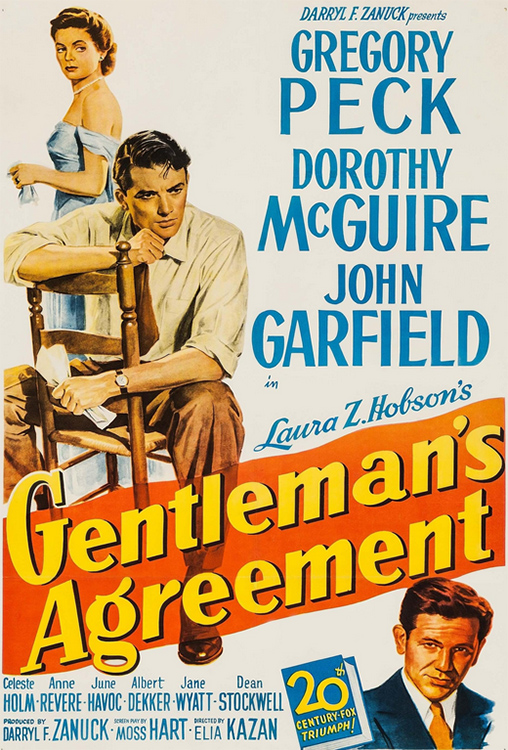 GENTLEMAN’S AGREEMENT (1947) DIR Elia Kazan PROD Darryl F. Zanuck SCR Moss Hart (novel “Gentlemen’s Agreement” [1947] by Laura Z. Hobson) CAM Arthur C. Miller ED Harmon Jones MUS Alfred Newman CAST Gregory Peck, Dorothy McGuire, John Garfield (Dave Goldman), Celeste Holm, Anne Revere, June Havoc, Albert Dekker, Jane Wyatt, Dean Stockwell, Sam Jaffe
DAISY KENYON (1947) DIR – PROD Otto Preminger SCR David Hertz (novel “Daisy Kenyon” [1945] by Elizabeth Janeway) CAM Leon Shamroy ED Louis R. Loeffler MUS David Raskin CAST Joan Crawford, Dana Andrews, Henry Fonda, Ruth Warrick, Martha Stewart, Peggy Ann Garner, Connie Marshall, Mae Marsh, John Garfield (Himself [uncredited])
FORCE OF EVIL (1948) DIR Abraham Polonsky PROD Bob Roberts SCR Abraham Polonsky, Ira Wolfert (novel “Tucker’s People” [1943] by Ira Wolfert) CAM George Barnes ED Art Seid MUS David Raskin CAST John Garfield (Joe Morse), Beatrice Pearson, Thomas Gomez, Marie Windsor, Howland Chamberlain, Roy Roberts, Paul Fix, Stanley Prager, Barry Kelley
JIGSAW (1949) DIR Fletcher Markle PROD Harry Lee Danziger, Edward J. Danziger SCR Fletcher Markle, Vincent McConnor (original story by Joe Roeburt) CAM Don Malkames ED Robert Matthews MUS Robert W. Stringer CAST Franchot Tone, Jean Wallace, Marc Lawrence, Myron McCormick, Winifred Lenihan, Betty Harper, Hedley Rainnie, Walter Vaughn, Marlene Dietrich, Henry Fonda, John Garfield (Loafer with Newspaper [uncredited]), Marsha Hunt, Fletcher Markle, Burgess Meredith, Everett Sloane
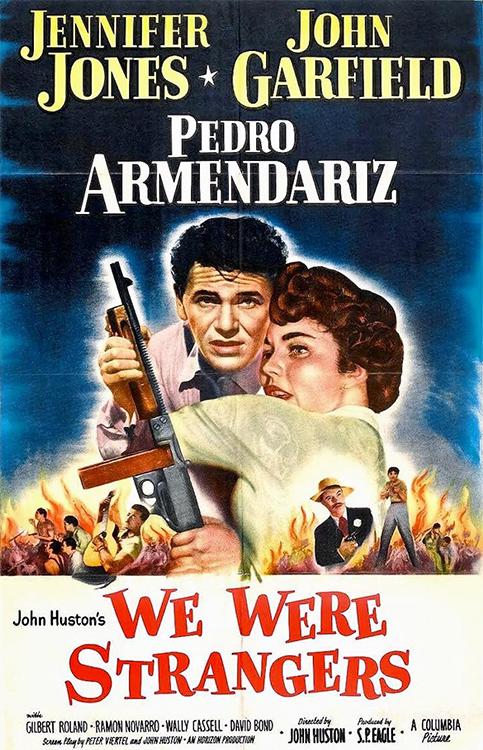 WE WERE STRANGERS (1949) DIR John Huston PROD Sam Spiegel SCR John Huston, Peter Viertel (based on an episode in the novel “Rough Sketch” [1948] by Robert Sylvester) CAM Russell Metty ED Al Clark MUS George Antheil CAST Jennifer Jones, John Garfield (Tony Fenner), Pedro Armendiraz, Gilbert Roland, Ramon Navarro, Wally Cassell, David Bond, José Pérez
UNDER MY SKIN (1950) DIR Jean Negulesco PROD Casey Robinson SCR Casey Robinson (short story “My Old Man” [1923] by Ernest Hemingway) CAM Joseph LaShelle ED Dorothy Spencer MUS Daniele Amfitheatrof CAST John Garfield (Dan Butler), Micheline Prelle [Micheline Presle], Luther Adler, Orley Lindgren, Noel Drayton, Frank Arnold
THE BREAKING POINT (1950) DIR Michael Curtiz PROD Jerry Wald SCR Ranald MacDougall (novel “To Have and Have Not” [1937] by Ernest Hemingway) CAM Ted D. McCord ED Alan Crosland Jr. MUS Max Steiner CAST John Garfield (Harry Morgan), Patricia Neal, Phyllis Thaxter, Juano Hernandez, Wallace Ford, Edmon Ryan, Ralph Dumke, Guy Tomajan
HE RAN ALL THE WAY (1951) DIR John Berry PROD Bob Roberts, John Garfield [uncredited] SCR Dalton Trumbo, Hugo Butler, Guy Endore (novel “He Ran All the Way” [1947] by Sam Ross) CAM James Wong Howe MUS Franz Waxman CAST John Garfield (Nick Robey), Shelley Winters, Wallace Ford, Selena Royle, Gladys George, Norman Lloyd, Robert Hyatt, Clancy Cooper, Vici Raaf
2. PLAYS AND FILMS WITH JULIE GARFIELD
PLAYS include
UNCLE VANYA (recipient of the Theatre World Award, 1971)
THE DANCE OF DEATH
THE LOWER DEPTHS
THE CHERRY ORCHARD
LOVERS AND OTHER STRANGERS
DEATH OF A SALESMAN
POOR MURDERER
THE MERCHANT
FILMS include
GOODBYE, COLUMBUS (1969) DIR Larry Peerce PROD Stanley R. Jaffe SCR Arnold Schulman (novella “Goodbye, Columbus” [1959] by Philip Roth) CAM Gerald Hirschfeld ED Ralph Rosenblum MUS Charles Fox CAST Richard Benjamin, Ali MacGraw, Jack Klugman, Nan Martin, Michael Meyers, Lori Shelle, Monroe Arnold, Julie Garfield (Wedding Guest [uncredited]), Bette Midler
COMING APART (1969) DIR – SCR Milton Moses Ginsberg PROD Andrew J. Kuehn, Israel Davis CAM Jack Yager ED Lawrence Tetenbaum MUS Francis Xavier CAST Rip Torn, Sally Kirkland, Robert Blankshine, Darlene Dorin, Julie Garfield (Julie), Lois Markle, Megan McCormick, Nancy MacKay, Viveca Lindfors
 JOHN AND MARY (1969) DIR Peter Yates PROD Ben Kadish SCR John Mortimer (novel “John and Mary” [1966] by Mervyn Jones) CAM Gayne Rescher ED Frank P. Keller MUS Quincy Jones CAST Dustin Hoffman, Mia Farrow, Michael Tolan, Sunny Griffin, Stanley Beck, Tyne Daly, Alix Elias, Julie Garfield (Fran), Marvin Lichterman, Olympia Dukakis, Cleavon Little, Jennifer Salt
THE REVOLUTIONARY (1970) DIR Paul Williams PROD Edward Rambach Pressman SCR Hans Koningsberger (also novel ‘The Revolutionary: A Novel’ [1967]) CAM Brian Probyn ED Henry Richardson MUS Michael Small CAST Jon Voight, Seymour Cassel, Robert Duvall, Collin Wilcox Paxton, Jennifer Salt, Elliott Sullivan, Julie Garfield (Girl)
LOVE STORY (1970) DIR Arthur Hiller PROD Howard G. Minsky SCR Erich Segal CAM Richard C. Kratina ED Robert C. Jones MUS Francis Lai CAST Ali MacGraw, Ryan O’Neal, John Marley, Ray Milland, Russell Nype, Katharine Balfour, Sydney Walker, Robert Modica, Walker Daniels, Tommy Lee Jones, Julie Garfield (Bystander at Harsichord Concerto)
THE HOSPITAL (1971) DIR Arthur Hiller PROD Howard Gottfried SCR Paddy Chayefsky CAM Victor J. Kemper ED Eric Albertsen MUS Morris Surdin CAST George C. Scott, Diana Rigg, Bernhard Hughes, Richard Dysart, Stephen Elliott, Donald Harron, Andrew Duncan, Nancy Marchand, Frances Sternhagen, Paddy Chayefsky, Julie Garfield (Nurse Perez [uncredited])
THE FRONT (1976) DIR – PROD Martin Ritt SCR Walter Bernstein CAM Michael Chapman ED Sidney Levin MUS Dave Grusin CAST Woody Allen, Zero Mostel, Herschel Bernardi, Michael Murphy, Andrea Marcovicci, Remak Ramsey, Marvin Lichterman, Lloyd Gough, David Margulies, Joshua Shelley, Joseph Sommer, Danny Aiello, Julie Garfield (Margo)
KING OF THE GYPSIES (1978) DIR Frank Pierson PROD Federico De Laurentiis SCR Frank Pierson (book “King of the Gypsies” [1975] by Peter Maas) CAM Sven Nykvist ED Paul Hirsch MUS David Grisman CAST Sterling Hayden, Shelley Winters, Susan Sarandon, Eric Roberts, Judd Hirsch, Brooke Shields, Annette O’Toole, Annie Potts, Michael V. Gazzo, Julie Garfield ([uncredited])
NIGHT FLOWERS (1979) DIR – ED Louis San Andres PROD Sally Faile SCR Gabriel Walsh CAM Larry Pizer MUS Harry Manfredini CAST Gabriel Walsh, José Perez, Sabra Jones, Henerson Forsythe, Angel Lindbergh, J.C. Quinn, Lázaro Pérez, David Margulies, Jack Hollander, Linda Hamilton, Julie Garfield (Alice)
ISHTAR (1987) DIR – SCR Elaine May PROD Warren Beatty CAM Vittorio Storaro ED William Reynolds, Richard P. Cirincione, Stephen A. Rotter MUS Dave Grusin CAST Warren Beatty, Dustin Hoffman, Isabelle Adjani, Charles Grodin, Jack Weston, Tess Harper, Carol Kane, Aharon Pialé, Fijad Hageb, David Margulies, Julie Garfield (Dorothy)
SEE YOU IN THE MORNING (1989) DIR – SCR Alan J. Pakula PROD Alan J. Pakula, Susan Solt CAM Donald McAlpine ED Evan A. Lottman MUS Michael Small CAST Jeff Bridges, Alice Krige, Farrah Fawcett, Drew Barrymore, Lukas Haas, David Dukes, Frances Sternhagen, Theodore Bikel, Macaulay Culkin, Julie Garfield (Cafeteria Cashier)
STANLEY & IRIS (1990) DIR Martin Ritt PROD Arlene Sellers, Alex Winitsky SCR Irving Ravetch, Harriet Frank Jr. (novel “Union Street” [1982] by Pat Barker) CAM Donald McAlpine ED Sidney Levin MUS John Williams CAST Jane Fonda, Robert De Niro, Swoozie Kurtz, Martha Plimpton, Harley Cross, Jamey Sheridan, Feodor Chaliapin Jr., Julie Garfield (Belinda)
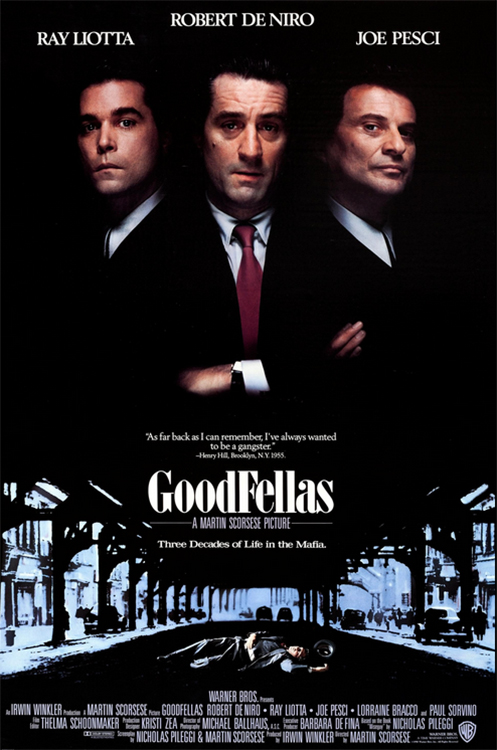 GOODFELLAS (1990) DIR Martin Scorsese PROD Irwin Winkler SCR Nicholas Pileggi, Martin Scorsese (book “Wiseguy: Life in a Mafia Family” [1985] by Nicholas Pileggi) CAM Michael Ballhaus ED Thelma Schoonmaker CAST Robert De Niro, Ray Liotta, Joe Pesci, Lorraine Bracco, Paul Sorvino, Frank Sivero, Tony Darrow, Mike Starr, Julie Garfield (Mickey Conway)
MEN OF RESPECT (1990) DIR William Reilly PROD Ephraim Horowitz SCR William Reilly (play “The Tragedy of Macbeth” [1606] by William Shakespeare) CAM Bobby Bukowski ED Elizabeth Kling MUS Misha Segal CAST John Turturro, Katherine Borowitz, Dennis Farina, Peter Boyle, Rod Steiger, Lilia Skala, Steven Wright, Stanley Tucci, Julie Garfield (Irene)
MORTAL THOUGHTS (1991) DIR Alan Rudolph PROD Mark Tarlov, John Fiedler SCR William Reilly, Claude Kerven CAM Elliott Davis ED Tom Walls MUS Mark Isham CAST Demi Moore, Glenne Headly, Bruce Willis, John Pankow, Harvey Keitel, Billie Neal, Frank Vincent, Karen Shallo, Julie Garfield (Maria Urbanski)
THE LITTLE DEATH (1996) DIR Jan Verheyen PROD Ann Dubinet, Chris Zarpas SCR Michael Holden, Nicholas Bogner CAM David Phillips ED Joseph Gutowski MUS Christopher Tyng CAST Pamela Gidley, J.T. Walsh, Dwight Yoakam, Brent David Fraser, D.W. Moffett, Solomon Burke, Amy Stoch, Michael Holden, Philip Baker Hall, Richard Beymer, Julie Garfield (The Judge)
AWAY FROM HERE (2014) DIR Bruce Van Dusen PROD Kate Cohen, Terry Leonard SCR Kate Cohen, Timothy Michael Cooper MUS Robert Miller CAST Nick Stahl, Alicia Witt, Ray Wise, Frankie Faison, John Bedford Lloyd, Donna Mitchell, Walter Belenky, Julie Garfield (Phoebe), Mary Regency Boies
TV MOVIES
THE NATIVITY (1978) DIR Ken Cameron, Bernard L. Kowalski PROD Michael Apted TELEPLAY Michael Apted, Millard Kaufman, Morton S. Fine CAM Gábor Pogány ED Robert Phillips, Jerry Dronsky MUS Lalo Schifrin CAST Madeleine Stowe, John Shea, Jane Wyatt, Paul Stewart, Audrey Totter, George Voskovec, Julie Garfield (Zipporah), Leo McKern, John Rhys-Davies
FAMILY REUNION (1981) DIR Fielder Cook PROD Lucy Jarvis TELEPLAY Allan Sloane (article “How America Lives in Good Housekeeping” in Ladies Home Journal by Joe Sparton) CAM Jack Priestley ED Eric Albertson MUS Wladimir Selinsky CAST Bette Davis, J. Ashley Hyman, David Huddleston, John Shea, Roy Dotrice, David Rounds, Kathryn Walker, Paul Rudd, Julie Garfield (Girl on the Bus)
PLAZA SUITE (1982) DIR Harvey Medlinsky PROD Harvey Medlinsky, Marica Govons TELEPLAY (play “Plaza Suite” [1968] by Neil Simon) CAM David Zacks ED Danny White CAST Lee Grant, Jerry Orbach, Julie Garfield, Jeffrey Haddow, Randy Rocca
A MOTHER’S PRAYER (1995) DIR Larry Elikan PROD Sally Young TELEPLAY Lee Rose CAM Eric van Haren Noman ED Peter V. White MUS CAST Linda Hamilton, Noah Fleisch, Bruce Dern, Kate Nelligan, S. Epatha Merkerson, Corey Parker, Julie Garfield (JoAnne Wasserman)
 FILM TALK
You must be logged in to post a comment.