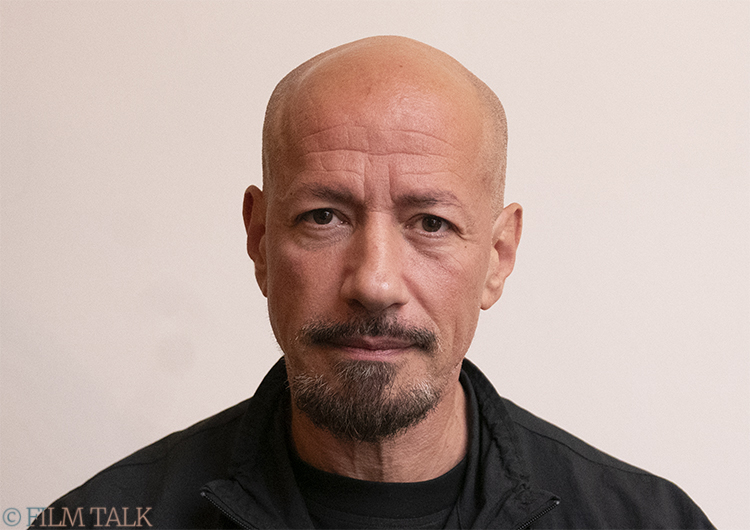
As the son of an Egyptian father and a Swedish mother, filmmaker and screenwriter Tarik Saleh (b. 1972) has a bicultural background that played a significant role in shaping his artistic cinematic voice. His films often reflect a deep awareness of cultural intersections and power structures, combining Scandinavian realism with Middle Eastern influences.
Before entering the world of cinema, Saleh gained recognition as a graffiti artist in his native Stockholm during the late 1980s and early 1990s, and began his career in television and animation. His first film, “Metropia” (2009), an animated feature, was about one man’s fight against an evil corporation’s machinations. It was celebrated for its unique visual style and critical commentary on surveillance and consumerism. His breakthrough came with “The Nile Hilton Incident” (2017), a political thriller set at the Nile Hilton Hotel in Cairo during the Egyptian Revolution in January 2011. The film won the Grand Jury Prize at the Sundance Film Festival and established him as a key figure in political cinema.
In 2022, Saleh released “Cairo Conspiracy,” a.k.a. “Boy from Heaven” (originally titled “Walad min al-Janna”), his second film set in Cairo; in this tense political thriller, a young student gets caught in the power struggle between Egypt’s religious and state authorities. At the Cannes Film Festival, he won for Best Screenplay.
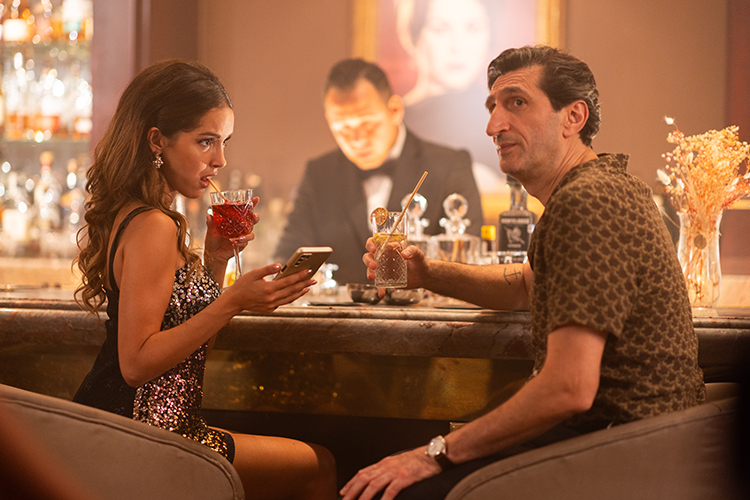
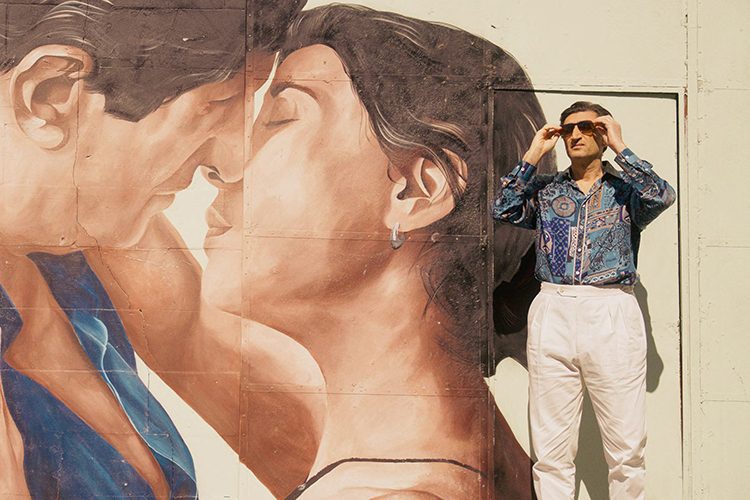
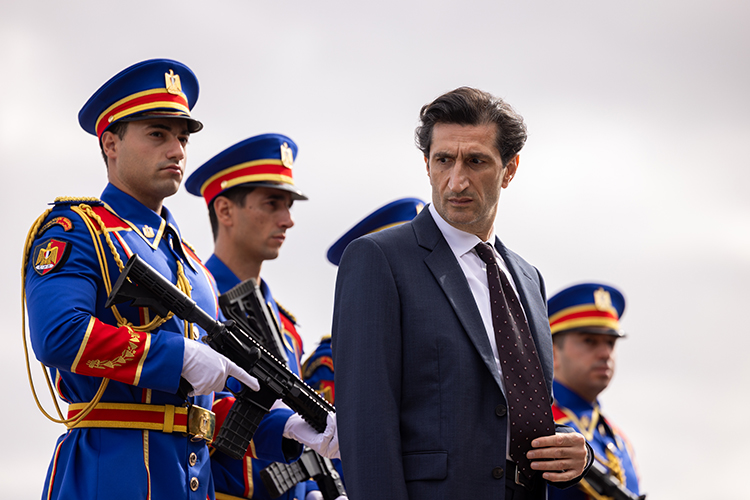
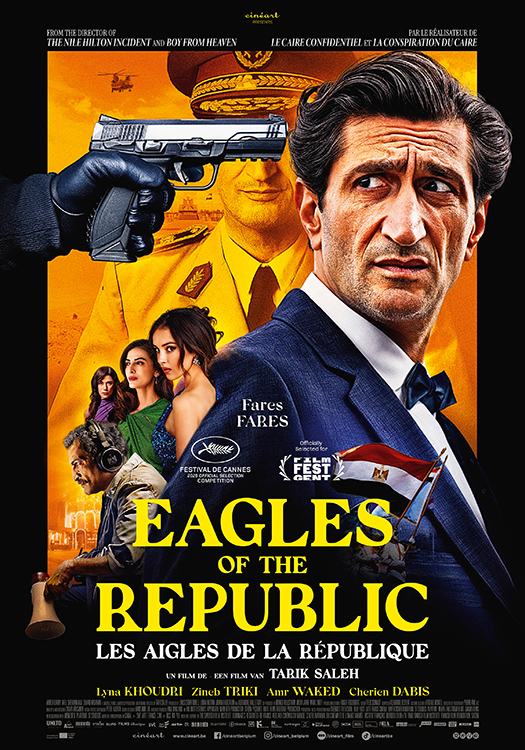 Now the third film of his Cairo trilogy is out; it is titled “Eagles of the Republic,” and Fares Fares portrays Egypt’s most beloved actor, George Fahmy, nicknamed ‘The Pharao of the Screen,’ who fell into disgrace with the authorities. On the verge of losing everything, he is forced to accept an offer he can’t refuse: to play the Egyptian president and his glorious rise to power in a film commissioned by the highest authorities. The presence of the president’s right-hand man on the set—a character called Dr. Mansour (played by Amr Waked)—makes it even more humiliating, as he rewrites scenes and demands extra takes.
“Eagles of the Republic” marks the latest collaboration between Tarik Saleh and Fares Fares; they previoulsy worked together on “The Nile Hilton Incident” and “Cairo Conspiracy,” although “Eagles of the Republic”—a political fantasy triller set in the Egyptian film industry—is considerably different in tone.
In between his Cairo trilogy, Saleh was lured to Hollywood to direct Chris Pine in “The Contractor” (2022), shot in Europe and the U.S.
”Eagles of the Republic,” which world premiered at the latest Cannes Film Festival, is Sweden’s submission for the 2026 Academy Awards (category International Feature); the shortlist of fifteen finalists is scheduled to be announced next month on December 16, with the final five nominees made public on January 22, 2026.
In Belgium, “Eagles of the Republic” film is released on November 12 through Cinéart. This is the interview I did with filmmaker Tarik Saleh, conducted in Brussels in late October.
Mr. Saleh, what was the story behind the story of “Eagles of the Republic”?
When I did “The Nile Hilton Incident” [2017], it was supposed to be shot in Egypt. I spent almost five months in Egypt preparing that film; I was on different sets, and I was very impressed by the film crews. They work very fast, and technically they are very skilled because they work under hard circumstances. The film industry in Egypt is also one of the oldest film industries in the world. They have served a billion people with film and television because Egypt and Cairo were like the Hollywood of the Middle East. They also had a star system—a studio system—where the stars were connected to producers or studios, like in old Hollywood. And it’s still a little bit like that; you still have those big producers who almost own their stars with special contracts and so on. So the idea to make “Eagles of the Republic” came to me back then; I began to imagine the whole story. I left Egypt in 2015; that was the last time I was there. That’s already ten years ago. After I left, the army and Egyptian president Abdel Fattah el-Sisi started to take over the film industry. Earlier, the film industry had always had a relationship with power; it always danced with power.
We know Egyptian-born actors like Omar Sharif [1932-2015] and Rami Malek [Academy Award winner for playing Freddy Mercury in “Bohemian Rhapsody,” 2018], but who are other Egyptian stars? And how is the Egyptian film industry doing right now?
In the 1980s, a new generation of big Egyptian actors and stars came up, like Ahmed Zaki. He was a huge star, but he’s dead now [died in 2005 at age 58]. In 2014, the Al-Haram studio—one of the three major studios and one of the oldest in the world—burned down. Some of the greatest Egyptian films were made in this historical studio that you can compare with Paramount. It was an accident, but it was almost symbolic. At the same time, the Egyptian army had finalized taking over every major big production company and all private TV channels. Today, the major contribution of the Egyptian film industry is through the television series they make. One of these huge TV series that the army wanted to produce when they had taken over the film industry was a big-budget TV series about president el-Sisi’s rise to power, titled “Al Ekhteyar” [a.k.a. “The Choice”]. It was a propaganda series, but when I watched it, it also had a very funny side to it; el-Sisi is a short man, and the actor who plays him is this handsome, tall guy with a lot of hair. That made it very comical and it also tells you everything you need to know. I mean, in every biopic, also in Hollywood, you have a good-looking actor playing a historical figure. So when I wrote my script, I thought about that. And with the story of a film in a film, the director is not necessarily the man in charge. In Europe, we have that system where the director—the auteur—is in control, like Mansour is in the film. He’s a very good director, and he is in charge.
You also worked in Hollywood. You’re in charge when you work there, and not the actors?
When I work in Hollywood or in Europe, a star can walk up to me and ask, ‘Where is the camera in this shot? Where are you with the camera?’ I will tell him, ‘Well, why do you ask? Focus on your job, and I’ll do my job. Maybe you have a better suggestion for me?’ Actors should not focus on the camera. They should focus on the character they’re playing. So if you look at it from that angle, I’m in charge.
You just mentioned the character of Dr. Mansour. Is that how you also work on a film set?
No [laughs], but Dr. Mansour is a fascinating character to me. As a director, I sometimes describe directing like you’re having a party in your own house. You are hosting the party, but you’re not participating in it. You have to be the grown-up in this situation.
What do you mean?
Let me give you an example. Even before #MeToo, it was well-known that there are people who do films in order to be unfaithful to their wives or husbands. They go off, and it’s like summer camp; they get involved with each other, create a lot of drama that’s behind the scenes, and it affects the actual film. So very early on, I always declare that no one is allowed to have sex with another person during my film shoots. Of course, they do it anyway; they do it behind my back. People don’t think about it, but when you gather people—artists—and you have 100 to 150 people who shoot, work and live in hotels… Things that happen behind the scenes are so crazy. So I’m not like Dr. Mansour because he uses that to his advantage. He expects it; he’s waiting and hoping that it will happen.
Considering the political content of your Cairo trilogy, and especially “Eagles of the Republic,” would you compare yourself with Costa-Gavras, for example?
It would be an honor to be compared to Costa-Gavras. I met him a few times, and I think he’s an amazing artist. But there are differences too. I have a feeling that he wanted to change the world with his films, and I think he worked in a time when you believed that cinema could change the world. And the way I look at it now, I think it’s more about defending humanity in a world where fascism is on the rise again. So I feel more connected to filmmakers like Fritz Lang or Billy Wilder. I wish I felt more like Costa-Gavras, but we live in another time. We live in much darker times than he did. There was hope for change when he made his films.
How do you explain your connection with Fritz Lang and Billy Wilder? Is it because “Eagles of the Republic” is a multi-layered film, like “Sunset Boulevard” [1950], or “The Apartment” [1960], which was a wonderful comedy, but also told a tragic story?
Fritz Lang and Billy Wilder fled Europe and the horrors of the Holocaust, the genocide, and everything that happened in World War II. They went to America and they did genre films that, on the surface, looked like entertainment. But when you see them today, you realize that they were talking about something else. Even later, Milos Forman described America in “One Flew Over the Cuckoo’s Nest” [1975], but he also talked about an authoritarian Europe. I’m very connected to European filmmakers coming out of World War II, and Fritz Lang and Billy Wilder had a huge influence on me. A film like “Missing” [1982, directed by Costa-Gavras], for example, is genre. It’s absolutely a thriller, and a very effective thriller, but we’re not sure where it takes place. It’s an unnamed country. With my film, el-Sisi is there. It’s him. It is Egypt. It is very specific. You just mentioned “Sunset Boulevard.” Well, you could say that “Eagles of the Republic” is my “Sunset Boulevard.” People probably don’t think about it when they watch that film, but it’s set in the real Hollywood. There are made-up characters, but there are also real characters playing themselves, like Cecil B. DeMille. And if you’re a film nerd as I am, you know that Cecil B. DeMille was one of those very complicated people. For me, that film still holds up. It’s one of the best films ever made. So, of course, that’s a big inspiration for me. Wilder is arguably the best filmmaker who ever lived. What I love about Billy Wilder is his knowledge about power, structure, and human frailty.
You always work with the same production designer, Roger Rosenberg. How important is he to you?
A director is like a football coach who tries to be surrounded by his best players. That process always begins very early on with my production designer, Roger Rosenberg. He writes down every single detail of the film. For this film he had written about four hundred pages, and we discussed every page.
How did you get French film composer Alexandre Desplat on board?
We met in Paris, and it felt like I had met my brother, a brother I didn’t know about. After he had seen the film, he said, ‘The film is about a man who sold his soul piece by piece.’ From then on, I could not wait to hear the music he would write for that character. He was also familiar with Egyptian music; you could feel that right away. When he grew up, he watched Egyptian films.
Brussels
October 27, 2025
“Eagles of the Republic” (2025, trailer)
FILMS
METROPIA (2009, animated) DIR Tarik Saleh, Erik Gandini PROD Kristina Åberg SCR Tarik Saleh, Stig Larsson, Fredrik Edin (idea by Tarik Saleh, Stig Larsson, Fredrik Edin) CAM Sesse Lind ED Johan Söderberg MUS Krister Linder CAST (voices only) Vincent Gallo, Stellan Skarsgård, Udo Kier, Alexander Skarsgård, Juliette Lewis, Sofia Helin, Shanti Roney
TOMMY (2014) DIR Tarik Saleh PROD Kristina Åberg SCR Anton Hagwall CAM Carl Nilsson ED Theis Schmidt, Dino Jonsäter, Linda Jildmalm MUS Martin Landquist CAST Ola Rapace, Moa Gammel, Lykke Li Zachrisson, Alexej Manvelov, Johan Rabaeus, Inez Buckner, Ewa Fröling
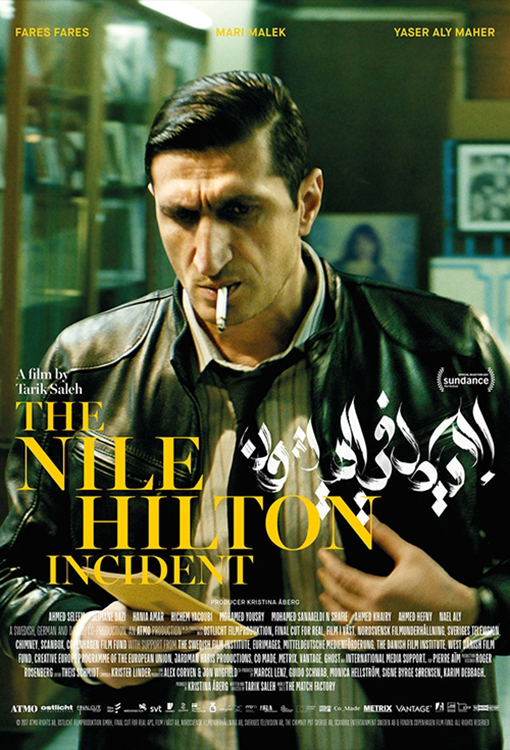 THE NILE HILTON INCIDENT (2017) DIR – SCR Tarik Saleh PROD Kristina Åberg CAM Pierre Aïm ED Theis Schmidt MUS Krister Linder CAST Fares Fares, Mari Malek, Yasser Ali Maher, Ahmed Selim, Slimane Dazi, Hania Amar, Hichem Yacoubi, Mohamed Youssry
THE CONTRACTOR (2022) DIR Tarik Saleh PROD Erica Lee, Basil Iwanyk SCR J.P. Davis CAM Pierre Aïm ED Theis Schmidt MUS Alex Belcher CAST Chris Pine, Gillian Jacobs, Sander Thomas, Toby Dixon, Dean Ashton, Dustin Lewis, Regina Ting Chen, Brian Lafontaine, Kiefer Sutherland, Fares Fares
WALAD MIN AL-JANNA, a.k.a. CAIRO CONSPIRACY (2022) DIR – SCR Tarik Saleh PROD Kristina Åberg, Ali Akdeniz, Fredrik Zander CAM Pierre Aïm ED Theirs Schmidt MUS Krister Linder CAST Fares Fares, Tawfeek Barhom, Mohammad Bakri, Makram Khoury, Mehdi Dehbi, Moe Ayoub, Sherwan Haji
EAGLES OF THE REPUBLIC (2025) DIR – SCR Tarik Saleh PROD Johan Lindström, Alexandre Mallet-Guy, Linda Mutawi, Linus Torell CAM Pierre Aïm ED Theis Schmidt MUS Alexandre Desplat CAST Fares Fares, Lyna Khoudri, Cherien Dabis, Amr Waked, Zineb Triki, Sherwan Haji, Husam Chadat, Linda Mutawi, Mustafa Peker, Hassan El Sayed


You must be logged in to post a comment.