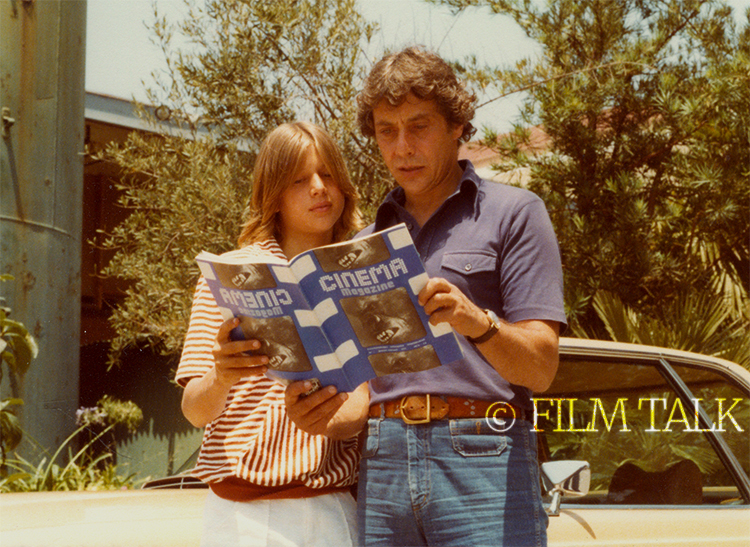
Film-wise, August 2026 has been a bad month. We lost actress Hayden Panetierre (36), British-born film director John Irvin (86), actress and singer Shelley Fabares (82), the legendary Dolly Parton (80), and actor Tim Curry (80). Another notable obituary a few weeks ago reported the death of legendary film director Mark Rydell who died of natural causes at the Motion Picture & Television Country House in Woodland Hills, California, on August 13, 2026, at 97.
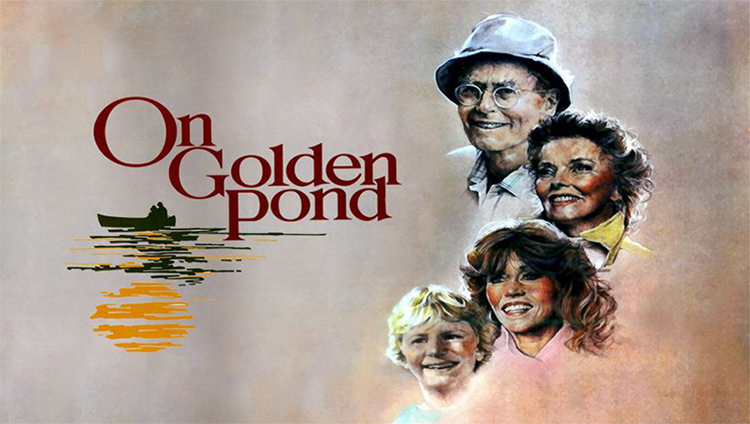
His death is a great loss for the American film industry, as many Hollywood stars flocked to work with him over the years. He directed Katharine Hepburn and Henry Fonda in their Oscar-winning performances (“On Golden Pond,” 1981). Five other actors in his films were nominated for an Oscar: Rupert Crosse (“The Reivers,” 1969); Marsha Mason (“Cinderella Liberty,” 1973; her first of four noms); Bette Midler (“The Rose,” 1979; “For the Boys,” 1991); Fredric Forrest (“The Rose,”), and Sissy Spacek (“The River,” 1984).
As a longtime actor who first appeared on Broadway and on television in 1952, he worked with James Dean and Steve McQueen, among others. Yet he preferred to direct, if somewhat sporadically, as it turned out. With the help of his friend Sydney Pollack, he then helmed episodes of “The Virginian” (1963), “Ben Casey” (1963-1964), “Gunsmoke” (1964-1966), “I Spy” (1965), “The Long, Hot Summer” (1965-1966), and “The Fugitive” (1966), among others.
He became a renowned actor’s director and then made eleven feature films that earned more than twenty Oscar nominations. His directorial film debut was “The Fox” (1969), warmly received by arthouse audiences, followed by “The Reivers” (1969), a heartwarming and nostalgic trip down memory lane starring Steve McQueen; “The Cowboys” (1972) with John Wayne whose character was killed on-screen—forty minutes before the end of the movie—and two films starring James Caan, the romantic drama “Cinderella Liberty” (1972) and the period comedy “Harry and Walter Go to New York” (1976) with an all-star cast of Elliott Gould, James Caan, Diane Keaton and Michael Caine, before lobbying hard to get Bette Midler to play the leading role in her film debut “The Rose” (1979).
Mark Rydell only made a few more pictures. “On Golden Pond” (1981) with Katharine Hepburn, Henry Fonda and his daughter Jane Fonda, was his most successful one, followed by the heartland drama “The River” (1984) with Mel Gibson in his first U.S. role; “For the Boys” (1991), a musical comedy-drama that reunited Rydell with James Caan and Bette Midler; the marital drama “Intersection” (1994, a remake of the French film “Les choses de la vie” from 1970 starring Romy Schneider), with Richard Gere, Sharon Stone and Lolita Davidovich; and the crime drama “Even Money” (2006) starring Kim Basinger, Ray Liotta and Forest Whitaker. The film focuses on three strangers who are addicted to gambling and how their lives come to be intertwined.
A substantial human drama, that was Mark Rydell’s niche, with dramatic interaction between people. Kind of like Sydney Pollack, who told me in 1997, ‘I like to do character-driven stories about people and relationships.’ So, if you were looking for explosions, violence, car chases, or special effects, you had to go elsewhere; Mark Rydell’s films and his characters were all very down-to-earth—and so was he, as I found out in the Summer of 1978, when he was shooting “The Rose.”
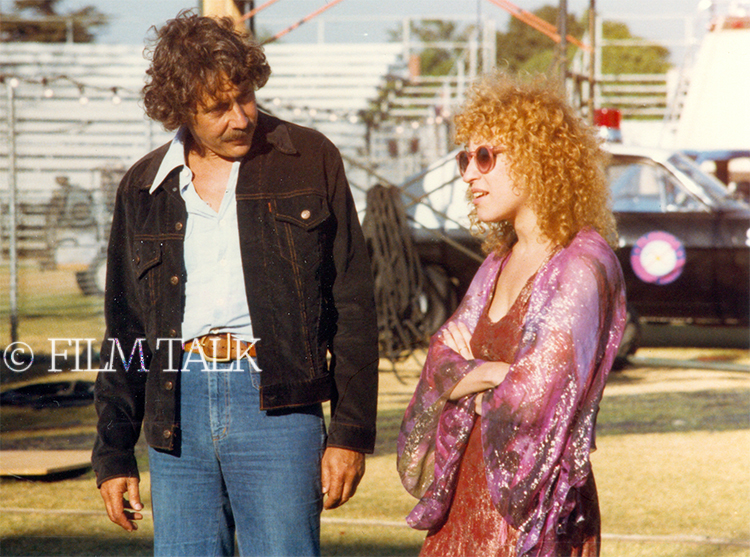
In July of that year, I spent a few weeks in Los Angeles to meet actors and film directors for interviews. I also went to the publicity departments of the major studios to pick up press material and press kits of their upcoming films. When I visited 20th Century Fox—where I also got a private tour of the back lot, which was very quiet, with no film or TV crews at work or anything like that—I met Joel H. Coler, Director of International Advertising and Publicity, as his business card said. I asked him, ‘It seems you’re not shooting anything at the studio right now, are you?’ ‘Not at the studio, but next Friday evening, we’re shooting the final scene of “The Rose,” directed by Mark Rydell and with Bette Midler and Alan Bates. Would you like to come?’
That Friday, July 14—I always had a little notebook with me that I used as my diary, and I still have it—I went down to the Veterans Memorial Stadium in Long Beach where the final scene for “The Rose” was to be filmed late in the evening. In that scene, Bette Midler, playing a self-destructive female rock star, and Alan Bates as her manager arrive at the stadium by helicopter; they get out, he takes her to the stage where she sings one song before her character collapses and dies.
When I arrived at the stadium in Long Beach around 05:30 PM—it was a long drive on a Friday afternoon, coming from Hollywood—I asked security to see Joel H. Coler, and that was my entry ticket to the main event. Around 08:00 PM, the musicians were all ready. They began playing and rehearsing the song “Camille” (song heard in the YouTube clip below), which they used to introduce The Rose on stage. By 09:15 PM, the helicopter scene was filmed, with the helicopter flying low above a crowd of about 2,000 people. It lands on the football field, Bette Midler and Alan Bates get out and walk towards the stage.
Bette Midler and Alan Bates arrive at Long Beach’s Veterans Memorial Stadium in the final scene of “The Rose”
Mark Rydell tried a couple of different versions for the audience to welcome the character of Rose, from screaming and applauding to shouting ‘Sex, drugs, rock and roll.’ The fireworks, with a huge rose as one of its highlights, were done at the same time.
During the shoot, I sat in the audience as an extra—and got paid for it—and watched the helicopter scene, which was done a couple of times. Around 11:15 PM, Bette Midler sang her song and finally collapsed on stage. That scene also took multiple takes, and after one of the takes when she fell down on stage, I heard Mark Rydell shout, ‘Great fall!’
Bette Midler as Rose in Mark Rydell’s rock musical “The Rose,” released in 1979
I stayed in the audience until 00:30 AM and then walked down to the front of the stage to take pictures while Bette Midler did her scene again. After they finished shooting, I went backstage and met Alan Bates and Mark Rydell. I know, it all looks so simple and even hard to believe, but that’s what it was like back then. Everybody was very accessible and very gracious. I got an interview with Alan Bates almost right away; we didn’t only talk about “The Rose,” but also about another American film he did that year (Paul Mazursky’s “An Unmarried Woman,” co-starring Jill Clayburgh), and his career in Great Britain, where his body of work included films like John Schlesinger’s “Far From the Madding Crowd” (1967) and Joseph Losey’s “The Go-Between” (1971), both with Julie Christie.
Mark Rydell gave me the phone number of his office at Fox to make an appointment for an interview the following week. I also hoped to talk to Bette Midler. I mean, they all had finished the scene, they were all still there, so it wouldn’t hurt to ask, would it? So I checked with her manager and “The Rose” producer Aaron Russo if she was available. He told me to wait there, and about an hour later, there she was. She was in high spirits, and we talked for about twenty minutes.
When she toured Europe a few months later, she also gave a concert in Antwerp, Belgium, which I attended. I knew what hotel she was staying at, so in the afternoon, I was in the hotel lobby, hoping to meet Aaron Russo again. He was with her all the time and took care of every practical or technical matter. When I saw him entering the lobby, I walked up to him and talked to him briefly. I asked if I could say hello to her after the concert; he was very kind and even remembered me, and told me it was okay to wait for her backstage. And guess what: after the concert, when she came down the stairs from her dressing room, ready to leave the theater and go out for a late dinner, she also recognized me and we talked and laughed for a few minutes.
“The Rose” (1979, trailer)
But, back to Long Beach in July 1978. The closing scene was filmed on Friday, July 14. A week later, on Friday, July 21, the wrap party took place at 20th Century Fox’s stage 6, where I was invited. I entered the studio on Pico Boulevard, told security I was a guest from Belgium who was invited to the wrap party, and he told me how to get to stage 6. There was plenty of food and drinks for everyone, and I talked briefly to Alan Bates and Mark Rydell, who reminded me, ‘We’ll meet next week. Call my secretary, and she’ll set up the interview.’
And she did. On Tuesday, July 25, I had to be at his office at 11:45 AM. Joel Oliansky’s office was next to his; he had made “The Competition” (1980) starring Richard Dreyfuss, Amy Irving, and Lee Remick. Mark Rydell was late, but I didn’t mind. I had the luxury of being welcomed by all those wonderful and talented people who allowed me some of their time. I was a nobody, a staff writer for Cinema Magazine, a Flemish film monthly that nobody had ever heard of. And yet, there I was.
An hour later, Mark Rydell arrived at his office. ‘Ah! There you are!’ We entered his office, I took my oversized cassette tape recorder out of my bag, and for more than thirty minutes we talked about his work as an actor and a film director.
The cassette tape of that interview is nearly fifty years old now; it hasn’t disintegrated completely, but the sound quality is very poor. I still have the interview as it was published in this Flemish film magazine, but that’s in Dutch, and I’d like to have Mark Rydell’s original words when quoting him. So I took my time to get through the tape vigorously, and, fortunately, I was able to reproduce most of it.
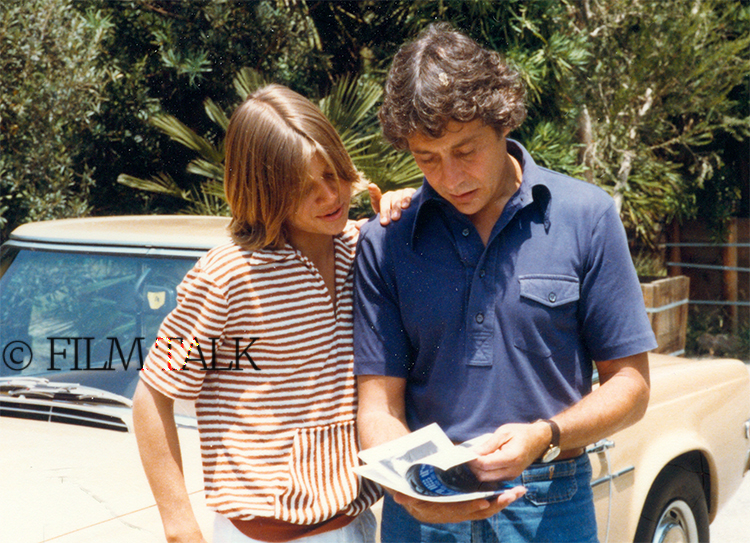
After we finished the interview, we went outside his office to take a few pictures in front of his Mercedes, in the company of his son and actor Christopher (b. 1963), who had appeared in “Cinderella Liberty” and “Harry and Walter Go to New York” (1976).
Mr. Rydell, you were born in New York and you grew up there. What was your artistic training like?
I was born in New York in 1934, and during the first half of the 1950s, I studied at the Actors’ Studio in New York with Elia Kazan and Lee Strasberg. I later met some of my fellow students on set, like Marlon Brando, James Dean, Rod Steiger… I know them all from that time. Afterward, I worked with Sanford Meisner and spent some time at the Neighborhood Playhouse. Then I started working for television. CBS offered me a leading role in a new series, “As the World Turns.” For six years [1956-1962], we filmed it three times a week. That always took place in the afternoon. In the evenings, I directed on Broadway. One of those plays, “Roots” [1961], was very successful; it was about an English family in the northern United States. The play had nothing to do with the TV series [1976] that became so popular.
Did you work on any other TV series in New York?
No, it was thanks to Sydney Pollack—who later became my business partner—that I came to Hollywood. We were both at the Neighborhood Playhouse. John Frankenheimer had brought Pollack into the studios and arranged for him to direct a two-part episode of “Ben Casey” [1962]. Sydney Pollack, however, wanted to focus on the technical aspects of directing, so he needed someone to work with the actors, and he asked me if I’d like to be his assistant. Of course, I agreed right away, and the producer, Matthew Rapf—who went on to produce numerous other TV series—thought my work was good enough to keep me on as an assistant for several episodes. Six months later, he gave me my first script for “Ben Casey,” which I was allowed to direct myself.
So that’s when things really took off?
Well, it didn’t go that fast; I was offered scripts for other shows like “Gunsmoke” and “I Spy,” and of course I accepted them right away.
Can you tell us a little about “I Spy”?
Originally, it was an eight-episode series. If it were successful, there would be more. I directed only three episodes. The series brought some freshness to American television, thanks to the charisma of lead actors Robert Culp and Bill Cosby. When the series got very successful, they became a little bit cocky, but that was quite understandable: they had much more talent than the scripts required of them.
“I Spy” (1965-1968, intro)
What is, in your opinion, the difference between directing a TV series and directing movies?
In television, the director has no power. The producer is the key figure, and in most cases, he stays with the series and its regular cast until it’s canceled. Directors come and go, but you can learn your craft there. When I was still working in television, I had some say as a director, but now that’s just impossible. Now you have to think about the production managers at the TV networks, the advertising agents for the commercials, and so on. Then you have the tight schedules and the terrible time limits. When making a TV series, you have to shoot at least ten pages a day; that immediately rules out a high-quality program, unless you can work with very good actors on a specific scene. These days, television is considered a medium whose goal is to produce empty and uninspiring content. Films can be the exact opposite: the director is largely in control and can do whatever he wants. There’s much more room for art. After I began directing movies, I only directed one more TV show—the pilot episode for the TV series “Family” [1976]. Mike Nichols wrote the screenplay, and he asked me if I wanted to direct it. I told him I didn’t want to work in television anymore, but he insisted that I at least read it. In the end, it struck me as a show that could cast television in a different light because it was a simple fictional story that looked authentic. It dealt with the problems of an average American family, and it was significantly better than “Father Knows Best” and all those other absurd soap operas.
How did you make the transition from television to film?
When you’re a well-known TV director, many producers are eager to offer you a film contract because they know they can get you for next to nothing. It was no different for me: I was offered my first screenplays, but I was very selective about what I accepted because, for a first-time film director, the first film is extremely important. “The Fox” became my first film, and I thought I could really make something of it. It ended up taking me two years and costing a lot of money. But the film made a fortune; everyone got rich off it—except me, because I’d only been hired as a staff member. But I don’t complain because my next film, “The Reivers” with Steve McQueen, was a huge success. John Huston was originally supposed to direct the film, but he dropped out and I was able to replace him.
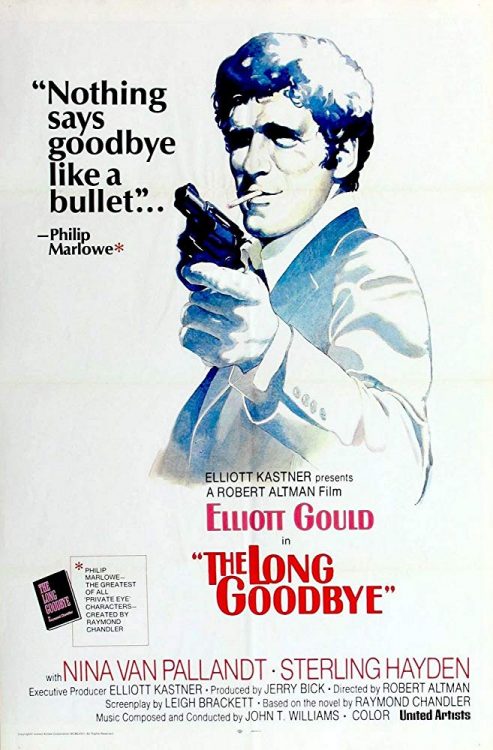 You’re known as a film director, but you also produced “The Cowboys” and “Cinderella Liberty,” and you played an important part in Robert Altman’s “The Long Goodbye” [1973]. Do you ever plan to do all of that in a single film?
In my moments of megalomania, I’ve thought about it [laughs], but I’m not quite sure how to do it. There’s this little story about an English actor who played the gravedigger in the play “Hamlet” for years. They asked him once, ‘What is “Hamlet” about?’ And he said, ‘Well, there’s this gravedigger…’ He approached the play from his own personal perspective, with his role in mind. That’s what an actor should do. A director must do the opposite: he must bring the actors together and approach each one from the perspective of their role. Some directors act in their own films, but I don’t understand how they manage it.
Which of your films do you think is the best?
It’s not elegant to say, but I think they’re all good. I have wonderful memories of every film; they’re all a part of my life, and I stand with every one of them. I always approach each film thinking it could be my last. That’s my message to the world [laughs].
Are there particular actors or actresses that you like to work with?
No, not at all; for me, the only thing that matters is being able to work with good actors and actresses. John Wayne was fantastic, Marsha Mason was magnificent, Bruce Dern, Bette Midler, Steve McQueen—they were all exceptional to work with. All actors are different as individuals, which means they have to be approached in different ways, and I love that. So far, I worked almost exclusively with very good and talented people. That’s one of the advantages of my job; I have the opportunity to work with the best people you can find, from actors to screenwriters, from set designers to musicians…
Speaking of musicians, why did you hire Belgian harmonica player Toots Tielemans for the soundtrack of “Cinderella Liberty”?
John Williams and I needed to find someone who could play the harmonica exceptionally well. Toots was a good friend of mine, so I called him and asked if he’d be interested in collaborating on the film’s score. He’s a true virtuoso who should be protected, just like Bette Midler. They’re both wonderful performers.
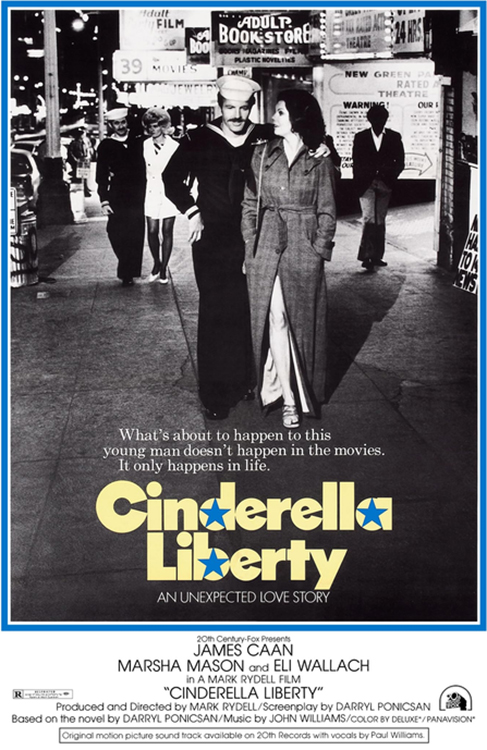 You worked with John Wayne, one of the biggest stars ever, but you’ve also cast Marsha Mason for the leading role of “Cinderella Liberty” when she was still unknown. Wasn’t that a career risk?
No, not at all, and that happened quite by chance. Paul Mazursky had just made “Blume in Love” [1973] in which Marsha played a small role. When I saw the film, I was amazed to see how talented she was, and I wanted her for “Cinderella Liberty.” I contacted Mazursky and asked him where I could find her. He told me she was a member of the American Conservatory Theater in San Francisco. So I went to San Francisco to see her at the theater where she was performing; she played Nora in “A Doll’s House” at the time. I was very impressed by her performance and went backstage after the show to speak with her. I introduced myself as Mark Rydell from 20th Century Fox and asked if she was interested in the leading role in my next film, “Cinderella Liberty,” opposite James Caan. I’ll never forget her first reaction [laughs]. She looked at me as if I were crazy and simply said, ‘Okay, send me the script, and we’ll see.’ She apparently thought I wanted something else, but, well, the rest is history. The studio thought it was absurd because they wanted a different, well-known actress for that role. I told them that I would make this movie only if Marsha played the lead. Once they realized she could act, I got full autonomy. A week after the film was released, I received a telegram from Fox saying that no other actress could have played that part better than Marsha.
Is that what you want to achieve with your films? Discover new talent, try something else, broaden your horizons?
Absolutely. For example, “The Reivers” was an adventure set at the beginning of this century and explored how people in that small Mississippi town experienced it; in “Harry and Walter Go To New York,” the focus was on the lives of vaudeville performers. Before I started working on “The Rose,” I read a lot of books. I studied 1969 thoroughly; it was a tough time with Cambodia, mass murders, Nixon, and so on. I had to really immerse myself in it all again. It was like a forced history lesson [laughs].
Do you ever plan to make a film in Europe?
I’d love to. There are many Europeans I’d love to work with. Sven Nykvist, Ingmar Bergman’s cinematographer, for example. When you work in a foreign country, there’s always a risk that things go wrong, and then you have to make sure you’re back in charge. I would love to see if I can express my ideas in other places the way I can here.
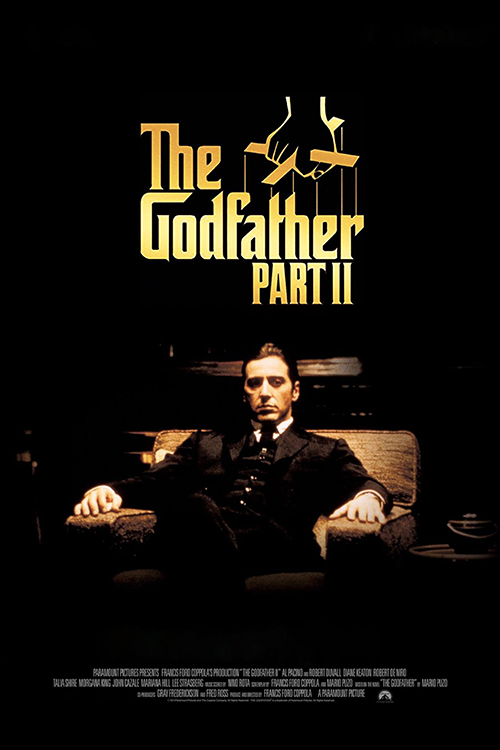 How do you feel about the trend of making sequels?
I think it’s cheap entertainment. “Jaws 2” [1978] is making a fortune, but that’s the purest form of film exploitation and has little to do with cinema as such. “The Godfather, Part II” [1974] was, in my opinion, the best sequel ever made.
What do you do in your free time?
I read a lot and play the piano. I’ve always loved jazz. I also work out a lot to stay in shape. I think being active encourages more activity. When I finish a movie, I feel great. At the end of a hard day, I have more energy than I did at the start. It’s when I stop… [makes a funny face and laughs].
Are you interested in politics?
Of course. Artists are guided by their feelings most of their life, so why not when it comes to politics, art, lifestyle, and so on? You might find yourself swimming against the current, but that’s actually the role of an artist. According to some people, “Cinderella Liberty” suggested that a prostitute can also be a role model. If that’s how I see it, I’m not going to change or hide my opinion for anyone. It’s very important to me that I can express my ideas. I’d rather prefer to lead than to follow.
Are there any filmmakers working today that you admire?
Steven Spielberg. Even though he’s still so young, he’s a miracle guy. He knows what he’s doing and he doesn’t make a mistake.
20th Century Fox, Century City
July 25, 1978
FILMS
CRIME IN THE STREETS (1956) DIR Don Siegel PROD Vincent M. Fennelly SCR Reginald Rose (also story) CAM Sam Leavitt ED Richard C. Meyer MUS Franz Waxman CAST James Whitmore, John Cassavetes, Sal Mineo, Mark Rydell (Lou Malckin), Virginia Gregg, Peter J. Votrian, Will Kuluva, Malcolm Atterbury, Denise Alexander, Dan Terranova
THE FOX (1967) DIR Mark Rydell PROD Raymond Stross SCR Lewis John Carlino, Howard Koch (novella “The Fox” [1922] by D. H. Lawrence) CAM William A. Fraker ED Thomas Stanford MUS Lalo Schifrin CAST Sandy Dennis, Keir Dullea, Anne Heywood, Glynne Morris
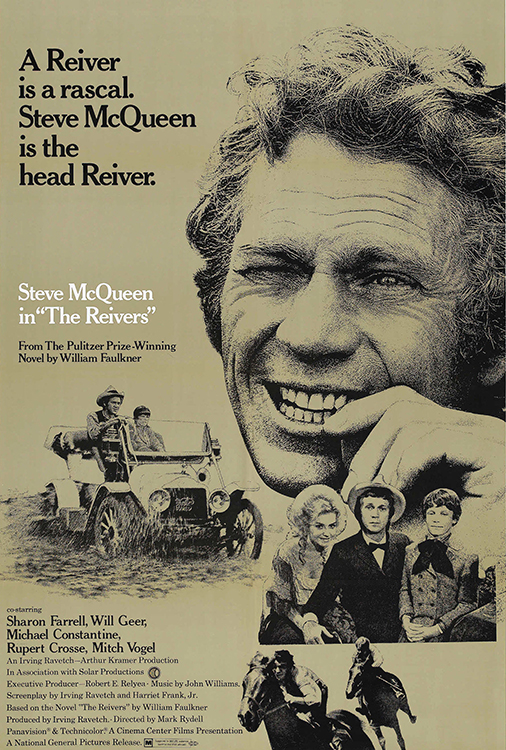 THE REIVERS, U.K. title THE YELLOW WINTON FLYER (1969) DIR Mark Rydell PROD Irving Ravetch SCR Irving Ravetch, Harriet Frank Jr. (novel “The Reivers, A Reminiscence” [1962] by William Faulkner) CAM Richard Moore ED Thomas Stanford MUS John Williams CAST Steve McQueen, Sharon Farrell, Will Geer, Michael Constantine, Rupert Crosse, Mitch Vogel, Ruth White, Clifton James, Diane Ladd, Billy Green Bush, Burgess Meredith (voice only)
THE COWBOYS (1972) DIR – PROD Mark Rydell SCR William Dale Jennings, Irving Ravetch, Harriet Frank Jr. (novel “The Cowboys” [1971] by William Dale Jennings) CAM Robert Surtees ED Neil Travis, Robert Swink MUS John Williams CAST John Wayne, Roscoe Lee Browne, Bruce Dern, Colleen Dewhurst, Alfred Barker Jr., Nicolas Beauvy, Robert Carradine, Steve Benedict, Slim Pickens, Richard Farnsworth
CINDERELLA LIBERTY (1973) DIR – PROD Mark Rydell SCR Daryl Ponicsan (also novel “Cinderella Liberty” [1973]) CAM Vilmos Zsigmond ED Donn Cambern, Patrick Kennedy MUS John Williams CAST James Caan, Marsha Mason, Eli Wallach, Kirk Calloway, Burt Young, Bruno Kirby, Allyn Ann McLerie, Dabney Coleman, Allan Arbus, Jon Korkes, Sally Kirkland, Mark Rydell (Gutteral Mischief), Christopher Rydell
THE LONG GOODBYE (1973) DIR Robert Altman PROD Jerry Bick SCR Leigh Brackett (novel ‘The Long Goodbye’ [1953] by Raymond Chandler) CAM Vilmos Zsigmond ED Lou Lombardo MUS John Williams CAST Elliott Gould, Nina van Pallandt, Sterling Hayden, Mark Rydell (Marty Augustine), Henry Gibson, David Arkin, Jim Bouton, Warren Berlinger, Jo Ann Brody, Steve Coit, Rutanya Alda, David Carradine, Arnold Schwarzenegger
HARRY AND WALTER GO TO NEW YORK (1976) DIR Mark Rydell PROD Don Devlin, Harry Gittes SCR John Byrum, Robert Kaufman (story by John Byrum, Don Devlin) CAM László Kovács ED David Bretherton, Don Guidice MUS David Shire CAST James Caan, Elliott Gould, Michael Caine, Diane Keaton, Charles Durning, Lesley Ann Warren, Val Avery, Jack Gilford, Dennis Dugan, Carol Kane, Kathryn Grody, David Proval, Michael Conrad, Burt Young
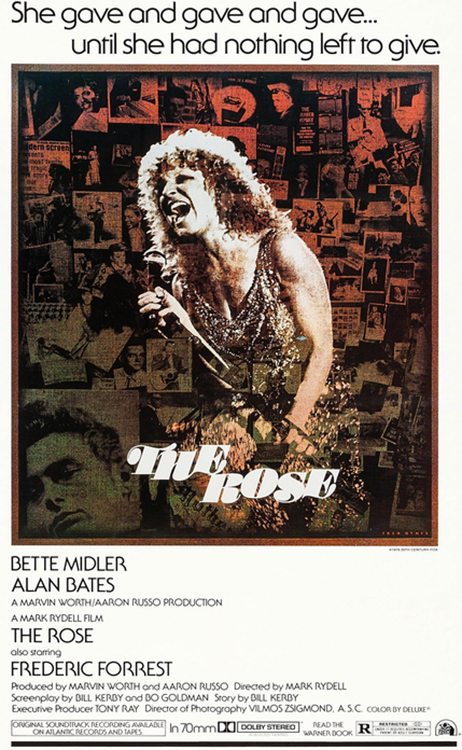 THE ROSE (1979) DIR Mark Rydell PROD Aaron Russo, Marvin Worth SCR Bill Kerby, Bo Goldman (story by Bill Kerby) CAM Vilmos Zsigmond ED Carroll Timothy O’Meara, Robert L. Wolfe CAST Bette Midler, Alan Bates, Frederic Forrest, Harry Dean Stanton, Barry Primus, David Keith, Sandra McCabe, Will Hare, Rudy Bond
ON GOLDEN POND (1981) DIR Mark Rydell PROD Bruce Gilbert SCR Ernest Thompson (also play “On Golden Pond” [1979]) CAM Billy Williams ED Robert L. Wolfe MUS Dave Grusin CAST Katharine Hepburn, Henry Fonda, Jane Fonda, Doug McKeon, Dabney Coleman, William Lanteau, Christopher Rydell, Troy Garity
THE RIVER (1984) DIR Mark Rydell PROD Edward Lewis, Robert Cortes SCR Robert Dillon, Julian Barry (story by Robert Dillon) CAM Vilmos Zsigmond ED Sidney Levin MUS John Williams CAST Sissy Spacek, Mel Gibson, Scott Glenn, Billy Green Bush, Don Hood, James Tolkan, Shane Bailey, Becky Jo Lynch, Bob W. Douglas, Amy Rydell, Barry Primus, Andy Stahl, Lisa Sloan, Larry D. Ferrell
PUNCHLINE (1988) DIR – SCR David Seltzer PROD Daniel Melnick, Michael Rachmil CAM Reynaldo Villalobos ED Bruce Green MUS Charles Gross CAST Sally Field, Tom Hanks, John Goodman, Mark Rydell (Romeo), Kim Greist, Paul Mazursky, Pam Matteson, George McGrath, Taylor Negron, Barry Neikrug, Damon Wayans
HAVANA (1990) DIR – PROD Sydney Pollack SCR Judith Rascoe, David Rayfiel (story by Judith Rascoe) CAM Owen Roizman ED William Steinkamp, Fredric Steinkamp MUS Dave Grusin CAST Robert Redford, Lena Olin, Alan Arkin, Tomas Milian, Tony Plana, Daniel Davis, Betsy Brantley, Richard Farnsworth, Mark Rydell (Meyer Lansky), Raul Julia
FOR THE BOYS (1991) DIR Mark Rydell PROD Bette Midler, Margaret South, Bonnie Bruckheimer SCR Neal Jimenez, Lindy Laub, Marshall Brickman (story by Neal Jimenez, Lindy Laub) CAM Stephen Goldblatt MUS Dave Grusin ED Jerry Greenberg, Jere Huggins CAST Bette Midler, James Caan, George Segal, Patrick O’Neal, Christopher Rydell, Arye Gross, Norman Fell, Rosemary Murphy, Bud Yorkin, Billy Bob Thorton
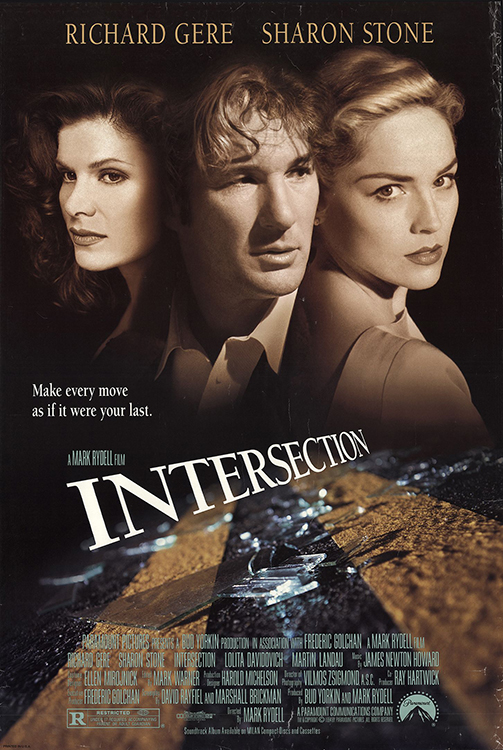 INTERSECTION (1994) DIR Mark Rydell PROD Mark Rydell, Bud Yorkin SCR Marshall Brickman, David Rayfiel (screenplay LES CHOSES DE LA VIE [1970] by Paul Guimard, Claude Sautet, Jean-Loup Dabadie; novel “Les choses de la vie” [1967] by Paul Guimard) CAM Vilmos Zsigmond ED Mark Warner MUS James Newton Howard CAST Richard Gere, Sharon Stone, Lolita Davidovich, Martin Landau, David Selby, Jennifer Morrison, Ron White, Matthew Walker
A MAN IS MOSTLY WATER (2000) DIR – SCR Fred Parnes PROD Fred Parnes, Libbie Chase CAM D. Alan Newman ED Kate Ahmed MUS Skip Heller CAST Fred Parnes, Christopher Rydell, Mark Curry, Paulina Mielech, Linda Pine, Heather Roop, Anton Yelchin, Bill Pullman, Lou Rawls, Mark Rydell (Distributor)
HOLLYWOOD ENDING (2002) DIR – SCR Woody Allen PROD Letty Aronson CAM Wedigo von Schultzendorff ED Alisa Lepselter CAST Woody Allen, Téa Leoni, Bob Dorian, Ivan Martin, Gregg Edelman, George Hamilton, Treat Williams, Woody Allen, Debra Messing, Neal Huff, Mark Rydell (Al)
EVEN MONEY (2006) DIR Mark Rydell PROD Mark Rydell, Danny DeVito, David S. Greathouse SCR Robert Tannen CAM Robbie Greenberg ED Hughes Winborne MUS Dave Grusin CAST Kim Basinger, Nick Cannon, Danny DeVito, Kelsey Grammer, Jay Mohr, Tim Roth, Forest Whitaker, Ray Liotta, Christopher Rydell, Mark Rydell (Ivan)
CHICANERY (2017) DIR – PROD – SCR Charles Dennis CAM Michael Rangeloff ED Andee Hodgin MUS Maxwell Sterling CAST Brent Huff, Michael Laskin, Patty McCormack, Kate Vernon, Loren Lester, Neil Dickson, Ross Benjamin, Rachelle Carson, Kenneth Welsh, Mark Rydell (Jack Sobel)
SENIOR ENTOURAGE (2021) DIR Brian Connors PROD David A. Lockhart ED Giovanni Moriconi CAST Ed Asner, Helen Reddy, Charles Robinson, Marion Ross, Mark Rydell (Mark), Jamie Lee Curtis, David A. Lockhart, Brian Connors, Dahlia Waingort Guigui, Ian Fisher, Martin Guigui, Kathrine Kohl, Sitara Attaie, Amber Martinez
TV MOVIES
CRIME OF THE CENTURY (1996) DIR Mark Rydell PROD Mike Moder TELEPLAY William Nicholson (book “The Airman and the Carpenter: The Lindbergh Kidnapping and the Framing of Richard Hauptmann” [1985] by Ludovic Kennedy) CAM Toyomichi Kurita ED Antony Gibbs MUS John Frizzell CAST Stephen Rea, Isabella Rossellini, J. T. Walsh, Michael Moriarty, Allen Garfield, John Harkins, Barry Primus, Bert Remsen
JAMES DEAN (2001) DIR Mark Rydell PROD George W. Perkins SCR Israel Horovitz CAM Robbie Greenberg ED Antony Gibbs MUS John Frizzell CAST James Franco, Michael Moriarty, Valentina Cervi, Enrico Colantoni, Edward Herrmann, Joanne Linville, John Pleshette, Barry Primus, Amy Rydell, Mark Rydell (Jack L. Warner), Christopher Lee, Alexander Rydell, Christopher Rydell


You must be logged in to post a comment.