
After the fall of the disgraced Hollywood mogul Harvey Weinstein (74) in 2017 and the subsequent rise of #MeToo—the movement that first began to spread virally as a hashtag on social media—it didn’t take too long for intimacy coordinators to be introduced on a film or television set.
Intimacy coordinators received their first on-screen credit with HBO’s “The Deuce” (2017) starring Maggie Gyllenhaal, who said at the time that when she did sex scenes, ‘you just figured out how to deal with it.’ Natalie Portman told her one day, ‘Whenever there’s a fight scene, or someone grabs your neck, there’s always a stunt coordinator and a fight coordinator. Why is there never anyone for sex scenes?’ On any set with animals, there is also an animal welfare coordinator.
While many film directors, producers, and actors did their best when they had a risqué or otherwise intimate shoot, it was often like, ‘Okay, the sex scene is coming up, so take your clothes off and let’s do this.’ The actors had to find out how they’d do that scene, with the crew standing around and watching them.
Claire Warden, who has worked on several Broadway plays, revivals, and musicals as an intimacy coordinator since 2017, and later switched to television and film, is one of the leading intimacy coordinators in the industry. Born in Guernsey, one of the Channel Islands, west of Normandy, France, she’s an actress, fight director, and intimacy coordinator. Her work is to get a better performance by making the actors feel safe enough to be open and vulnerable. Consequently, words such as ‘consent’ and ‘closed set’ are now standard vocabulary on a film and television set.
Some stars have said they don’t need an intimacy coordinator, including Gwyneth Paltrow, Mikey Madison, Michael Caine, Michael Douglas, or Sean Bean; the latter told Variety on August 8, 2022, that intimacy coordinators ‘spoil the spontaneity’ of shooting a sex scene. ‘I think the natural way lovers behave would be ruined by someone bringing it right down to a technical exercise,’ he added.
Kate Winslet, on the other hand, told The New York Times Magazine on March 3, 2024, that she would have benefited from an intimacy coordinator every single time she had to do a love scene, or be partially naked, or even a kissing scene. ‘It would have been nice to have had someone in my corner because I always had to stand up for myself.’
Intimacy coordinators work with actors to coordinate scenes that involve sex and nudity in the same way they’d coordinate a fight scene or dance scene; they work with actors and the production team to ensure that intimate scenes are carried out safely, respectfully, and consensually. They choreograph intimate scenes, advocate for performers’ rights, and facilitate open communication with everyone involved.
Ms. Warden and her team created the description of an IC’s role for SAG-AFTRA’s February 2024 guidelines Standards and Protocols for the Use of Intimacy Coordinators, referring to intimacy coordinators as ‘an advocate, a liaison between actors and production, and a movement coach and/or choreographer in regards to nudity and simulated sex and other intimate and hyper-exposed scenes.’
That makes Ms. Warden, also the Director of Advanced Training at Intimacy Director and Coordinators (IDC)—a professional team and a global leader in training and certifying intimacy coordinators and intimacy directors for film, television, and theater—part of the collaboration team advising SAG-AFTRA on their effort to standardize, codify and implement guidelines for on-set intimacy coordinators.
Now a New York resident, Ms. Warden was Broadway’s first intimacy director when she worked on “Frankie and Johnny in the Clair de Lune” (2019) starring Michael Shannon and Audra McDonald. That same year, she was one of Variety’s ‘Ten Broadway Players to Watch.’ The list of up-and-coming stars of Broadway included two directors, two actresses, two producers, two playwrights, one choreographer, and, with Ms. Warden, one intimacy coordinator.
In 2020, she was awarded a special Desk Drama Award (often referred to as ‘The Golden Globes of Theater’) ‘for her pioneering work as an intimate choreographer and her leadership in the rapidly emerging movement of intimacy direction.’ Her other Broadway plays or musicals include “Slave Play” (2021-2022), “Company” (2021-2022), Arthur Miller’s “Death of a Salesman” (2022-2023), and “Othello” (2025), starring Denzel Washington and Jake Gyllenhaal.

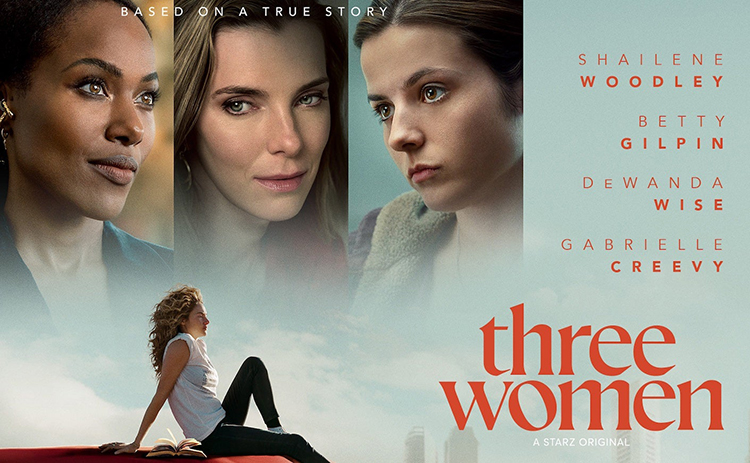
Her TV shows include “Gossip Girl” (2021); “Dickinson” (2021); “And Just Like That…” (2023) starring Sarah Jessica Parker; “Three Women” (2023) with Shailene Woodley; and the 8-part limited series “Dying for Sex” (2025), starring the insanely talented and five-time Oscar-nominee Michelle Williams. She also worked on two feature films: Steven Spielberg’s “West Side Story” (2021), and “A Journal for Jordan” (2021), directed by Denzel Washington.
The following interview with Ms. Warden was conducted via Zoom. She explained her work and working methods in detail.
Ms. Warden, you were an actress before you became an intimacy coordinator. Is that a logical step for you?
I think it is becoming more of a regular path now. When I did it, it was really because intimacy coordination didn’t exist. So I’m part of the team that created it. I think that, as an actor, I was seeing what was happening in the industry. There was a need for support and protocols, and a different approach because I was also a fight choreographer—I had that kind of choreographic understanding. So I think, from there, having been in the industry and understanding the need, and then getting connected to the people who also helped create it, a lot of my acting became part of what we put into creating the discipline. We have actors that come to train now as intimacy coordinators, although it’s more people that are either in the fight world, or directors, stage managers, assistant directors, people like that.
So I suppose it’s also an advantage for you that you have the experience of a stage and screen actress, since you have a real understanding of what actors are going through?
I think so. I know what it feels like to do that. I also have a honed instinct for telling acting stories and physical storytelling, understanding dramaturgy and cameras, and how you do that. I think that helps me to align both with the actors and the directors, and to know what they’re trying to do. As I add my work to it, it doesn’t make it harder or go against that.
How do you work with your actors? I mean, when there’s a sex scene or a scene with nudity scheduled, and you’re going to rehearse it, or you’re going to shoot it, how do you do it? Who is the first one you talk to?
Well, it takes a lot of preparation before we get to shooting it. I first start talking to the director and get their ideas, their wants, their requests, and what they’d like to see in the scene. I then talk individually to each of the actors involved to take those requests, and then see how they sit with the consent levels. That’s the advocacy part of the role; if what’s been asked is outside of the consent levels of the actor, then I am part of upholding that and I go back to the director to have a conversation like, ‘We can see this, we can’t see that, so let’s figure out how we’re going to film this by honoring the actor’s consent levels.’
I talk to other people as well; I talk to the wardrobe team a lot. Once we know if an actor is going to do any nudity or what’s going to be seen, we get all the wardrobe and the special equipment ready. I’m talking to our first assistant director, who runs the set so that we can be ready for what we call a ‘closed set protocol.’ Whenever we shoot nudity or simulated sex, we close the set down, we ask all the people that are not essential to shooting the scene to leave the set, and we close down monitors so that only the people that are actively working on the scene get access to it.
I talk to our production team to get what’s called riders, which are the kind of extra contracts that the actors sign, having agreed to nudity or simulated sex. Sometimes I’m talking with props. Sometimes I’m talking with the director of photography if we’re looking at very particular frames or scenes. So it’s a lot of liaising work to make sure that all the information is with the right departments. When we get to shoot it, everyone knows what’s expected, everyone knows what’s going to happen, and then we can just go ahead and shoot in the way that it’s expected.
When you’re shooting a scene, are you standing or sitting next to the director?
Usually, I’m very close to the director, yes. I’m wherever the director is watching their monitor, so I can be really close to seeing what they’re seeing. I’m available for them when they say, ‘Oh, I want a little bit more of that,’ or ‘That didn’t quite work. Let’s try it again.’ And sometimes they’ll talk directly to the actors, and I’m part of that. Sometimes they’ll want me to give notes to the actors, but I’m always between the director and the actors; I’m there with the director and watch it with them, so I’m seeing what they’re seeing. I’m always available for the actors to go in between takes, and make sure it’s all working for them, make any adjustments we need to make, etc.
Since you work with so many people on set and collaborate with various departments, I suppose you’re also a kind of negotiator.
I think of it more as a facilitator than a negotiator because each department has different needs, and I figure out what those needs are, and how it fits in or doesn’t fit in with what we need to do to uphold the actor’s consent. Or figure out a solution for everybody, depending on what the scene needs, what the actors want, and what the protocols are. So there’s a lot of diplomacy in it, a lot of facilitating and organizing of many people’s needs.
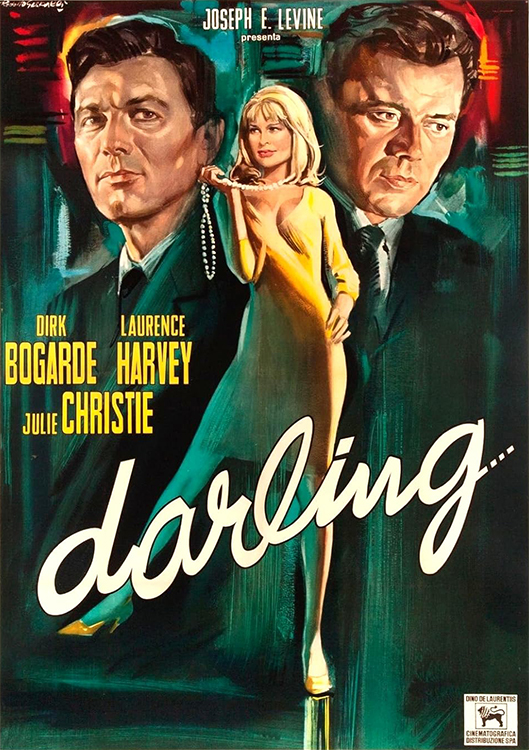 John Schlesinger [1926-2003], a very acclaimed and accomplished film director from the 1960s through the 1990s, made “Darling” with Julie Christie in 1965. There’s a scene in the film where the camera follows her down a series of corridors, and she does a sort of striptease until she ends up naked in front of the mirror in her bedroom. The day they were supposed to shoot the scene, she said to him, ‘That’s not like me. I would never do that.’ And he said, ‘Julie, you’re not playing you. You’re playing this character.’ In the end, he shot the scene; it was all done in very good taste, and you didn’t see anything. But I can understand the need for an intimacy coordinator since she was reluctant to do it.
Yes, and that story is really interesting because there’s two aspects of this. There’s what the actor wants or doesn’t want seen on screen. Sometimes they don’t want the world to be able to see it for the rest of time because once it’s on film, that’s forever. Someone somewhere can see it, so maybe they don’t want the world for the rest of time to see that part of their body. What’s also interesting in terms of that story of Julie, is this: does this really fit the character or the story? I think what intimacy coordination has been able to do—now that we’re talking about nudity and simulated sex scenes—we’re storytellers as well, we’re part of the creative team.
What it’s been able to do is open up the creative considerations and the storytelling aspects. Is this actually true to our characters and to our stories? During the 1990s, especially, a film had to be sold, and if you hadn’t seen any breasts after forty-two minutes, ‘Get some in,’ you know. That was a lot of the storytelling that was happening, and a lot of that kind of objectifying male gaze dominated cinema.
So I think there are two considerations of what really enhances the storytelling and the information we have about the character, and then what the actors want to do, because I understand Julie. If it’s a really naturalistic film and we see this character at home when she goes from the bedroom to the kitchen to get a snack, most people don’t do a sexist sultry striptease. If there is another character involved, or she knows she’s being watched, then that will color what the character does. I think now we’ve opened up the depth and the nuance of storytelling around sex, intimacy, and nudity, so that we can be as detailed in that as we are in the rest of the film or any other scenes.
What I find very interesting about you and your career is that you’re originally from the Channel Islands, and a few decades later, you’re working with Steven Spielberg [“West Side Story,” 2021].
Yes, I know. It blows my mind too [laughs].
I mean, Spielberg is like God. How did that happen? How did that come about?
I often have to pinch myself and be like, ‘Wait a minute. I live in New York City. I’m one of the top ICs in this town and close to the world, and what’s happening?’ I think when I worked with Steven, they needed an intimacy coordinator. I was one of the first intimacy coordinators in the business, along with Alicia Rodis. So I had some experience by then; with another colleague, Teniece Divya Johnson, we worked on that show, and for the Anita scene—which was the kind of sexual assault scene—I had experience in creating violence as well. I’m used to working on those scenes, so I have an expertise to bring. And bless Steven; he’s such a wonderful, I mean, really wonderful man and a wonderful director, and he wanted to take care of this very young cast.
So yes, I think it’s funny; the Channel Islands are such a small place in terms of exposure and experience. I grew up doing community theater, but there’s no professional work there, so I knew I had to leave. But they’re islands of great beauty, and there’s something about being surrounded by the sea that way; it’s a very powerful and rough sea around the islands, but also, there’s this beautiful calm as well. You have these big craggy rocks that are always in the seascape. I think there’s just something about that; I think it has always infused my soul so I can be in and among environments of great power and sometimes danger, and work with them—not against them—and you have limitless opportunities and potential if you’re brave enough to go for it. I think that has informed the way I live my life and the way I act, but also, everybody was looking around, and someone had to do something about it. With a couple of other people, we decided to just do that, and we said, ‘Let’s push change through.’ We kept going, and we made it work.
“West Side Story” (2021, trailer), directed by Steven Spielberg
You are a pioneer in your line of work, aren’t you?
Yes, I think there was a lot of both my professional experience and my life experience that came together in order for me to contribute significantly in building it. I spend a lot of time focusing on working with actors and how to equip them to find resilience. A general purpose to stand up against oppression and injustice has just always been part of me; I think all those things came together to allow me to be a person who could lead this movement.
Let’s say that this profession now exists about ten years, or close to ten years. Has it changed a lot in that short period?
Oh yes, amazingly. I would say even in the last two years, I’ve noticed how different it is.
How so?
At the beginning, we started launching it to the industry throughout 2016 and 2017, when there was a lot of resistance to it, a lot of misunderstanding of what we were trying to do. There were a lot of pushbacks, and so it was an enormous fight against resistance and mostly advocacy, and a lot of trying to get people to shift and bend a little bit to support actors. Actors were also kind of in shock and not even sure of their own consent levels; no one had ever asked them, ‘What’s okay with you and what’s not?’ So when we were guiding actors to figure that out, it was a big milestone when HBO mandated intimacy coordinators on all their shows [in 2018]. That was a big statement from the industry side that said, ‘Okay, we accept this.’ It made a lot of other people understand what intimacy coordination can bring. But I would say that two years ago, most of the time when I began a conversation with a production company or with an actor, my first question was always, ‘Have you worked with an intimacy coordinator before?’ The answer was almost always, ‘No, this is the first time.’
Now, I think on my last two or three shows, everybody worked with an intimacy coordinator before, so there’s an understanding of this now. There’s a different approach to it now; there’s still some learning to do, but for the most part, productions now bring in an intimacy coordinator because they know it makes everybody’s life easier. I’m looking ahead because I’m still one of the leaders, and think, ‘What’s next? Where do we have to go next?’ Now it’s established, and we have a union contract over here which is like history making; no one had a new bargaining unit for over forty years. The last one was for the stunt coordinators.
So now that it is accepted and legitimized, what I see as the next step is for those that interact with the intimacy coordinators—the producers, the director, the actors, the DP—to then have a little bit more education and understanding of what their role in upholding a consent-based approach looks like, and how—rather than sitting and waiting for the intimacy coordinator to just make magic and make everybody do good—how do I fold that kind of thinking into my practice as a director, or into my practice as an actor? How does production hold everybody educated and accountable, rather than just the intimacy coordinator?
Intimacy coordinators are now becoming part of the main creative team if there’s a lot of intimacy in a show. I tend to work on shows where there’s a lot of intimacy; there are still some shows with one or two intimate scenes, and they’re a little easier, but now they come to me when they’ve got shows where every episode has at least three scenes. So we got this creative team, with the showrunner, the director, the DP, and me. We’re talking about how we’re gonna create this across the whole show or the whole movie. It shifted a lot. Thank goodness.
So now an intimacy coordinator is part of a film or television crew just like, for example, a cinematographer or a sound technician?
Yes. We are now. In America, we are very much part of the crew. We just unionized; we joined the SAG-AFTRA [formed in 2012 by the merger of the Screen Actors Guild and the American Federation of Television and Radio Artists], which is the union for actors, choreographers, and stunt coordinators. We’re not in the DGA [Directors Guild], which is the director’s union, or the IATSE [International Alliance of Theatrical Stage Employees], which is for the other crew units. There’s a little difference because in England, for example, intimacy coordinators are part of what’s called BECTU [Broadcasting, Entertainment, Communication, and Theatre Union], the crew union where all the crew members are part of. In Australia, they’re not yet unionized, but they’re hoping to unionize with the actors. So yes, we are now understood and treated as crew members.

Did you also collaborate on SAG-AFTRA’s Standards and Protocols for the Use of Intimacy Coordinators?
Yes. That was a long process. But it was very helpful that my colleague Alicia [Rodis] and I had a number of meetings with some of the executives at SAG-AFTRA—the executive director, the New York executive director, and the president. We got to talk to them because they said, ‘All right. We see you’re doing this. Talk to us about it. What is it that you do?’ After we had those conversations, they were very supportive because what we were doing was protecting their members. Their members are the actors, and we were creating things for their members, so they were very on board with us. We formed this group of working intimacy coordinators and some SAG-AFTRA staff members to look at where the gaps were in the protocols and guidelines. We then filled those and created an approach that made it official and clear for actors to follow. Then we revised it a little bit, we released it again, and then we released a follow-up. As they continue to negotiate their contracts for their actors, we give advice as to what we want to put in that contract for them.
Is there a difference for you when you work with young or older actors, and the way they respond?
What’s interesting is that the younger actors have grown up in a time or finished their training when this conversation had already started. So they are used to this, and they expect this kind of support now. They’re very open to intimacy coordination, but they’re also a little less confident sometimes; they haven’t quite found their way of doing it, so they may need a little more support as well. Older actors who built their career way before intimacy coordinators existed, or before they had this conversation, needed a little adjustment, and established actors are like, ‘I know, I’ve spent my whole life protecting myself, so I know how to do that.’ It’s a conversation and working together to see how I can offer support to them, and take some of that load off without interfering in the way they want to act in their process. So they have an adjustment to make because it’s a new way of doing something that they’ve figured out for themselves because they had to. Some experienced actors are like, ‘Oh, thank God you’re here! Let’s go, you tell me everything we do, and we do it.’
As you already mentioned, during the 1980s and 1990s, there were quite a few films with sex scenes when nudity was not necessary at all.
Yes, that happened a lot back then. That was a hard time for actors because they had no protection; it was expected, and there was no consideration of what it meant for them. It was unnecessary as well. You know, there’s nothing wrong with the human body and showing it if your actors agree and if it serves the story. For me, as a creative and a storyteller, that’s always my interest: how do we tell the best story possible that is as true as we can get it? That’s where a lot of my kind of storytelling and dramaturgy comes from. I love to look at the story we’re telling, and then, let’s figure out how we commit to that story within the boundaries of our actors.

We already talked about Steven Spielberg. You also worked with Denzel Washington on “A Journal for Jordan” [2021], which he directed. What was he like to work with?
He’s a very different kind of director. He hadn’t worked with an intimacy coordinator before, so it took him some time to be open to it, to accept it, and to make adjustments, which he did eventually. When he saw it working, he said, ’Oh, I see how you just made that easier. Okay, I think I get it now.’ He’s very much an actor’s director, so he just wants to be in with the actors. It’s all about finding ways to make space for the actors to have other support as they need it, which we managed to do. I also worked with Denzel on a theater project, “Othello.”
Working with actors on stage or on screen, is the same approach for you?
The foundations and the principles are the same, but it is a very different craft, I think, because when you’re creating something in film, you’ve got a lot more people, you’ve got the camera right in. You have a lot more control over what’s seen because of the camera; you only have to do it for that scene, and then you’re done. Whereas in theater, you have to create the choreography that is the same every single show—maybe for months, depending on how long the run is—and that works from all over the theater, depending on where the audience is. So it’s a different kind of skill, a different craft in creating the choreography and in holding the space.
Do you work differently with your actors then?
No, I don’t think with the actors. It’s the same approach, and I work with them the same, but in theater it’s often a very linear process. We all start in the same place; we build the show together, and then we go to previews. In film, we’re jumping all over the place; we’re doing this scene from that part, and then we’re going back because we haven’t shot that bit yet. So that’s more of a challenge to help them to keep that storytelling arc of intimacy going throughout the movie or throughout the TV show. And the environments feel very different to work in, so there’s a different response, a different amount of emotional and space-holding support that I give to them because working in those environments feels very different.
Are you currently working on a new project?
A couple of weeks ago, I finished a movie for Netflix, and I’m in final talks for a TV series. Hopefully, we can get that started at the end of August.
Zoom interview
June 11, 2026
FILMS
WEST SIDE STORY (2021) DIR Steven Spielberg PROD Steven Spielberg, Kevin McCollum, Kristie Macosco Krieger SCR Tony Kushner (book “West Side Story” [1957] by Arthur Laurents) CAM Janusz Kaminski ED Michael Kahn, Sarah Broshar MUS Leonard Bernstein INTIMACY COORDINATOR Claire Warden CAST Ansel Elgort, Rachel Zegler, Ariana DeBose, David Alvarez, Rita Moreno, Brian d’Arcy James, Corey Stoll
A JOURNAL FOR JORDAN (2021) DIR Denzel Washington PROD Denzel Washington, Michael B. Jordan, Todd Black, Steve Tisch, Jason Blumenthal SCR Virgil Williams (memoir “A Journal for Jordan: A Story of Love and Honor” [2008] by Dana Canedy) CAM Maryse Alberti ED Hughes Winborne MUS Marcelo Zarvos INTIMACY COORDINATOR Claire Warden CAST Michael B. Jordan, Chanté Adams, Jalon Christian, Robert Wisdom, Tamara Tunie, Jasmine Batchelor
TV MOVIE
THE DARK TOWER (2020) DIR Stephen Hopkins EXEC PROD Stephen Hopkins, Stephen King, Glen Mazzara; Mark Winemaker SCR (created by Glen Mazzara; novel “The Dark Tower” [2004] by Stephen King) CAM Peter Levy ED Natham Gunn INTIMACY COORDINATOR Claire Warden Bear McCreary CAST Sam Strike, Jasper Pääkkönen, Terence Maynard, Michael Rooker, Abraham Popoola, Jerome Flynn
TV SERIES / MINI SERIES
LOOKING FOR ALASKA (2019; intimacy consultant and intimacy coordinator), 2 episodes
MRS. FLETCHER (2019; intimacy coordinator), 7 episodes
HUNTERS (2020; intimacy coordinator), 1 episode
BILLIONS (2020; intimacy coordinator), 2 episodes
YOUR HONOR (2020; intimacy coordinator), 2 episodes
HOW TO MAKE LOVE TO A BLACK WOMAN (2020; intimacy coordinator), 1 episode
GOSSIP GIRL (2021; intimacy coordinator), 12 episodes
DICKINSON (2021; intimacy coordinator), 8 episodes
WECRASHED (2022; intimacy coordinator), 1 episode
AND JUST LIKE THAT… (2023; intimacy coordinator), 5 episodes
HARLAN COBEN’S SHELTER (2023; intimacy coordinator), 1 episode
THREE WOMEN (2023; intimacy coordinator), 10 episodes
DYING FOR SEX (2025; intimacy coordinator), 8 episodes
FURIOUS (2026; intimacy coordinator), 8 episodes
UNACCUSTOMED EARTH (2026; intimacy coordinator), 8 episodes
BROADWAY PLAYS / MUSICALS / REVIVALS
FRANKIE AND JOHNNY IN THE CLAIR DE LUNE (2019; intimacy and fight director)
SLAVE PLAY (2019-2020; intimacy and fight director)
LINDA VISTA (2019; intimacy consultant)
THE INHERITANCE (2019-2020; intimacy choreographer)
JAGGED LITTLE PILL (2019-2021; intimacy director)
WEST SIDE STORY (2020; intimacy director)
WAITRESS (2021; intimacy director)
SLAVE PLAY (2021-2022; intimacy and fight director)
COMPANY (2021-2022; intimacy director)
DEATH OF A SALESMAN (2022-2023; intimacy and fight director)
NEW YORK, NEW YORK (2023; fight direction)
THE NOTEBOOK (2024; intimacy director)
ROMEO + JULIET (2024-2025; intimacy director)
OTHELLO (2025; intimacy director)


You must be logged in to post a comment.